

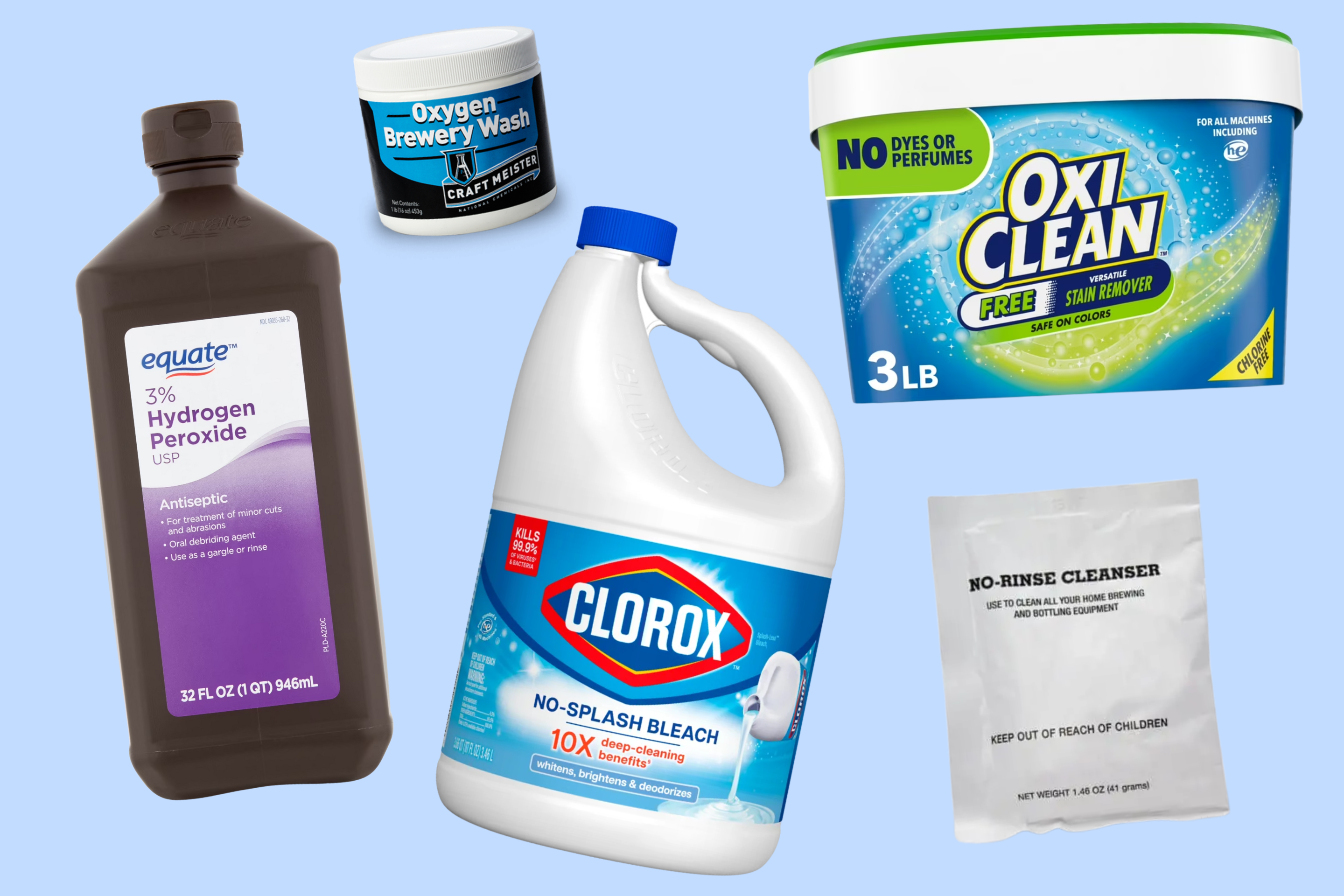
The fastest way to ruin a great brew day? Realizing you don't have sanitizer on hand right when you need it.
Sanitizing is one of the most important steps in homebrewing, and skipping it (or doing it incorrectly) can lead to off-flavors, infections, or a batch that never quite tastes right. If you don't have brewing sanitizer on hand, some household items, such as unscented bleach, hydrogen peroxide, and OxiClean, can be used in a pinch when used correctly. In this guide, we'll explain how to sanitize homebrewing equipment using household items, what to avoid, and why dedicated brewing sanitizers are still the best option.
Cleaning vs. Sanitizing: What's the Difference?
Before you sanitize anything, it must be clean.
Cleaning removes dirt, residue, dried wort, yeast, and grime.
Sanitizing kills microorganisms that can spoil your beer.
Once your equipment is clean, then it's ready to be sanitized.
Household Items You Can Use to Sanitize Brewing Equipment
1. Unscented Bleach
Bleach is one of the most accessible sanitizing options and can be effective when used properly.
How to Use Bleach for Homebrewing
- Mix 1 capful of unscented bleach per 1 gallon of water
- Make sure the bleach is non-scented
- Soak the equipment for at least 5 minutes
- Rinse thoroughly until the bleach smell is completely gone
Pros
- Cheap and widely available
- Effective against bacteria
Cons
- Requires rinsing (tap water can reintroduce microbes)
- Can leave flavor or aromas if not rinsed well
- Can damage plastics and pit stainless steel if left too long
Bleach works in an emergency, but it's not ideal for repeated use.
2. OxiClean Free
OxiClean Free (the unscented version) can act as a sanitizer substitute when necessary.
How to Use OxiClean
- Mix 1 tablespoon per gallon of water
- Sanitize equipment as you normally would
- Lightly rinse afterward
OxiClean Free has a similar chemical makeup to Mr. Beer No-Rinse Cleanser, but it's not food-grade; we recommend rinsing to be safe.
Pros
- Easy to find
- Affordable
- Excellent cleanser
Cons
- Requires rinsing
- Leaves oxidized residue if not fully removed
- Better suited for cleaning than sanitizing
3. Hydrogen Peroxide (3% of Higher)
Hydrogen peroxide is another solid emergency option and works similarly to no-rinse sanitizers.
How to Use Hydrogen Peroxide
- Use 3% hydrogen peroxide or higher
- No dilution required
- Apply directly to the equipment
- Allow contact for a few minutes, then drain
Pros
- No mixing required
- No strong odor
- Easy to find at drugstores
Cons
- Requires enough volume to fully coat the equipment
- Not designed specifically for brewing
Why Dedicated Brewing Sanitizers Are Better
While household substitutes can work in a pinch, brewing-specific sanitizers are designed to be safer, faster, and more reliable.
What Makes a Great Homebrewing Sanitizer?
While household substitutes can work in a pinch, brewing specific sanitizers is designed to be safer, faster, and more reliable.
- Non-caustic (won't burn hands)
- Fast-acting
- No-rinse
- Effective against bacteria
- Safe for plastics and stainless steel
Common Brewing Sanitizers (and How They Compare)
Star San (acid-based)
- No-rinse
- Fast-acting
- Flavorless
Iodophor (iodine-based)
- No-rinse
- Effective and widely used
Oxygen-based cleaners (Craftmeister, Saniclean)
- Great for cleaning
- Mild sanitizing properties
Final Thoughts: Be Prepared for Brew Day
Household sanitizers can absolutely save a brew day if you're caught unprepared, but they should be temporary solutions, not long-term habits.
If you brew regularly, the easiest (and safest) solution is simple:
→ Stock up on a dedicated no-rinse sanitizer like Mr. Beer No-Rinse Cleanser.
It's fast, effective, and removes the guesswork so you can focus on what matters most, brewing great beer.


