

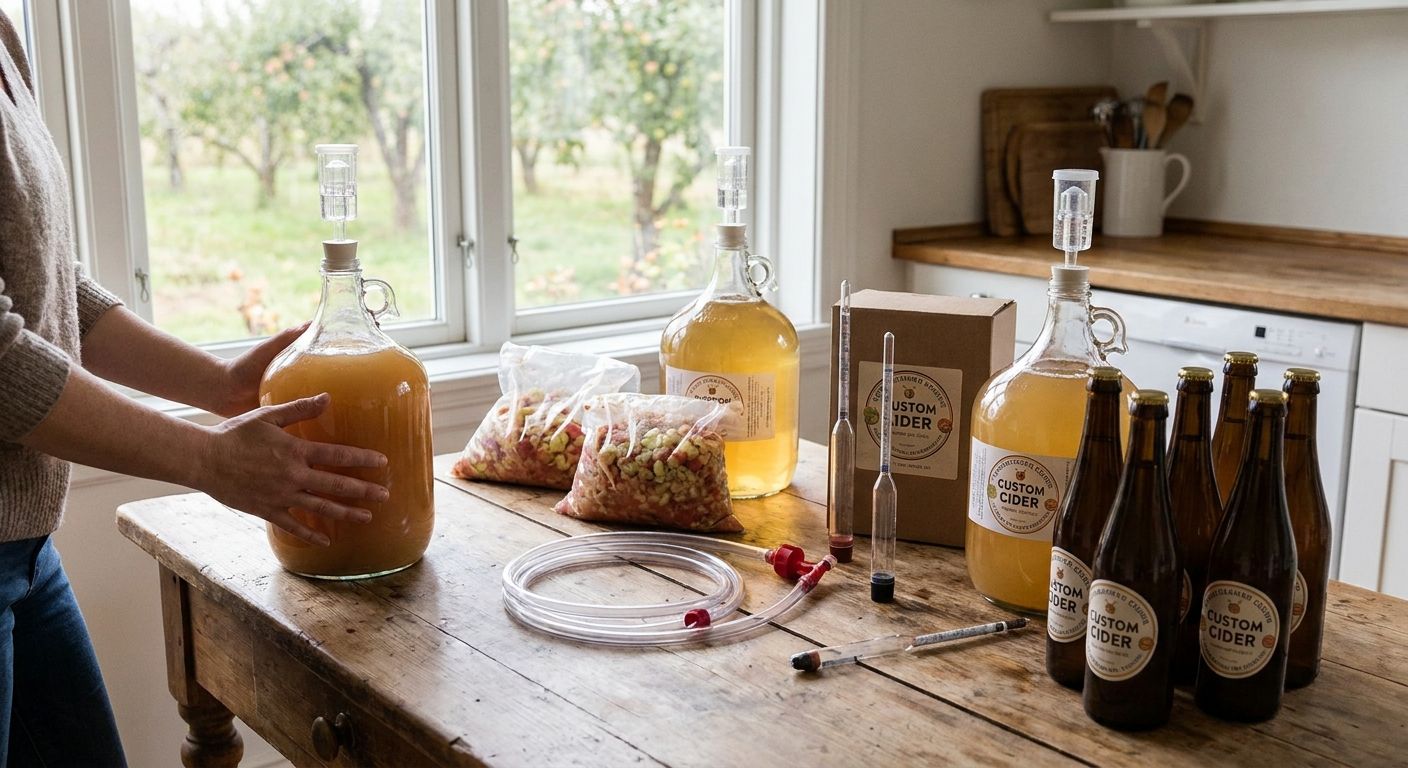
Mr. Beer doesn't sell a bottled hard cider extract the way it sells beer concentrates, but the fermenting equipment, yeast, sanitizer, and bottling gear built for beginner beer brewers are the same tools that turn apple juice into hard cider. In 2026, building a hard cider brewing kit from Mr. Beer's lineup means picking the right equipment size, a suitable yeast, and the bottling supplies to finish the job — you bring the juice.
- Coopers DIY 5 Gallon Complete Beer Making Kit is the best overall hard cider brewing kit base for full-size batches in 2026.
- Coopers DIY 2 Gallon Beer Making Kit fits small kitchens and apartments for a first cider batch.
- Safale US-05 Dry Ale Yeast is a clean-fermenting ale yeast that works well for dry, crisp hard cider.
- Mr. Beer has no dedicated cider extract yet, so a hard cider brewing kit means equipment plus your own juice.
- 740ml Deluxe Bottling System and Mr. Beer Carbonation Drops cover bottling and natural carbonation.
Why this matters
Searches for a "hard cider brewing kit" usually assume a single box with everything inside, including the cider itself. That product doesn't exist at Mr. Beer right now. What does exist is a full set of homebrewing equipment — the same fermenter, airlock, sanitizer, yeast, and bottling components used for beer — that works just as well when the fermentable liquid is apple juice instead of malt extract.
If you're new to any of this, start with how to choose your first brewing kit before buying anything. The equipment decisions are identical whether you end up brewing beer or cider — it's the ingredient you add that changes the outcome.
What makes the best hard cider brewing kit setup
- Batch size that matches your space. A 5-gallon fermenter yields more finished cider per batch than a 2-gallon setup, but it also takes up more counter or closet real estate.
- A yeast suited to fruit-forward fermentation. Clean, neutral ale yeasts let apple character come through instead of masking it.
- Sanitizing supplies you'll actually use. Cider is unforgiving of contamination, so a simple no-rinse process matters.
- Bottling equipment sized to your batch. Bottles, caps, and a capper (or a pre-fitted system) need to match how much cider you're packaging.
- A way to carbonate naturally. Priming drops or sugar let bottle-conditioned cider carbonate on its own timeline.
- Room to scale up later. A setup that works for a 2-gallon test batch shouldn't be a dead end if you want to brew 5 gallons next time.
Hard cider brewing kit components at a glance
| Component | Best for | Standout feature | Starting price | Key limitation |
|---|---|---|---|---|
| Coopers DIY 5 Gallon Complete Beer Making Kit | Full-size cider batches | Larger fermenter volume | $129.95 | Needs more storage space |
| Coopers DIY 2 Gallon Beer Making Kit | Small batches, small kitchens | Compact footprint | $89.95 | Smaller yield per batch |
| Safale US-05 Dry Ale Yeast | Dry, crisp cider | Clean fermentation profile | See product page | Not formulated specifically for cider |
| No-Rinse Cleanser | Sanitizing without a rinse step | Simplified prep routine | See product page | One piece of a full sanitizing routine |
| 740ml Deluxe Bottling System (Qty 12) | Bottling finished cider | Ready-to-fill bottle set | See product page | Caps and priming sugar are separate |
| Mr. Beer Carbonation Drops | Priming bottled cider | Pre-measured priming dose | See product page | Only needed for bottle conditioning |


1. Coopers DIY 5 Gallon Complete Beer Making Kit: best overall equipment for full-size hard cider batches
The 5-gallon fermenter, airlock, and related gear in this kit give you the full equipment footprint needed to ferment apple juice at real batch scale in 2026. Swap the beer-focused ingredients for your own cider juice and you have a complete fermentation vessel and process.
Coopers DIY 5 Gallon Complete Beer Making Kit pros:
- Larger 5-gallon capacity means more finished cider per brewing session
- Full equipment set covers the fermentation side of the process in one purchase
- Reusable for beer batches later if you want to switch things up
Coopers DIY 5 Gallon Complete Beer Making Kit cons:
- Larger fermenter needs more dedicated storage space than a 2-gallon setup
- No cider-specific ingredients included — you supply the juice
- Bottling and yeast are separate purchases
Coopers DIY 5 Gallon Complete Beer Making Kit pricing: $129.95 as of 2026, current pricing and availability subject to change on mrbeer.com.
Best for: brewers who want a full 5-gallon hard cider batch and have space to store the fermenter.
2. Coopers DIY 2 Gallon Beer Making Kit: best for small-batch or small-space cider brewing
This compact kit scales the same fermentation process down to a smaller footprint, which matters if counter space or closet storage is tight. It's a reasonable way to test a cider recipe before committing to a full 5-gallon batch.
Coopers DIY 2 Gallon Beer Making Kit pros:
- Smaller footprint suits apartments and tight kitchens
- Lower juice volume needed to fill a batch, useful for a first attempt
- Same basic fermentation process as the larger kit, so skills transfer directly
Coopers DIY 2 Gallon Beer Making Kit cons:
- Smaller yield means less finished cider per batch
- Multiple batches needed if you're brewing for a gathering
- Still requires yeast, sanitizer, and bottling supplies separately
Coopers DIY 2 Gallon Beer Making Kit pricing: $89.95 as of 2026, current pricing and availability subject to change on mrbeer.com.
Best for: first-time cider brewers with limited space who want to test a recipe before scaling up.
3. Safale US-05 Dry Ale Yeast: best yeast for dry, crisp hard cider
Safale US-05 is a widely used American ale yeast strain known in homebrewing circles for a clean, neutral fermentation profile that doesn't compete with fruit character. That neutrality is why it shows up in cider recipes as often as it does in pale ales.
Safale US-05 pros:
- Clean fermentation profile lets apple flavor lead
- Familiar strain with a long track record among homebrewers
- Works across a range of batch sizes
Safale US-05 cons:
- Formulated as an ale yeast, not a dedicated cider yeast
- Fermentation temperature range should be checked against the product label before pitching
- Results still depend heavily on the juice you start with
Best for: brewers who want a dry, crisp finished cider rather than a sweeter profile.
4. No-Rinse Cleanser: best for sanitizing cider equipment without extra steps
Cider is at least as sensitive to contamination as beer, and a no-rinse sanitizing product removes one step from a process that already has enough of them. It's a straightforward addition to either the 5-gallon or 2-gallon equipment set.
No-Rinse Cleanser pros:
- Skips the rinse step in your cleaning routine
- Works on the same equipment used for beer, so one product covers both
- Simple to fold into an existing brew-day routine
No-Rinse Cleanser cons:
- Still just one part of a full sanitizing process
- Contact time and dilution instructions on the label need to be followed exactly
Best for: brewers who want a simpler sanitizing step before pitching yeast into cider.
5. 740ml Deluxe Bottling System (Qty 12): best for bottling finished hard cider
Once fermentation finishes, you need bottles to package the batch, and this system gives you a set of 740ml bottles sized for home use. It's equipment you'll reuse across cider and beer batches alike.
740ml Deluxe Bottling System pros:
- Bottles sized for practical home storage and serving
- Reusable across multiple future batches
- Matches the scale of a typical home fermentation batch
740ml Deluxe Bottling System cons:
- Caps and priming sugar or drops are separate purchases — check the product page before assuming what's included
- An added cost on top of the fermenting equipment itself
Best for: brewers ready to package a finished batch of cider or beer.
6. Mr. Beer Carbonation Drops: best for priming bottled cider
Bottle-conditioned cider needs a measured dose of fermentable sugar to carbonate naturally, and pre-measured carbonation drops remove the guesswork of calculating priming sugar by hand.
Mr. Beer Carbonation Drops pros:
- Pre-measured dosing simplifies the priming step
- Straightforward to drop into each bottle before capping
- Works for cider and beer batches alike
Mr. Beer Carbonation Drops cons:
- Only relevant if you're bottle conditioning rather than kegging
- Still requires patience while carbonation develops in the bottle
Best for: brewers bottle-conditioning cider who want simple, consistent priming.
How we ranked these
Each pick was placed against the criteria above: batch size fit, yeast suitability for a fruit-forward ferment, sanitizing simplicity, and bottling readiness. The Coopers DIY 5 Gallon and 2 Gallon kits lead because they cover the core fermentation equipment; everything after that fills a specific gap in the process rather than duplicating what's already covered.
Which hard cider brewing kit should you choose?
For most first-time cider brewers with the space for it, the Coopers DIY 5 Gallon Complete Beer Making Kit is the strongest starting point for a 2026 hard cider brewing kit build — it gives you the fermentation capacity to make a full batch worth bottling. If space is the deciding factor, the Coopers DIY 2 Gallon Beer Making Kit lets you test a cider recipe on a smaller scale first. Either way, add Safale US-05 for the ferment, no-rinse cleanser for prep, and a bottling system plus carbonation drops to finish the batch.
FAQ
Does Mr. Beer sell a dedicated hard cider brewing kit?
Not as a single packaged product with cider juice included. Mr. Beer's fermenting equipment, yeast, sanitizer, and bottling gear can be combined into a hard cider brewing kit — you supply the apple juice yourself.
Can you use a beer brewing kit to make hard cider?
Yes. The fermenter, airlock, and bottling equipment in a beer kit work the same way for cider — the difference is the ingredient you ferment, not the equipment.
What size fermenter is best for a first hard cider batch?
A 2-gallon setup like the Coopers DIY 2 Gallon Beer Making Kit is a reasonable size for a first test batch, while a 5-gallon setup yields more finished cider per session once you're comfortable with the process.
What yeast works best for hard cider?
A clean-fermenting ale yeast such as Safale US-05 is commonly used because it lets apple character come through rather than adding its own strong flavor profile.
Do you need special sanitizer for cider versus beer?
No. The same no-rinse sanitizing products used for beer equipment work for cider equipment, since contamination risks are similar across both.
How do you carbonate bottled hard cider?
Bottle-conditioned cider carbonates naturally once a measured dose of priming sugar or a carbonation drop is added to each bottle before capping.
What's included in the 740ml Deluxe Bottling System?
It provides a set of 740ml bottles sized for home batches. Check the current product page before assuming caps or priming drops are included, since those may be separate.
Is a 5-gallon or 2-gallon kit better for hard cider?
A 5-gallon kit yields more cider per batch and suits brewers with storage space, while a 2-gallon kit fits smaller kitchens and works well for a first test batch.
One last thing
The biggest gap in a DIY hard cider brewing kit isn't equipment — it's the yeast choice. Grabbing whatever dry ale yeast is on hand works, but matching a clean strain like Safale US-05 to a fruit-forward ferment is the single decision that shapes whether your 2026 batch tastes dry and crisp or muddled.


