

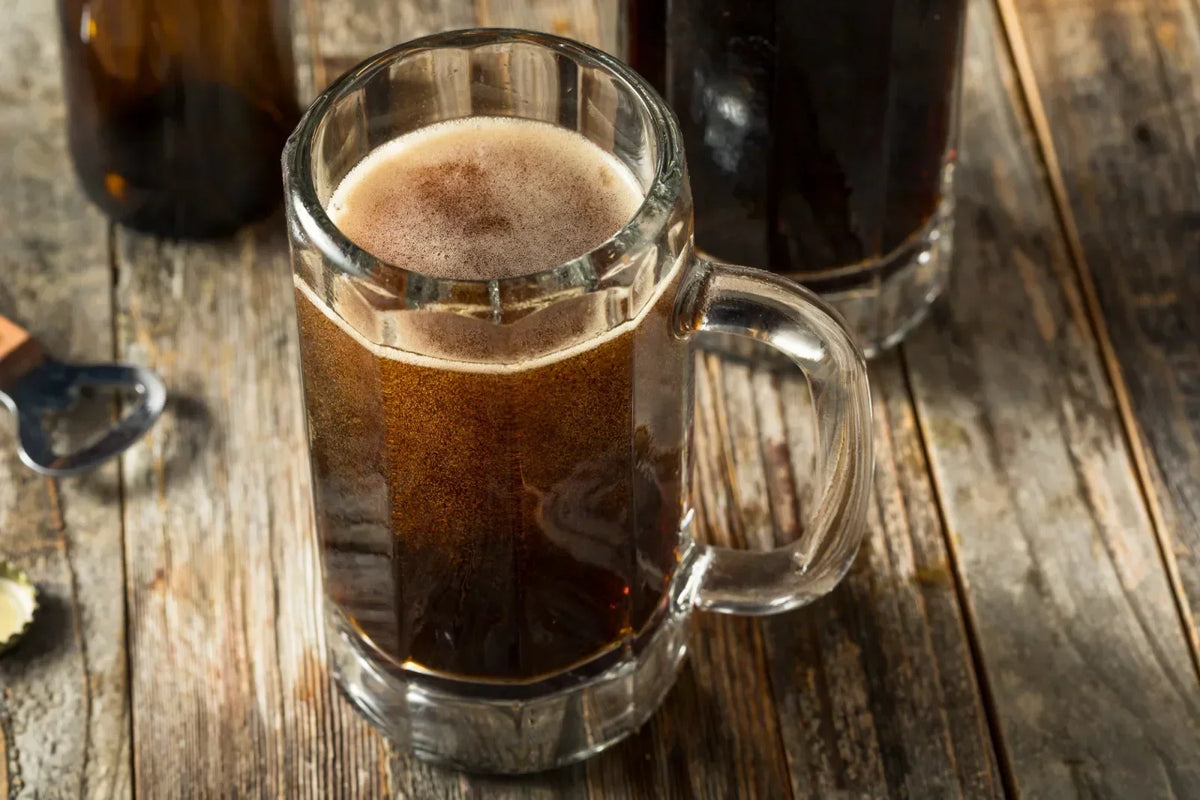
If you want to make homemade root beer, you do not need a full beer-brewing setup. What you do need is a kit designed around the way root beer is actually mixed, bottled, and naturally carbonated.
The Mr. RootBeer Root Beer Kit keeps that process simple. It includes the root beer ingredients, reusable bottles, special pressure-release caps and gaskets, cleanser, funnel, and instructions needed to make your first batches. You supply the sugar, water, and a few basic kitchen tools.
More importantly, the kit is built around a specific carbonation process. That means the bottles and caps are not interchangeable with ordinary beer bottles, and adding extra carbonation sugar or carbonation drops is not part of the Mr. RootBeer instructions.
- The Mr. RootBeer Kit is a dedicated homemade root beer system, not a beer kit adapted for soda.
- The kit contains ingredients for two gallons total, but you make one gallon at a time using the four supplied 1-liter bottles.
- Natural carbonation happens in the bottles using the sugar and root beer yeast called for in the instructions.
- Only use the supplied Mr. RootBeer bottles with the special pressure-release caps and gaskets.
- Most batches carbonate at room temperature in about 1–3 days before being moved to the refrigerator.
What Makes a Good Root Beer Making Kit?
A good root beer making kit should do more than give you a bottle of flavoring. It should provide a clear path from mixing the ingredients to safely carbonating and storing the finished root beer.
For a first-time maker, these are the things that matter most:
- A dedicated root beer recipe: The flavor base, yeast, and carbonation process should be designed to work together.
- Safe carbonation equipment: Naturally carbonated root beer creates pressure, so the bottles and closures need to be designed for the process.
- Clear instructions: You should know exactly what to mix, how much to use, when to bottle, and when to refrigerate.
- Sanitation supplies: Anything that touches the root beer should be properly cleaned and sanitized before use.
- Reusable equipment: Bottles, caps, and other hard goods should be usable again for future root beer batches when maintained as directed.
- A manageable batch size: Making one gallon at a time is easy to handle in a normal kitchen and refrigerator.
Mr. RootBeer Kit at a Glance
| Feature | Mr. RootBeer Kit | Why It Matters |
|---|---|---|
| Total root beer included | Ingredients for two gallons | Lets you make a second batch after finishing the first |
| Batch size | One gallon at a time | Uses the four included 1-liter bottles |
| Carbonation | Natural bottle carbonation | Uses the sugar and yeast specified in the recipe |
| Bottles | Four reusable 1-liter PET bottles | Designed to work with the supplied pressure-release caps and gaskets |
| Carbonation time | Typically 1–3 days | Bottles are refrigerated when they reach the correct firmness |
| Experience level | Beginner-friendly | No beer mash, hop schedule, or traditional fermenter required |
Why the Mr. RootBeer Kit Works for Beginners
The Mr. RootBeer Root Beer Kit is purpose-built for making root beer at home.
Instead of starting with malt extract, hops, and a beer fermenter, you mix the root beer ingredients with sugar and water, add the supplied root beer yeast, transfer the mixture into the special bottles, and allow the bottles to carbonate.
That makes it considerably different from brewing beer even though some of the same habits still matter. You still need clean equipment, careful measuring, patience, and a good seal on every bottle.
But you do not need to learn mash temperatures, hop additions, or multi-week beer fermentation before making your first batch.
What Comes in the Kit?
The Mr. RootBeer Kit includes the core ingredients and equipment needed for the root beer itself:
- Root beer mix
- Flavor crystals
- Root beer yeast
- No-Rinse Cleanser
- Four reusable 1-liter PET bottles
- Four reusable screw caps with pressure-release gaskets
- Plastic funnel
- Bottle labels
- Root beer instructions and activity guide
The included ingredients are enough to make two gallons total, but the root beer is made one gallon at a time. The same four bottles are reused for the second gallon after the first batch has been consumed.
What Do You Supply Yourself?
For each one-gallon batch, the official instructions also call for a few common kitchen ingredients and tools.
You will need:
- White granulated sugar
- Dark brown sugar
- Water
- A 1-gallon container with a lid
- A large mixing bowl
- Measuring cups and spoons
- A mixing spoon
Because the sugar is part of both the flavor and the natural carbonation process, follow the included recipe for your first batch rather than adding extra priming sugar or carbonation drops.
Important Bottle Safety
Mr. RootBeer should only be made in the bottles supplied for the system using the special pressure-release caps and gaskets. Do not substitute standard PET beer bottles or glass bottles. The root beer can build substantial pressure during carbonation, and the Mr. RootBeer closures are specifically designed to release excess pressure.
How Does Mr. RootBeer Get Carbonated?
Mr. RootBeer uses natural carbonation.
The recipe combines root beer mix, flavor crystals, white sugar, brown sugar, and a small amount of root beer yeast. After everything is mixed with water, the root beer is immediately transferred into the supplied bottles and capped.
The yeast consumes a small amount of fermentable sugar and produces carbon dioxide. Because the bottles are sealed, that carbon dioxide dissolves into the root beer and creates the fizz.
This is why you should not add Mr. Beer Carbonation Drops to this recipe. The required sugar is already part of the Mr. RootBeer process.
How Long Does Carbonation Take?
The official instructions call for storing the filled bottles upright in a dark location between 68°F and 84°F.
Carbonation typically takes about 1–3 days when the temperature remains consistent.
Check the bottles once each day. When they feel firm but the sides can still be pushed in slightly, move them to the refrigerator. Bottles that become extremely hard may be over-carbonated.
For best results, refrigerate the root beer for at least one full day before drinking.
Why Refrigeration Timing Matters
With Mr. RootBeer, refrigeration does more than make the drink cold. It also slows down the yeast and helps control carbonation.
If you refrigerate too early, the finished root beer may be under-carbonated. If you wait too long and allow pressure to continue building, the root beer can become over-carbonated and develop unwanted flavors.
That is why checking bottle firmness each day is part of the recipe rather than an optional step.
The official instructions also recommend not storing finished Mr. RootBeer in the refrigerator for longer than four weeks.
Does Homemade Mr. RootBeer Contain Alcohol?
Mr. RootBeer is naturally carbonated with yeast, so the finished drink contains a small amount of alcohol as a result of that fermentation.
According to the Mr. RootBeer product information, the finished root beer contains approximately 1% alcohol by weight (ABW).
That is very different from brewing a traditional beer, but it is worth understanding before making or serving the product.
Can You Reuse the Kit?
Yes. The bottles, caps, pressure-release gaskets, funnel, and other reusable components are designed to be used again when properly cleaned and maintained.
Once the ingredients included with the original kit are gone, the Mr. RootBeer Refill Pack provides ingredients for additional root beer using the same Mr. RootBeer equipment.
The important part is continuing to use the correct bottles, caps, and gaskets. The refill is designed specifically for the Mr. RootBeer system.
Ready to Make Homemade Root Beer?
The Mr. RootBeer Kit includes the root beer ingredients, reusable bottles, special pressure-release caps, cleanser, funnel, and instructions to get started.
Root Beer Kit vs. Beer-Making Kit
A root beer making kit and a beer-making kit may share a few basic habits, but the actual processes are different.
| Process | Mr. RootBeer Kit | Mr. Beer Beer-Making Kit |
|---|---|---|
| Main ingredients | Root beer mix, flavor crystals, sugar, root beer yeast | Malt extract, hops already incorporated into HME, brewing yeast, and recipe-specific additions |
| Primary vessel | Mixed in a container, then carbonated directly in bottles | Beer ferments in a dedicated fermenter before bottling |
| Timeline | Carbonation typically takes 1–3 days before refrigeration | Beer generally requires several weeks for fermentation and carbonation |
| Bottles | Must use Mr. RootBeer bottles with pressure-release caps and gaskets | Uses compatible beer bottles appropriate for the brewing system |
| Best for | Making homemade root beer | Brewing alcoholic beer |
If making root beer gets you interested in trying beer next, our guide to choosing a beginner beer-making kit explains the different options and what to look for.
Tips for a Better First Batch
- Follow the recipe before experimenting. Make the first gallon according to the supplied instructions so you know what the intended flavor and carbonation should be.
- Sanitize everything that touches the mixture. Use the supplied No-Rinse Cleanser according to the instructions before mixing and bottling.
- Use only the correct bottles and closures. The pressure-release caps and gaskets are part of the safety design of the system.
- Check bottle firmness every day. Carbonation can move quickly, especially in warmer conditions.
- Refrigerate at the right time. Do not wait until the bottles are rock hard.
- Chill before tasting. Give the refrigerated root beer at least a full day to get properly cold before judging the finished batch.
- Finish the first gallon before making the second. You need the four included bottles again for Batch #2.
Which Root Beer Making Kit Should You Choose?
If your goal is simply to make homemade root beer, a dedicated root beer kit makes much more sense than buying a beer fermenter and trying to adapt it.
The Mr. RootBeer Kit bundles the ingredients with the specific bottles and pressure-release hardware the carbonation process requires. That is the real value of the system: you are not piecing together random brewing equipment and hoping all of it works safely together.
Make the first gallon according to the instructions, learn how the bottles feel as carbonation builds, refrigerate them at the right time, and then reuse the equipment for the second batch.
FAQ
What is the best root beer making kit for beginners?
The Mr. RootBeer Root Beer Kit is designed specifically for making naturally carbonated root beer at home. It includes the root beer ingredients, four reusable 1-liter bottles, special pressure-release caps and gaskets, No-Rinse Cleanser, a funnel, labels, and instructions.
How much root beer does the Mr. RootBeer Kit make?
The included ingredients are enough for two gallons total. The official recipe makes one gallon at a time using the four supplied 1-liter bottles, so finish the first gallon before making the second batch.
How does Mr. RootBeer get carbonated?
Mr. RootBeer is naturally carbonated in the bottle. The recipe uses sugar and root beer yeast, which produce carbon dioxide inside the sealed bottles. No additional carbonation drops are called for in the Mr. RootBeer instructions.
Can I use regular beer bottles for Mr. RootBeer?
No. Use only the Mr. RootBeer bottles with the supplied pressure-release caps and gaskets. Standard PET beer bottles and glass bottles should not be substituted because the root beer can create substantial pressure during carbonation.
How long does homemade Mr. RootBeer take to carbonate?
The official instructions say carbonation typically takes about 1–3 days when the bottles are stored upright in a dark location between 68°F and 84°F. Check the bottles daily and refrigerate them when they are firm but still have a little give.
Does Mr. RootBeer contain alcohol?
Because the root beer is naturally carbonated using yeast, the finished drink contains trace alcohol. Mr. RootBeer lists the finished product at approximately 1% alcohol by weight (ABW).
Can I reuse the Mr. RootBeer Kit?
Yes. The bottles, caps, gaskets, and other reusable equipment can be cleaned and used again as directed. Mr. RootBeer Refill Packs provide additional root beer ingredients for use with the original kit.
Is a root beer kit the same as a beer brewing kit?
No. Mr. RootBeer is mixed and naturally carbonated directly in its special bottles over a short period. Beer is brewed with malt and hops, fermented in a dedicated fermenter, then bottled and carbonated over a much longer timeline.


