

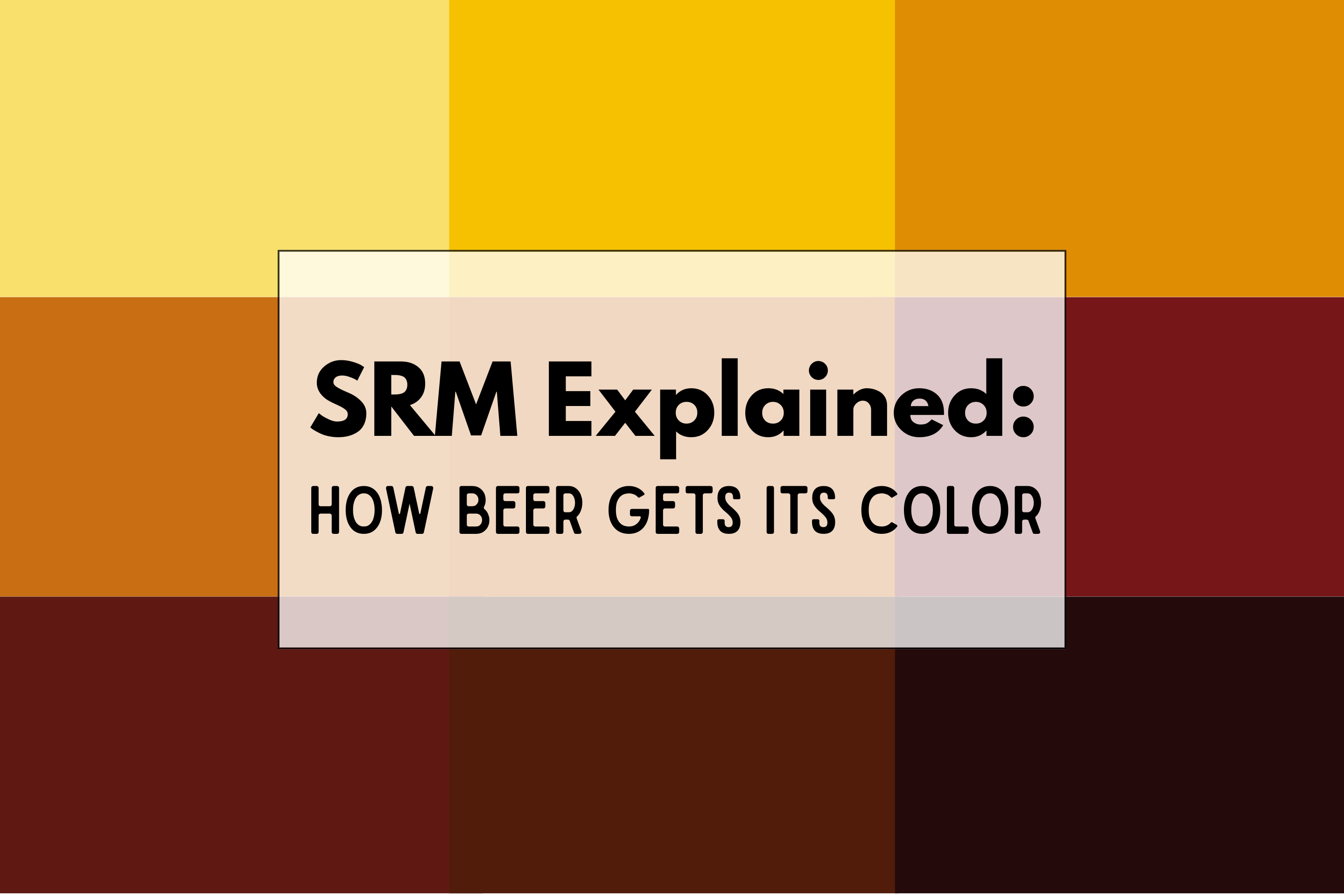
When you pour a beer, the first thing you notice, before aroma, before taste, is color. From light straw to deep black, beer comes in a stunning spectrum of shades. But what exactly determines a beer's color? And what does SRM have to do with it?
In this article, we'll break down how beer gets its color, the science behind the SRM (Standard Reference Method) scale, and how ingredients and process choices shape the final hue in your glass.
What Is SRM in Beer?
Beer comes in a stunning range of colors, from pale straw to jet black, and those hues tell a story. The Standard Reference Method is the brewing industry's standard for measuring beer color. Developed by the American Society of Brewing Chemists, SRM assigns a number based on how much light a beer absorbs. Simply put:
- The lower the SRM, the lighter the beer.
- The higher the SRM, the darker and often richer the beer.

SRM Breakdown: Style and Flavor
Understanding SRM gives brewers and drinkers alike a quick visual cue about what to expect in terms of flavor and food pairings. Here's how it all connects:
- 2-3 SRM (Pale Straw to Straw)
Styles: American Light, American Lager
Flavor: Crisp, clean, light-bodied
Pairing: Seafood, salads, sushi
- 4-7 (Pale Gold to Deep Gold)
Styles: Pilsner, Blonde Ale
Flavor: Refreshing, mildly sweet, or hoppy
Pairing: Grilled chicken, light pasta dishes
- 8-15 SRM (Pale Amber to Deep Amber)
Styles: Amber Ale, Märzen
Flavor: Toasty, caramel, malty richness
Pairing: Grilled meats, roasted vegetables
- 12-20 SRM (Red Ales)
Flavor: Balanced malt sweetness with subtle roasted notes
Pairing: Roasted pork, burgers, pub fare
- 16-24 SRM (Amber Brown to Ruby Brown)
Styles: Brown ale, Bock
Flavor: Nutty, chocolatey, smooth malt-forward profile
Pairing: Stews, BBQ, hearty comfort food
- 20-30 SRM (Deep Brown)
Styles: Porter
Flavor: Fruity, roasted, rich, and complex
Pairing: Smoked meats, sharp cheeses, chocolate desserts
- 35-40 (Black)
Styles: Stout
Flavor: Bold, roasted malt character with coffee or cocoa notes
Pairing: Oysters, braised meats, chocolate cake
- Specialty Beers & Fruit Ales
Colors: Bright reds, purples, and pinks
Flavor: Fruity, tart, or experimental
Pairing: Charcuterie boards, brunch, creamy cheeses
Where Beer Gets Its Color: Malts Are Key
Beer's color comes primarily from malt, the processed grains used in brewing. Malt starts as raw barley, which goes through a process called malting:
1.) Barley is soaked to begin germination.
2.) Growth is halted by drying and kilning
3.) At this stage, light-colored malts like Pilsner, Pale Ale, or Munich are produced.
These base malts are kilned at lower temperatures, allowing complex flavor compounds to form through a chemical process called the Millard reaction. The result? Light malts that contribute pale colors and toasty, or biscuity flavors.
Specialty & Roasted Malts
To get darker beers, brewers use malts that have been roasted at higher temperatures. This intensifies the Maillard reaction and triggers caramelization, where sugars break down under heat, forming rich flavor compounds and dark colors.
- Caramel/Crystal Malts: Add amber hues and sweet, candy-like flavors
- Chocolate & Black Malt: Contribute deep brown to black color and roast notes
- Roasted Barley: Often used in Stouts for intense black color and coffee-like bitterness
What About Malt Extract?
If you're a Mr. Beer brewer, you're brewing with premium hopped malt extract (HME), and that comes with some serious advantages. While malt extract can naturally darken during processing and storage, our carefully curated beer kits and recipes are designed to take the guesswork out of brewing.
Brewing Process Matters, Too
While malts do the heavy lifting, several brewing choices can nudge your beer's color one way or the other.
- Boil Time: Longer boils deepen color due to extended Maillard reactions.
- pH Levels: Lower pH (more acidic) tends to result in a paler beer.
- Yeast Strain: High-flocculating yeasts clear the beer faster, affecting perceived color.
- Hops: Can add haze that lightens or dulls color slightly
Estimating SRM at Home
Homebrewers can estimate their beer's colors using software or online tools. SRM is influenced by:
- The weight and color rating of each malt
- The final volume of beer
Curious about how your grain bill affects beer color? You can use this easy online SRM calculator from Brewer's Friend to estimate your beer's color in seconds.


