

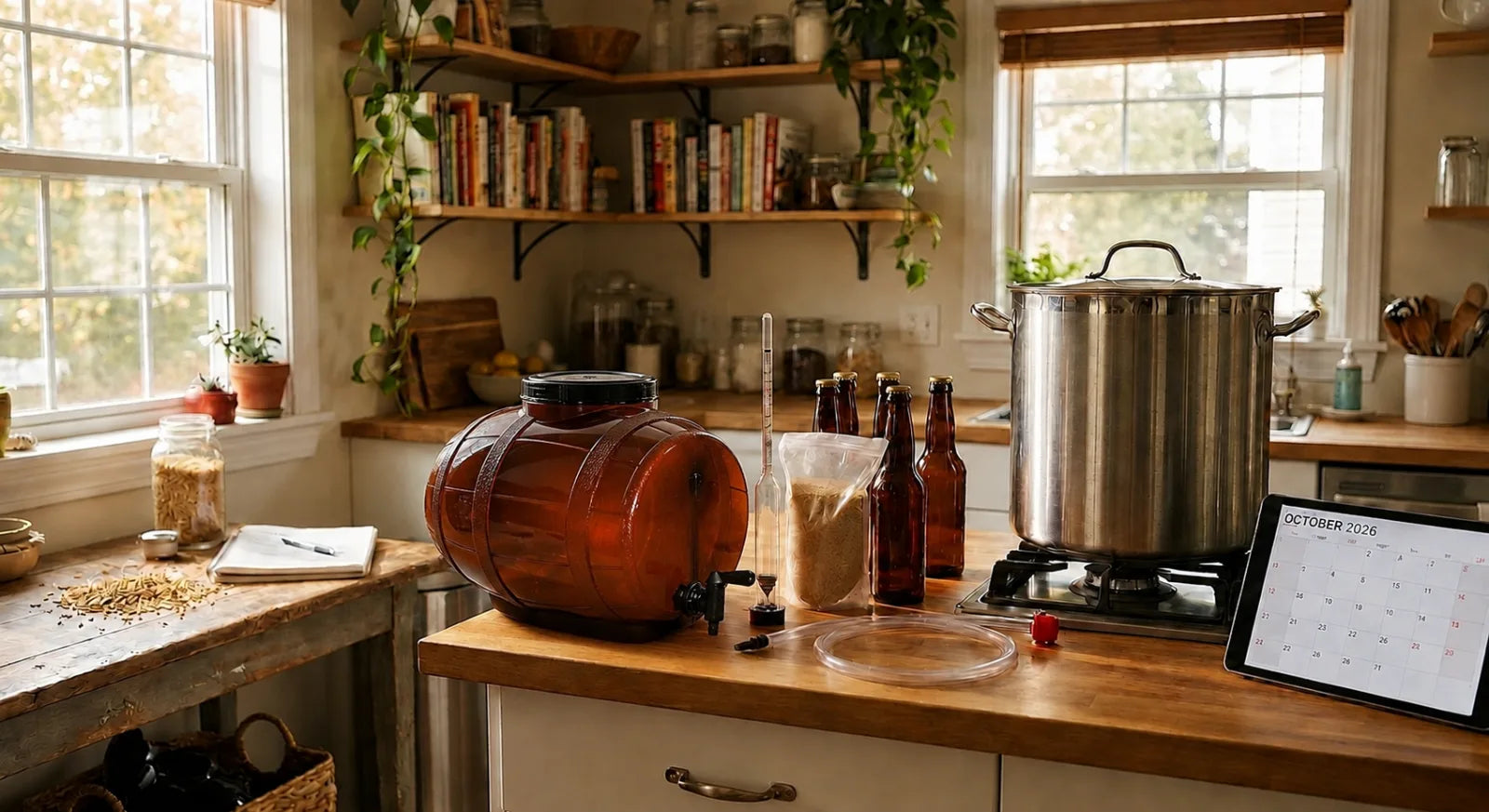
Homebrewing is worth it in 2026 if you want more than a cheaper way to put beer in the fridge. The real value comes from making something yourself, choosing the styles you want to drink, and reusing the same equipment for batch after batch.
If your only goal is getting beer with the least possible time and effort, buying a six-pack wins. If you like hands-on hobbies, experimenting with beer styles, and the idea of pouring a beer you actually brewed yourself, homebrewing starts to make a lot more sense.
- Homebrewing is most worthwhile when you enjoy the hobby and plan to brew more than once.
- Your biggest upfront expense is equipment; future batches reuse the fermenter, bottles, caps, and other brewing gear.
- A basic Mr. Beer brew day takes about 30 minutes, but fermentation and carbonation mean planning roughly 4–5 weeks ahead.
- Homebrewing is not guaranteed to be cheaper than buying beer because the answer depends on what you brew, what you normally buy, and how you value your time.
- A complete beginner kit lowers the barrier by bundling the brewing equipment, ingredients, bottling supplies, cleanser, and instructions into one setup.

Is Homebrewing Worth It in 2026?
For the right person, absolutely. But the reason matters.
Homebrewing is not simply a substitute for buying beer. It is a hobby that happens to produce beer at the end. You spend some money on equipment, put in a little hands-on time, wait while fermentation does most of the work, and eventually get to drink something you made yourself.
That makes it similar to cooking, baking, gardening, woodworking, or any other DIY hobby. You can usually buy the finished product faster. The fun is having a hand in making it.
If you are still deciding what kind of setup makes sense, our guide to choosing your first beer brewing kit breaks down the different beginner options before you buy.
Homebrewing vs. Buying Beer
There is no universal winner because the two experiences are fundamentally different.
| Factor | Homebrewing | Buying Beer |
|---|---|---|
| Upfront cost | Equipment plus your first ingredients | No equipment required |
| Ongoing cost | Refills, recipes, and bottling supplies | Retail price every time you buy beer |
| Brew-day time | About 30 minutes for a basic Mr. Beer refill | None |
| Time until you can drink it | Usually about 4–5 weeks | As soon as you get home |
| Beer selection | Choose what you want to brew | Choose from what is available to buy |
| Customization | Start simple and experiment more as you learn | None after purchase |
| Reusable equipment | Fermenter, bottles, caps, and hardware can be reused | Not applicable |
| Hobby value | A big part of the appeal | You are buying the finished product |
If convenience is your top priority, buying beer is easier. There is no serious argument otherwise.
Homebrewing wins when the process itself sounds enjoyable. You get a project, a little brewing knowledge, control over what style comes next, and eventually a fridge full of beer you made yourself.
How Much Does It Cost to Start Homebrewing?
The first batch costs more than later batches because that first purchase includes reusable equipment.
As of September 2026, the Mr. Beer Complete Bonus Beer Making Kit is $79.95 before any promotion. It includes the brewing equipment plus two separate 2-gallon refills, so you can brew two batches before you need another ingredient kit.
After those batches, you do not buy another complete brewing kit. Clean the reusable equipment, choose your next refill or recipe, and brew again.
What You Are Actually Paying for Upfront
A complete kit combines several things you would otherwise need to gather separately:
- A 2-gallon fermenter, lid, and spigot
- Reusable PET bottles and caps
- Brewing extract and yeast for the included beer
- Carbonation drops for bottling
- No-Rinse Cleanser
- Step-by-step brewing instructions
In the Complete Bonus Kit, you also get a second refill for your next batch.
What Does a Future Batch Cost?
Once you own the equipment, most of the cost shifts to the beer you want to brew next.
For example, a standard Mr. Beer refill includes the brewing extract, yeast, cleanser, and any included additions for that beer. Carbonation drops or another priming sugar are typically handled separately unless the specific product says they are included.
Refill and recipe prices vary based on the beer and ingredients, which is why there is no honest universal answer to, “How many batches until homebrewing pays for itself?”
A simple standard refill, a hop-heavy recipe, and a recipe with specialty grains and additional ingredients do not cost the same amount. Likewise, someone comparing homebrew to an inexpensive case of lager has completely different math from someone who normally buys $15 craft four-packs.
“If the only question is whether homebrewing beats the cheapest beer at the grocery store, you’re missing most of what makes brewing worth doing.”
Is Homebrewing Cheaper Than Buying Beer?
Sometimes, but not automatically.
Homebrewing becomes more economical after the equipment is already sitting in your kitchen because you are no longer buying a fermenter and bottles with every batch. But whether the finished beer is actually cheaper than what you normally purchase depends on several factors:
- The beer or recipe you choose to brew
- The amount you normally pay for commercial beer
- Whether you already own basic kitchen items used on brew day
- How frequently you brew and reuse your equipment
- Whether you count your hobby time as a financial cost
If you normally buy premium craft beer, the comparison can look very different from someone who buys inexpensive domestic lager.
That is why we would not choose homebrewing based on a promised break-even number. Choose it because you want to brew. Reusing the equipment and lowering your cost per batch over time is a nice bonus.
How Much Time Does Homebrewing Take?
The calendar makes homebrewing look much more time-consuming than it actually is.
For a basic Mr. Beer refill, brew day takes about 30 minutes. After that, the yeast takes over.
| Stage | Typical Basic Mr. Beer Timeline |
|---|---|
| Brew day | About 30 minutes |
| Fermentation | About 3 weeks |
| Carbonation | About 2 weeks |
| Ready to enjoy | Roughly 4–5 weeks total |
The exact timeline can change depending on the beer or recipe, so always follow the instructions for what you are brewing.
Most of those four or five weeks require no work from you. The beer is fermenting or carbonating while you go about your life.
If you want to see what actually happens during those stages, our How to Make Beer at Home guide walks through the process from sanitizing through bottling.

How Much Work Is Homebrewing?
There is some work involved. That is part of the hobby.
You need to sanitize your brewing equipment, mix the ingredients correctly, give the fermenter a suitable place to sit, bottle the beer, and clean your reusable equipment afterward.
What you do not need with a basic Mr. Beer setup is an all-day brew session, a giant brewing kettle, a garage full of specialty equipment, or years of brewing knowledge before your first batch.
Mr. Beer uses prepared Hopped Malt Extract to simplify the brewing process. The malt and hop balance has already been handled, so a basic brew day is much closer to following a recipe than building a beer from raw grain.
If the complexity of traditional homebrewing is what has kept you from trying it, read Why Mr. Beer Is the Easiest Way to Start Homebrewing.
What Do You Get Out of Homebrewing Besides Beer?
This is where the “worth it” calculation gets much harder to put into a spreadsheet.
You learn how fermentation works. You start recognizing differences between malt, hops, yeast, and beer styles. You get to experiment. You can brew seasonal beers before the season arrives, try something you cannot find locally, or make a batch specifically because it sounds fun.
You also get the satisfaction of handing someone a beer and saying, “I made that.”
That does not have a neat dollar value, but for a lot of homebrewers, it is the whole reason they keep brewing.
Is Mr. Beer Good for a First-Time Homebrewer?
Mr. Beer is designed specifically to remove some of the barriers that make traditional homebrewing intimidating for beginners.
A complete 2-gallon beer-making kit gives you a manageable batch size without requiring a full-size brewing system. The basic brewing process is straightforward, the equipment is reusable, and you can keep things simple or move into more involved recipes as your confidence grows.
The Complete Bonus Beer Making Kit is especially useful for someone who is not sure whether brewing will become a long-term hobby because it includes two batches.
Your first batch teaches you how the process works. Your second lets you do it again while everything is still familiar.

Want to see if homebrewing is for you?
Start with a complete kit, brew a style you actually like, and see how much fun making your own beer can be.
Who Gets the Most Value From Homebrewing?
Homebrewing tends to be especially worthwhile for people who:
- Like hands-on hobbies. If cooking, grilling, baking, gardening, or DIY projects are already your thing, brewing fits naturally into that world.
- Enjoy trying different beers. Reusable equipment lets you change styles from batch to batch instead of making the same beer forever.
- Want more control over what they drink. You choose what goes into the fermenter next and can move into more customizable recipes as you learn.
- Like sharing what they make. Homebrew has a way of becoming a conversation starter at cookouts, holidays, parties, and game days.
- Plan to brew repeatedly. The equipment becomes more useful every time you clean it, pick another refill, and start the next batch.
Who Probably Won't Get Much Value From It?
Homebrewing may not be worth it if you:
- Want beer immediately and dislike waiting.
- Have no interest in the brewing process itself.
- Do not want to clean or sanitize equipment.
- Only plan to brew once and never reuse the equipment.
- Are primarily looking for the absolute cheapest possible way to drink beer.
There is nothing wrong with any of those answers. Homebrewing is a hobby, and hobbies are only worthwhile when you actually enjoy doing them.
The Biggest Value: Your Equipment Is Reusable
This is the part beginners sometimes miss when comparing the price of a kit with the price of beer.
You do not throw the fermenter away when the first batch is finished.
The fermenter, bottles, caps, and other reusable brewing equipment are cleaned, sanitized, and used again. Your next purchase can simply be another compatible refill or recipe.
That gives you room to explore. Brew something light for summer, an Oktoberfest-style beer for fall, a darker beer for winter, or a hop-forward recipe because you feel like trying something different.
The equipment is the platform. The beer you put through it is what changes.
So, Is Homebrewing Worth It?
Yes, if brewing sounds like something you would enjoy doing more than once.
Do not start because somebody promised you every bottle will be cheaper than the store. Depending on what you brew and what you normally buy, that may or may not be true.
Start because making beer sounds fun.
A basic Mr. Beer batch takes about 30 minutes on brew day, most of the waiting happens without you doing anything, the equipment is reusable, and there are plenty of beer styles to explore once the first batch is gone.
If that sounds like your kind of hobby, then yes — homebrewing is very much worth trying.
FAQ
Is homebrewing beer worth it in 2026?
Yes, especially if you enjoy hands-on hobbies and plan to brew repeatedly. Homebrewing gives you reusable equipment, control over which beer styles you make, and the satisfaction of drinking something you brewed yourself. It is less appealing if your only goal is getting beer as quickly or cheaply as possible.
Is homebrewing cheaper than buying beer?
It can be, but there is no universal break-even point. The comparison depends on the cost of your equipment, which refill or recipe you brew, what commercial beer you normally buy, how often you reuse your equipment, and whether you count your hobby time as a cost.
How long does it take to brew beer with Mr. Beer?
A basic Mr. Beer brew day takes about 30 minutes. For many standard refills, fermentation takes about 3 weeks and carbonation takes about 2 weeks, putting the total timeline around 4–5 weeks. Always follow the instructions for the specific beer you are brewing.
Do I need brewing experience to start?
No. Mr. Beer Complete Beer Making Kits are designed for beginners and combine the core brewing equipment, ingredients, yeast, bottles, carbonation supplies, cleanser, and instructions needed to make the included batch.
What do I have to buy after my first Mr. Beer kit?
Your fermenter, bottles, caps, and other brewing equipment can be reused. For future batches, you mainly choose another refill or recipe and make sure you have the carbonation supplies and any other items required by that specific product.
Is Mr. Beer good for a first-time homebrewer?
Yes. Mr. Beer is built around manageable small batches, simplified brewing ingredients, reusable equipment, and step-by-step instructions. Complete kits remove much of the separate equipment and ingredient shopping that can make a first homebrew feel complicated.
Can I reuse a Mr. Beer brewing kit?
Yes. The fermenter, bottles, caps, and other reusable brewing equipment can be cleaned and sanitized for future batches. Once the included ingredients are gone, choose another compatible refill or recipe and brew again.
Does homebrewing require a lot of space?
Not necessarily. A 2-gallon brewing system is designed to work in a normal kitchen and needs a stable place for the fermenter away from direct sunlight and major temperature swings. You do not need a dedicated brewing room or garage to get started.


