

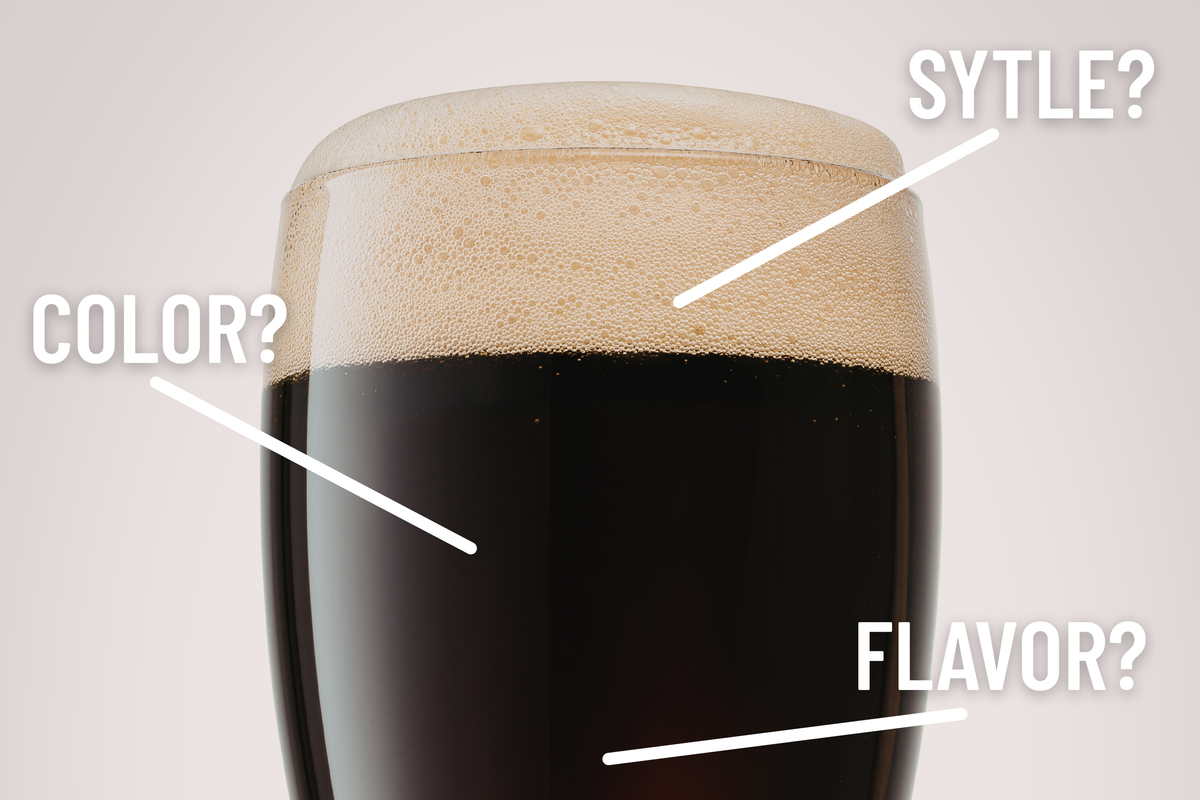
Dark beers are some of the most misunderstood styles in the beer world. Because of their deep brown and black color, many drinkers assume dark beer is heavy, high in alcohol, and full of calories. These common misconceptions often prevent people from discovering just how approachable, flavorful, and easy-drinking many dark beer styles truly are.
In reality, beer color alone says very little about how a beer tastes, feels, or drinks. Some dark beers, especially classic stouts and dark lagers, can be among the lightest in body, lowest in alcohol, and most sessionable beers available.
In this guide, we'll break down what makes a beer dark, debunk popular dark beer myths, explore common dark beer flavors, and explain why dark beers deserve a spot in every homebrewer's rotation.
What Makes a Beer Dark?
A beer's dark color comes from the malts used during brewing, not from added coloring, extra sugar, or higher alcohol content. Brewers create dark beer by using specialty malts that are kilned or roasted at higher temperatures for longer periods of time. This process triggers the Maillard reaction and caramelization, which produce darker colors and deeper flavors.
Even a small amount of dark malt can dramatically affect beer color. Similar to how bread becomes darker and more flavorful the longer it's toasted, brewing grains develop color and complexity through heat.
How Malt Roasting Affects Beer Color and Flavor
- Light to medium roasted malts: Brown to dark amber beer colors with caramel, toast, nutty, and chocolate notes
- Dark roasted malts: Deep brown to black beers with coffee and cocoa flavors
- Heavily roasted malts: Jet-black color with intense roasted, smoky, or slightly burnt characteristics
Key Factors That Influence Beer Color
- Dark malts: Chocolate malt, black malt, caramel, and crystal malts
- Grain type: Barley is most common; roasted barley is essential in many stout beers
- Roasting time and temperature: Longer and hotter roasting creates darker malts
- Adjunct ingredients: Coffee, cocoa, or molasses can deepen color and flavor
Dark Beer Myths: Does Dark Beer Mean Heavy?
Dark beer myths have existed for decades, but once you understand how dark beer styles are brewed, those assumptions quickly fall apart.
One of the most common misconceptions about dark beer is that a darker color automatically means a heavier body, higher alcohol content, and more calories. While this can be true for certain styles, it's far from a rule.
Myth #1: Dark Beer Is Always Strong
Many popular dark beer styles, such as dry Irish stout, are actually lower in alcohol than many pale ales or IPAs. Despite their bold appearance, these beers are often crisp, balanced, and easy to drink, making them ideal for homebrewers who want flavor without high alcohol levels.
Myth #2: Dark Beers Are Heavy and Filling
While some dark beers are rich and full-bodied, others, like dark lagers and schwarzbiers, are smooth, clean, and surprisingly light on the palate. Body is influenced more by ingredients, mash temperature, and yeast than by color alone.
Myth #3: Dark Beers Are Too Sweet
Dark beer does not automatically mean sweet beer. Many dark styles finish dry or balanced. Sweetness depends on fermentation, yeast selection, and residual sugars, not the beer's color.
What Do Dark Beers Taste Like?
One of the biggest reasons homebrewers love dark beer is the wide range of flavors these styles can offer. Depending on the malt bill and brewing technique, dark beers can be complex, smooth, bold, or refreshingly crisp.
Common Dark Beer Flavor Notes
- Coffee and espresso
- Dark chocolate and cocoa
- Caramel and toffee
- Toasted bread and nuts
- Dried fruit flavors like raisin or fig
More Than Just Roast
In styles like stout beer, roasted malts define the color, but they shouldn't overpower the flavor. Mid-colored and crystal malts add depth with notes such as:
- Caramel and toffee
- Biscuit and nutty flavors
- Toasted marshmallow, cake, and cookie
- Raisin and dried fruit aromas
Think of a great stout like a box of chocolates: dark on the outside, with a variety of flavors underneath.
The History of Stout Beer: From Porter to Modern Classic
Understanding the origins of stout beer helps explain why it remains one of the most popular dark beer styles today.
Stout beer originated in 18th-century England, where porter was the most widely consumed beer. Stronger versions were referred to as "stout porters," with the term stout originally describing strength rather than a separate beer style.
As brewing technology advanced in the 19th century, stouts became their own category. In 1817, the invention of the wheel drum kiln allowed brewers like Guinness to create black patent malt, giving stout its signature dark color and roasted flavor.
Today, stout beer is known as a dark, roasty, often creamy ale, while porter is generally lighter, malt-forward, and less intensely roasted, differences that homebrewers can easily explore in small batches.
Popular Dark Beer Styles to Try
- Dark Lager: Clean, smooth, and highly drinkable with subtle roasted malt flavors. Try It Here
- Black IPA: Combines dark malts with hop-forward bitterness and aroma.
- Stout: Dark, roasty, and complex; it ranges from dry and sessionable to rich and robust. Try It Here
- Porter: Lighter than stout with chocolate and caramel flavors and a softer roast. Try It Here
- Dunkel: A German dark lager with amber-to-brown color and mild malt sweetness. Try It Here
- Schwarzbier: A black German lager with a crisp finish and balanced chocolate and coffee notes. Try It Here
Why Dark Beers Are Perfect for Homebrewers
Dark beers offer incredible variety, approachability, and flexibility for homebrewers of all experience levels. Their appearance doesn't dictate how heavy, strong, or sweet they'll be, and many dark beer styles are just as easy-drinking as lighter beers.
The best way to understand dark beer is to brew and taste a few different styles. Focus on the flavors, not the color, and you may discover your new favorite beer hiding in the dark.
Ready to get started? Explore Mr. Beer dark beer kits, refills, and recipes, and see for yourself how approachable brewing dark beer at home can be.


