

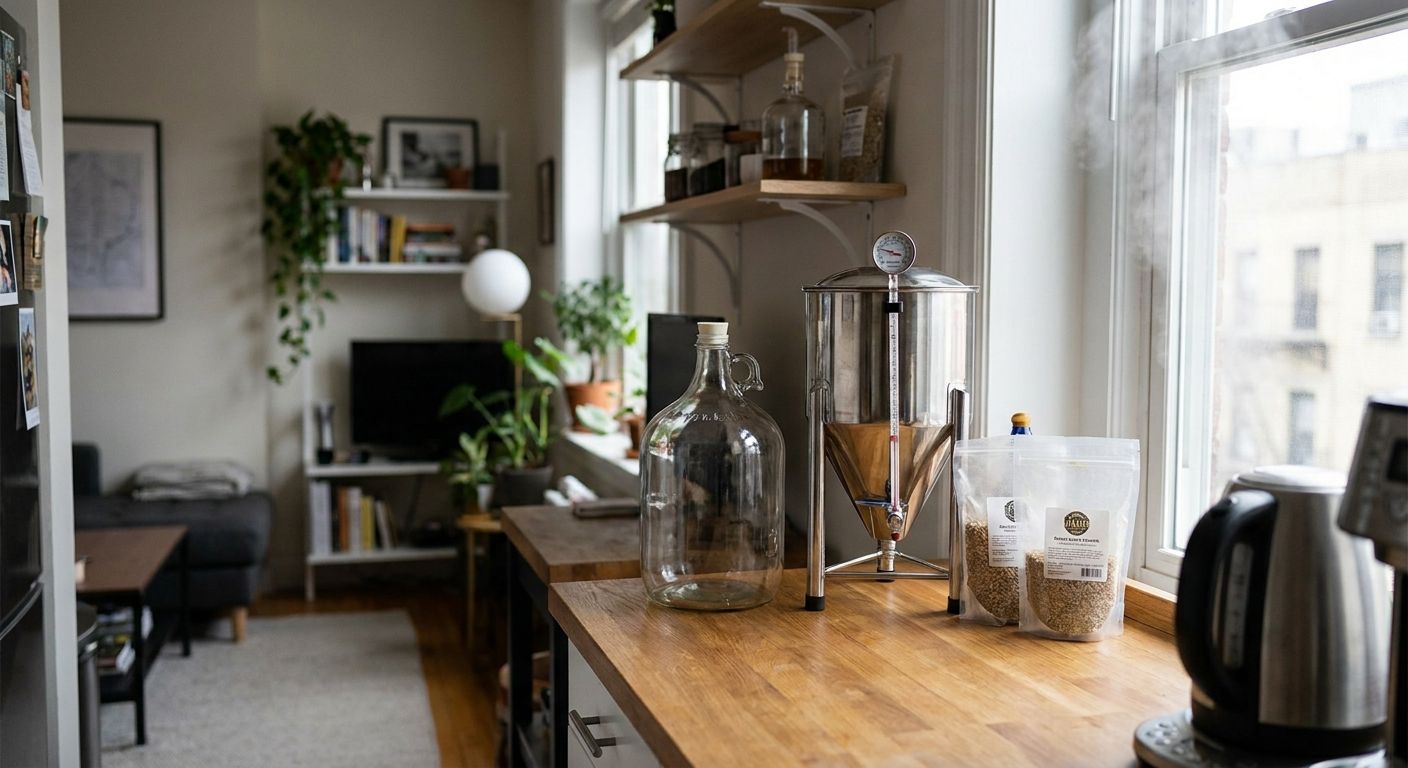
You don't need a basement, garage, backyard, or dedicated brew room to make beer at home.
If you've got a kitchen, a little storage space, and somewhere suitable for a fermenter to hang out for a few weeks, you've got enough room to brew.
The key to homebrewing in an apartment isn't finding some special apartment-only brewing method. It's simply working with the space you have: choosing a manageable batch size, planning where your fermenter and bottles will go, and keeping your brew day organized.
Here's how to make homebrewing work in a small apartment without turning your living room into a brewery.
- Yes, you can brew beer in an apartment. You don't need a basement, garage, or permanent brewing area.
- A 2-gallon batch is a great small-space starting point. It keeps the fermenter, bottling, and finished-beer storage manageable.
- Plan for two spaces: somewhere for the fermenter during fermentation and somewhere for bottles during carbonation and conditioning.
- Brew day doesn't have to take over your kitchen. Most Mr. Beer kits take about 30 minutes on brew day.
- A complete brewing kit helps reduce clutter. The equipment, ingredients, bottles, carbonation supplies, and cleanser are bundled together instead of requiring a collection of separate brewing gear.
Can You Really Brew Beer in an Apartment?
Absolutely.
Homebrewing sometimes gets pictured as a hobby involving giant kettles, glass carboys, buckets everywhere, and an entire garage full of equipment.
It can be that.
It doesn't have to be.
Small-batch extract brewing dramatically reduces the amount of equipment and working space you need. Instead of dedicating a room to brewing, you can brew in your kitchen, clean everything up afterward, and let the fermenter quietly do its job somewhere else in your apartment.
Once you start thinking about brewing as a temporary use of your kitchen rather than a permanent brewing installation, apartment homebrewing makes a lot more sense.
How Much Space Do You Need to Brew Beer?
Probably less than you think.
There are really three stages where space matters:
Notice what's not on that list: a permanent brewing station.
Your kitchen goes back to being your kitchen as soon as brew day is over.
Why 2-Gallon Batches Work So Well in Apartments
There's nothing magical about 2 gallons, but it's a really useful middle ground for a small space.
You make enough beer for the batch to feel worthwhile, while keeping everything else more manageable.
- Smaller fermenter: Easier to find an appropriate indoor location during fermentation.
- Fewer bottles: Less space needed during carbonation and storage.
- Less brewing equipment: Easier to pack everything away between batches.
- More variety: Finish one batch and brew something different instead of working through a large volume of the same beer.
- Easy brew day: You're working with normal kitchen-scale equipment instead of building your kitchen around the brew.
If you're still deciding what size system makes sense, our guide to the best beer brewing kits for beginners goes deeper into batch sizes and first-kit choices.
Pick Your Fermentation Spot Before Brew Day
This might be the single best apartment-brewing habit you can develop.
Before you mix anything, decide where your fermenter is going to spend the next few weeks.
You want a spot that's:
- Stable and unlikely to get bumped or moved
- Out of direct sunlight
- Away from major heat sources or cold drafts
- Within the recommended fermentation temperature for the beer you're brewing
- Somewhere you can leave it alone while fermentation does its thing
You don't need to hover over the fermenter. In fact, one of the nice things about homebrewing is how little attention the beer needs once fermentation starts.
Give it a good home and let the yeast work.
Set Up Brew Day Like a Small Kitchen Workflow
When counter space is limited, organization matters more than square footage.
Before you start brewing, clear the section of counter you'll use and get everything you need together.
- Fermenter, lid, and spigot
- Brewing extract and yeast
- Clean pot
- Spoon or whisk
- Measuring cup
- Cleanser and sanitizing solution
- Water
- A clean towel for ordinary kitchen cleanup — not for drying sanitized brewing equipment
Sanitize first, brew second, clean up as you go.
With a Mr. Beer Complete Kit, brew day is typically about 30 minutes. Once the wort is in the fermenter and the yeast has been added, you can clean the kitchen and reclaim your counter.
If you've never brewed before, our How to Make Beer at Home guide walks through the whole process.
Don't Forget About Bottle Storage
The fermenter gets most of the attention when people think about brewing in a small space.
The bottles are just as important.
After fermentation, your beer needs to be bottled, carbonated, and conditioned. That means you'll need an appropriate place for the filled bottles for a couple of weeks before they're ready to chill and drink.
This is another reason a small batch is so apartment-friendly.
With fewer bottles to manage, it's easier to keep your brewing hobby from spreading into every available corner of your home.
And once bottles go into the refrigerator and start disappearing for completely mysterious reasons, storage becomes less of an issue.
Does Brewing Beer Make Your Apartment Smell?
Yes, there can be some brewing aromas — but you are not installing a commercial brewery next to your couch.
During brew day, you'll smell warm malt and wort. Depending on what you're brewing, you may also notice some yeast and fermentation aromas while the beer is active.
For a small homebrew batch, those aromas are generally just part of the brewing process rather than a permanent apartment air freshener.
Keep your brewing equipment clean, follow proper sanitation practices, and keep the fermenter assembled according to the instructions.
And if your kitchen smells a little like beer on brew day?
There are worse problems.
What About Temperature in an Apartment?
You don't need a fermentation refrigerator just because you live in an apartment.
You do need to pay attention to the recommended fermentation range for the beer you're making.
Apartment temperatures can move around during the day, especially near windows, exterior walls, heating vents, or air-conditioning vents. That's why your fermentation location matters.
Choose the most stable suitable spot available and avoid assuming that the temperature next to a sunny window is the same as the temperature in the middle of the room.
If your kit includes a thermometer strip, use it. If it doesn't, an inexpensive room thermometer can help you understand the space you're working with.
How to Keep Brewing Equipment From Taking Over Your Apartment
The secret is surprisingly simple:
Give your brewing equipment one home.
Once your beer is bottled, wash and dry the reusable equipment according to the care instructions and store your brewing pieces together rather than scattering them across the kitchen.
Your fermenter can hold smaller brewing items while it's not in use. Keep compatible supplies together, and you'll have a brewing setup you can pull out when you need it and put away when you don't.
That's much easier than discovering six months later that your bottling caps are in one cabinet, your cleanser is somewhere else, and your brewing spoon has apparently joined the witness protection program.
What Kind of Beer Should You Brew in an Apartment?
Whatever you're excited to drink.
Living in an apartment doesn't limit you to one beer style.
You can brew a light, crisp beer, an amber ale, wheat beer, IPA, malt-forward lager-style beer, or move into more involved recipes as you gain experience.
The important thing is following the instructions and fermentation recommendations for the specific beer you're making.
If you haven't figured out your first style yet, check out our beginner's guide to beer styles.
Good Brewing Kits for Small Spaces
You don't need a special "apartment brewing kit." You simply want a setup that matches the amount of space you're comfortable dedicating to the hobby.
For most new apartment brewers, we'd look at these three options.


If you'd rather compare the entire lineup, browse our beer-making kits for beginners.
What About a 5-Gallon Brewing Kit?
You can absolutely brew a larger batch in an apartment if you have the room.
The question isn't whether apartment brewing has some imaginary 2-gallon limit. It's whether you want to dedicate the additional space to a larger fermenter and the bottles required for a full-size batch.
The Coopers DIY 5 Gallon Complete Beer Making Kit, for example, uses a full-size brewing system designed around a 23-liter batch.
That's a lot more beer — which can be fantastic.
It's also a lot more beer that needs somewhere to ferment, carbonate, and wait patiently for you to drink it.
If you have the room, go for it.
If you're measuring your available storage in fractions of closets, 2 gallons probably makes more sense.
Apartment Brewing: 2 Gallons vs. Full-Size
| Consideration | 2-Gallon Setup | Full-Size Setup |
|---|---|---|
| Fermentation space | More compact | Requires more dedicated room |
| Bottle storage | Easier to manage | More bottles to condition and store |
| Beer per batch | Smaller batch | Significantly more beer |
| Style variety | Easy to switch styles frequently | More of one beer to finish first |
| Best fit | Studios, apartments, beginners, variety seekers | Larger apartments and brewers who want bigger batches |
Frequently Asked Questions About Brewing Beer in an Apartment
Can you brew beer in an apartment?
Yes. You don't need a basement, garage, or dedicated brewing room. A compact brewing setup can be used in a normal kitchen, while the fermenter can stay in a suitable indoor location during fermentation.
How much space do I need to brew beer in an apartment?
You need temporary kitchen workspace on brew day, a stable indoor location for your fermenter during fermentation, and enough room for the filled bottles during carbonation and conditioning. A 2-gallon system keeps all three stages relatively compact.
Do I need a basement to homebrew beer?
No. A basement is not required. Your fermenter simply needs an appropriate indoor location away from direct sunlight and extreme temperature changes and within the recommended fermentation range for your beer.
Does homebrewing make an apartment smell?
Brewing can produce noticeable malt aromas on brew day and some yeast or fermentation aromas while the beer is active. With a small batch, clean equipment, and a properly assembled fermenter, those aromas are generally a manageable part of homebrewing.
Is a 2-gallon beer-making kit good for an apartment?
For many apartment brewers, yes. A 2-gallon system keeps the fermenter and finished batch manageable while still producing enough beer to make brewing rewarding. It also makes it easier to brew different styles more frequently.
Can I brew 5 gallons of beer in an apartment?
Yes, if you have enough suitable space. A full-size brewing system requires more room for fermentation and considerably more bottle storage after fermentation, so plan for the entire process before choosing a larger batch size.
How long does homebrewing take?
For most Mr. Beer Complete Kits, brew day takes about 30 minutes. A typical batch then ferments for about three weeks and carbonates for about two weeks, with most beers ready to enjoy after roughly 4–5 weeks total.
What is the best beer brewing kit for a small apartment?
For most beginners with limited space, we'd recommend starting with a complete 2-gallon brewing system. The Complete Bonus Beer Making Kit includes the equipment plus two beer refills, while a standard Mr. Beer Complete Kit is a straightforward choice if you only need one first batch. The Coopers DIY 2 Gallon Kit is a good option if you want additional brewing tools while staying with a compact batch size.
You Don't Need a Bigger Home. You Just Need a Brewing Plan.
Living in an apartment shouldn't keep you from brewing your own beer.
Start small. Clear the kitchen for brew day. Choose your fermentation spot before you begin. Plan where your bottles will condition. Keep your equipment together between batches.
That's really it.
A compact brewing setup lets you enjoy the full homebrewing process without permanently giving up half your living space to the hobby.
And once you've brewed your first batch, you may discover the real apartment-brewing problem:
figuring out where you're going to put all the beer you want to brew next.
Ready to start brewing?
Explore compact, beginner-friendly beer-making kits and find the setup that fits your space.


