

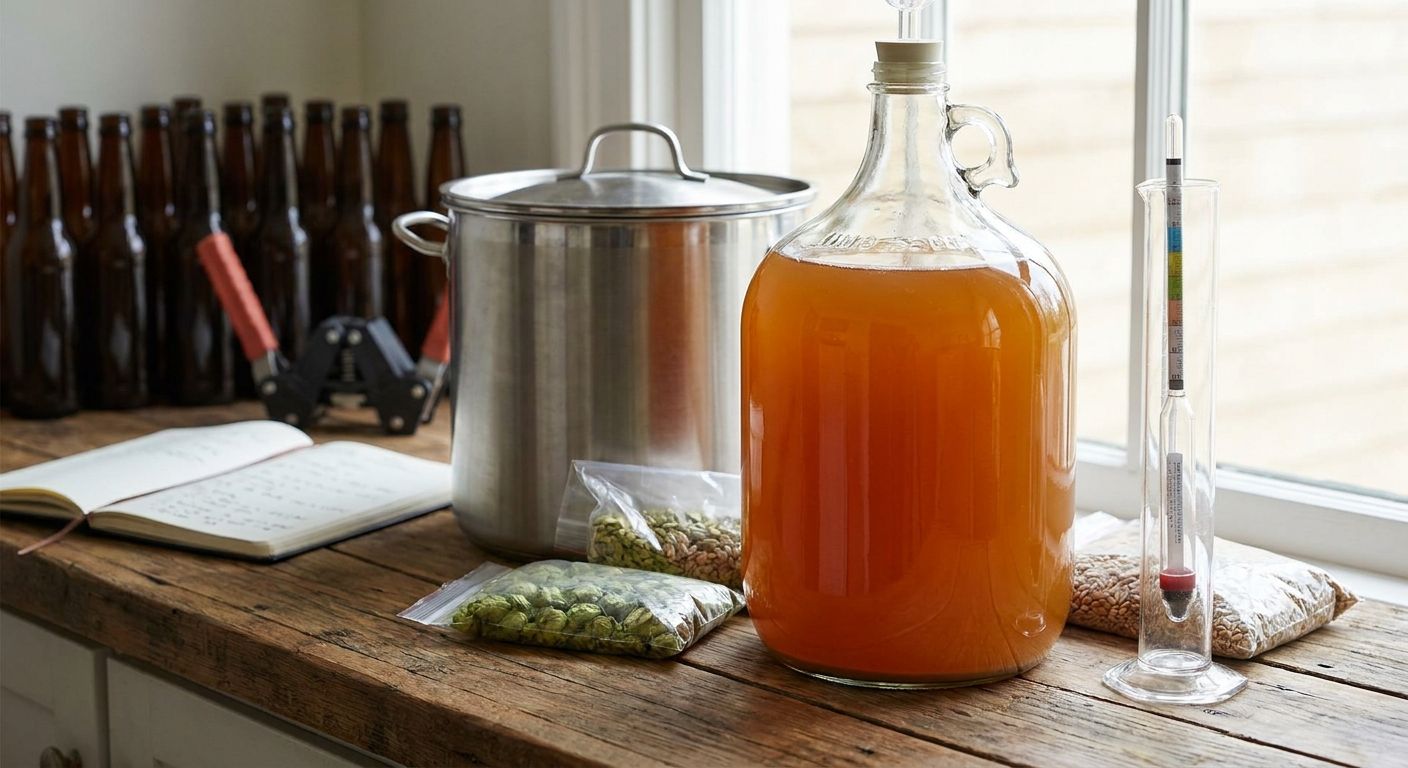
Homebrewing beer is worth it in 2026 if you plan to brew more than one or two batches, enjoy a hands-on kitchen hobby, and want flavor control that store shelves don't offer. It's a weaker deal if you only want to try it once, because equipment costs land upfront and only get spread out as you keep brewing. Add in the wait — one to two weeks of fermentation plus two to three weeks of conditioning — and the real payoff shows up after your second or third batch, not your first.
- Homebrewing is worth it in 2026 for repeat brewers who enjoy the process, not just the beer.
- Equipment costs land upfront; per-batch costs drop only after two or three batches.
- Fermentation and conditioning add three to five weeks before your beer is ready to drink.
- Mr. Beer's complete kits combine equipment and a recipe kit so beginners skip separate shopping.
- Hidden costs include sanitizer, carbonation drops, and replacement yeast between batches.
Why this matters
Search interest in "is homebrewing worth it" spikes right before someone clicks buy on a starter kit — it's a decision question, not a curiosity question. The honest answer depends less on a single dollar figure and more on how often you plan to brew, whether you actually like the process, and how much space you have for a fermenter and a case of bottles.
If you're still comparing options before buying, start with choosing your first beer brewing kit — it breaks down what separates a complete kit from a bare-bones one. The rest of this page walks through where homebrewing earns its keep in 2026 and where it doesn't, so you're not guessing based on one dollar figure someone else quoted online.
Is homebrewing worth it in 2026?
Yes, for most people who plan to keep brewing — homebrewing worth it comes down to repeat use, not a one-time purchase. The table below compares homebrewing against buying craft beer across the factors that actually move the answer one way or the other.
| Factor | Homebrewing | Buying Craft Beer |
|---|---|---|
| Flavor control | You choose the recipe, yeast, and conditioning time | Limited to what's already bottled |
| Cost over time | Drops per batch once equipment is paid off | Stays flat, tied to retail markup |
| Time to first taste | Three to five weeks (fermenting plus conditioning) | Same day |
| Effort required | Sanitizing, following steps, bottling | None |
| Hobby value | Ongoing project you can tweak each batch | One-time purchase, no involvement |
The table makes one thing obvious: homebrewing isn't a faster or more convenient way to get a beer. It's a slower, more hands-on way to get a beer you had a say in making, and that trade only pays off if you plan to make that trade more than once.
Why the answer varies from brewer to brewer
- How often you plan to brew — one batch rarely justifies the equipment cost; three or four batches usually do.
- What you already own — a spare pot, bottles, or a stable closet-temperature spot cuts your starting costs.
- Whether you like the process or just the product — some people want the hobby itself, others just want cheaper beer.
- Your available space — fermenters need a stable spot away from direct sun and heat sources, not necessarily a dedicated room.
- Your taste for experimenting — brewers who like trying new recipes get more out of the hobby than brewers who'd rather buy the same six-pack every week.
What the sticker price doesn't include
The cost of a starter kit is only part of the picture. Between batches, most homebrewers restock a handful of consumables that don't come bundled with every kit:
- Sanitizer or no-rinse cleanser for equipment between brews
- Carbonation drops for bottling
- Replacement yeast if you're switching styles or your original packet expires
- New recipe kits or extract refills once you've used the ones included in your starter kit
None of these costs are large individually, but they're the reason the "is it worth it" math only works out over multiple batches, not one.
Is homebrewing cheaper than buying beer?
Homebrewing gets cheaper than buying craft beer only after the equipment pays for itself, which typically takes two or three batches, not one. The first batch carries the full weight of the fermenter, sanitizer, and bottles, so judging the cost of homebrewing from a single brew overstates the price and understates the long-term value.
After that initial batch, the ongoing cost is mostly ingredients and consumables — the fermenter, bottles, and most hardware get reused. That's the same logic behind any hobby with upfront gear: a stand mixer isn't cheap the first time you bake bread, either, but it stops being the deciding cost by the tenth loaf.
“The first batch teaches you whether you like brewing beer; the second batch teaches you whether it's worth the cost.”
How much time does homebrewing beer take?
Plan on one to two weeks of active fermentation and another two to three weeks of conditioning before a batch is ready to drink — roughly three to five weeks total in 2026, which hasn't really changed over the years. Hands-on brew day work is a small fraction of that timeline; most of the calendar time is the beer sitting still while yeast does its job.
Extract-based brewing, the method behind Mr. Beer's kits, shortens the hands-on brew day compared with all-grain methods that involve mashing grains for hours. It doesn't shortcut the waiting time fermentation and conditioning require, though — that part of the timeline is set by the yeast and the style, not the brewing method.
Is Mr. Beer good for a first-time homebrewer?
Mr. Beer's complete kits pair the equipment and a recipe kit together, which removes the separate-shopping step that trips up a lot of first-time brewers trying to piece together a fermenter, sanitizer, and ingredients from different sources. A kit like the complete kit with two refills sets you up for two batches, which is usually enough to know whether the hobby fits your routine before you buy anything else.
The honest downside: complete kits still require the same fermentation and conditioning wait as any other homebrewing method, and the learning curve — sanitizing properly, following steps in order, bottling without introducing oxygen — takes a batch or two to get comfortable with. Neither of those is unique to Mr. Beer; they're part of homebrewing at any entry point.
Ready to brew your first batch?
Browse Mr. Beer's complete kits built for beginners.
Who gets the most value from homebrewing
Not every beer drinker gets equal value out of picking up the hobby. A few profiles tend to get the most out of it in 2026:
- People who already drink beer regularly and want more say over flavor than what's on the shelf.
- Hobbyists who like DIY projects with a tangible, drinkable result at the end.
- Anyone shopping for a gift for someone who mentioned wanting to try brewing, since a complete kit removes the guesswork of picking separate pieces.
- Small-space brewers who assumed homebrewing needs a garage or a dedicated room, when a stable closet or cabinet spot is usually enough.
If none of those describe you and you're only curious about the process, that's still a fine reason to try one batch — just go in knowing the value curve gets better on batch two, not batch one.
One last thing
The step beginners skip most often isn't sanitizing — it's carbonation. Skipping carbonation drops or measuring them incorrectly is one of the most common reasons a homebrew turns out flat, and it happens after weeks of otherwise careful brewing. Check your recipe kit's instructions for the correct amount before you cap the last bottle — it's a five-minute step that decides whether the whole three-to-five-week wait was worth it.
FAQ
Is homebrewing beer worth it in 2026?
Homebrewing is worth it in 2026 if you plan to brew more than one or two batches and enjoy the process of making beer, not just drinking it. The value comes from spreading equipment costs across repeat batches, so a single trial batch rarely reflects the real payoff.
Is homebrewing cheaper than buying beer?
Homebrewing gets cheaper than buying craft beer only after two or three batches, once the equipment cost is paid off. Judging the cost from a first batch alone overstates the price of the hobby.
How long does it take to homebrew a batch of beer?
A typical batch needs one to two weeks of fermentation and two to three weeks of conditioning, roughly three to five weeks total before it's ready to drink. Hands-on brew day work is a small fraction of that timeline.
Do I need brewing experience to start homebrewing?
No — complete kits that pair equipment with a recipe kit are built so beginners can follow the steps without prior brewing knowledge. The learning happens over your first couple of batches, not before you start.
What ongoing costs come with homebrewing after the first kit?
Expect to replace recipe kits, carbonation drops, and cleaning or sanitizing supplies between batches. Equipment like the fermenter and bottles typically gets reused across many batches.
Is Mr. Beer good for a first-time homebrewer?
Mr. Beer's complete kits combine the equipment and a recipe kit in one purchase, which removes the separate-shopping step that slows down many first-time brewers. The main decision left is which beer style to start with.
Can I reuse my homebrewing equipment for future batches?
Yes, fermenters, bottles, and most hardware are reusable across many batches when cleaned and sanitized properly between brews. Consumables like yeast, carbonation drops, and cleaning solution need replacing each time.
Does homebrewing take up a lot of space?
Homebrewing needs a stable spot away from direct sun and heat sources for fermenting, plus storage for bottles during conditioning, but it doesn't require a dedicated room. Small-space brewers typically fit equipment into a closet or cabinet.


