

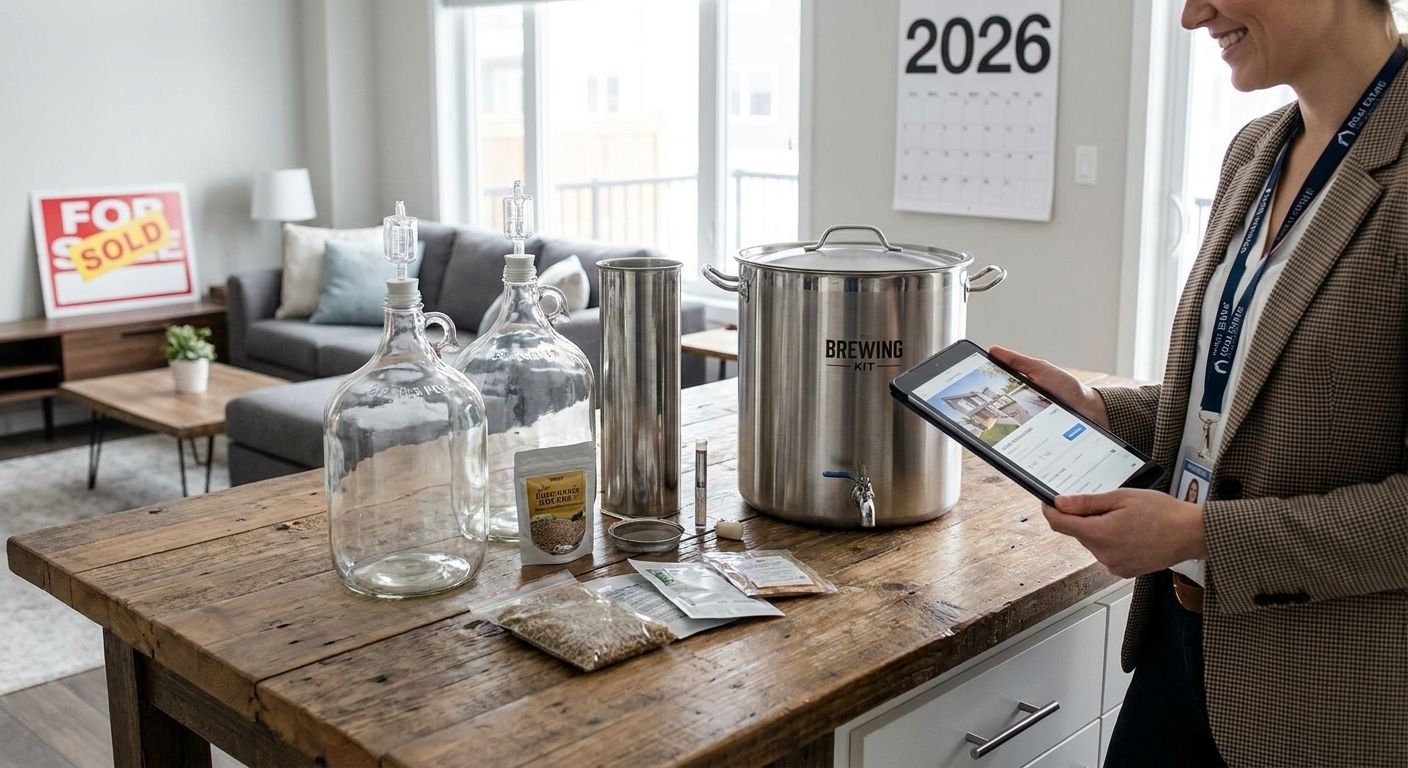
Real estate agents who take up home brewing get a hobby that runs on its own schedule instead of theirs, and a finished batch worth handing to a client at closing. Home brewing kits for real estate agents work because the process tolerates gaps between showings, open houses, and closing paperwork better than most weekend hobbies do. What's different for this segment isn't the equipment — it's picking a batch size, recipe, and routine that survive a week where three showings get rescheduled.
- Home brewing kits for real estate agents work best when batch size matches an unpredictable weekly schedule.
- A starter kit with equipment and two refills gives a new brewer two finished batches before deciding if the hobby sticks.
- Recipe refills, not new equipment, are the cheaper path to a second and third batch once you own a fermenter.
- A root beer kit covers clients who don't drink alcohol without changing your brewing routine.
- Skipping the cleaning step to save ten minutes before a showing is the fastest way to lose a batch.
Why home brewing matters for real estate agents
Agents don't have a fixed workday. Closings run long, open houses eat Saturdays, and a slow Tuesday can turn into three back-to-back showings with no warning. A hobby that demands daily attention gets abandoned by March.
Home brewing fits that reality because the active work happens in short bursts — brew day, then a bottling day later — with the fermenter doing its work unattended in between. A starter kit with equipment and two refills gets a first-time agent-brewer through two full batches before they've spent a dime on separate gear, which is enough to find out whether the hobby earns a permanent spot in the garage or basement.
There's a second reason this segment brews: closing gifts. A bottle of something you made yourself reads as more personal than a bottle of wine picked up at the grocery store on the way to the signing table, and it gives agents a repeatable, low-cost gift they control from start to finish.
How to start home brewing on an agent's schedule
Match your batch size to your calendar, not the other way around
Don't plan a brew day around a hoped-for open week. Plan it around the slowest day you actually have this month.
- Pick a weekday evening or Sunday afternoon with no scheduled showings
- Treat brew day as roughly an hour of active work, not a half-day project
- Block bottling day on the calendar the same way you'd block a closing
- Read through a beginner brewing kit guide once before your first batch so nothing on brew day surprises you
Choose a recipe based on what people actually drink, not what sounds impressive
A lot of first-time brewers pick the most complex style on the shelf and then wonder why nobody at the closing table finishes the bottle. Brew what your clients and your own household actually reach for.
- Go with a light, broadly drinkable style if you're brewing mainly to gift
- Pick a bolder style — a stout, a porter, an amber — if you and your regular drinkers prefer more flavor
- Keep a root beer kit on hand for clients who don't drink alcohol at all
- Don't chase a style just because it sounds more advanced; similar kits mostly differ by flavor, not difficulty
Set up a fermentation spot before brew day, not after
Where the fermenter sits matters more than most new brewers expect.
- Pick a spot out of direct sun and away from major temperature swings
- Keep it clear of cleaning chemicals, paint, or anything with strong fumes
- Choose a stable surface, not a shelf that gets bumped during a busy week
- Avoid spots near plumbing leaks or a water heater
Learn the cleaning and sanitizing routine before you brew, not during
This is the step agents skip when a showing runs fifteen minutes over, and it's the one that ruins the batch.
- Wash every piece that touches the beer with a dedicated cleanser before it touches wort
- Sanitize right before use, not hours ahead
- Keep a no-rinse cleanser or similar product on the shelf so there's no excuse to shortcut this step
- Rinse tools that came in contact with chemical cleaners before sanitizing
Check on fermentation without babysitting it
Fermentation doesn't need daily monitoring, which is exactly why this hobby suits agents.
- Check the fermenter briefly once a day or every other day, not on a strict schedule
- Watch for airlock activity as a rough signal that fermentation is underway
- Follow the timeline printed on your specific kit's instructions rather than guessing
- Resist the urge to open the lid repeatedly to check progress
Bottle and carbonate on a day you control
Bottling day is the one step that needs to happen on time, even during a busy closing week.
- Pick a bottling day when you have an uninterrupted stretch, not a squeezed-in half hour
- Use carbonation drops as directed on your specific kit rather than guessing at sugar amounts
- Label bottles with the brew date if you're planning to gift them later
- Store finished bottles somewhere stable until they're ready to hand out
Build a simple client-gift routine around finished batches
Once a batch is bottled and ready, treat it like part of your closing process instead of an afterthought.
- Keep a small stock of finished bottles on hand ahead of a busy closing month
- Pair a bottle with a card rather than presenting it as the whole gift
- Confirm a client drinks before handing over anything with alcohol in it
- Have a non-alcoholic option ready for clients who don't
Comparing your starter options
| Option | Best for | Process complexity | Key limitation |
|---|---|---|---|
| Complete starter kit (equipment + 2 refills) | Agents brewing their first batch with no gear yet | Low — equipment and recipe extract included | Two batches, then you're buying refills separately |
| Recipe refill (own equipment) | Agents who already have a fermenter and want a new flavor | Low — same process, new recipe | Requires equipment purchased separately first |
| Ingredient-level brewing (extract, hops, yeast bought individually) | Agents who've brewed a few batches and want more control | Moderate — more decisions per batch | Takes longer to plan and more room for a mistake |
| Non-alcoholic kit (root beer) | Agents who want a gift option for non-drinking clients | Low — similar process to beer kits | Not a substitute if the goal is an alcoholic gift |
The starter kit with equipment and two refills is the right call for most agents brewing their first batch in 2026 — it removes the equipment decision entirely and gives you two chances to see if the routine fits your week.


Mistakes real estate agents make with their first batch
- Starting a batch right before a heavy closing week. Fermentation and conditioning don't pause because three showings got scheduled back to back.
- Storing the fermenter near paint, cleaning chemicals, or a hot garage wall. Fumes and heat swings are two of the easiest ways to throw off a batch that was otherwise going fine.
- Handing bottles to clients before conditioning is finished. A gift that's rushed out the door before it's ready undercuts the whole point of brewing it yourself.
- Skipping sanitizing because a showing ran long. This is the single most common shortcut new brewers take, and it's the one most likely to spoil the batch.
- Buying a bigger, multi-batch setup before finishing a first batch. Confirm the routine actually fits your schedule before scaling up equipment or refill stock.
“A brew day pushed back by a slow week doesn't ruin a batch. A bottling day skipped for a showing might.”
FAQ
Is home brewing a good hobby for real estate agents with unpredictable schedules?
Yes — fermentation runs largely unattended between brew day and bottling day, so it fits around showings and closings better than hobbies that need daily attention. The two active steps, brewing and bottling, each take about an hour and can be scheduled around your calendar.
Can I give homemade beer as a closing gift to clients?
Yes, as long as you confirm the client drinks alcohol first. A bottled batch you made yourself reads as more personal than a store-bought bottle, and pairing it with a card keeps the gesture from feeling like the entire gift.
Do I need to check on the fermenter every day?
No — a quick check every day or two is enough during fermentation. Follow the timeline printed on your specific kit's instructions rather than opening the lid repeatedly to check progress.
What's the easiest way for a busy agent to pick a first beer style?
Pick a style you and your usual drinkers already enjoy rather than the most complex option on the shelf. Similar recipe kits mostly differ by flavor, not by how hard they are to brew.
Is there a non-alcoholic option for clients who don't drink?
Yes — Mr. Beer sells a root beer kit that follows a similar process to a beer kit, so it fits the same routine without adding alcohol to the gift.
How long before a batch is ready to give away?
Timing depends on the specific recipe and the instructions included with your kit, so check those before planning a gift date around a closing. Don't rush bottling or conditioning just to hit a deadline.
What's the difference between a complete kit and a refill?
A complete kit includes the equipment plus a recipe extract to brew your first batch from scratch. A refill is just the recipe extract for another batch once you already own the equipment.
Do I need much space for a home brewing setup?
A home brewing setup takes up relatively little room compared to full-scale equipment, but the exact footprint depends on the specific kit, so check current product details before assuming it will fit a given spot.
One last thing
The agents who stick with home brewing past their first batch aren't the ones who bought the most gear in 2026 — they're the ones who matched batch size to their actual week and didn't skip the cleaning step when a showing ran long. Start with the starter kit, run through two batches, and only then decide if a bigger setup earns a spot in the garage.


