

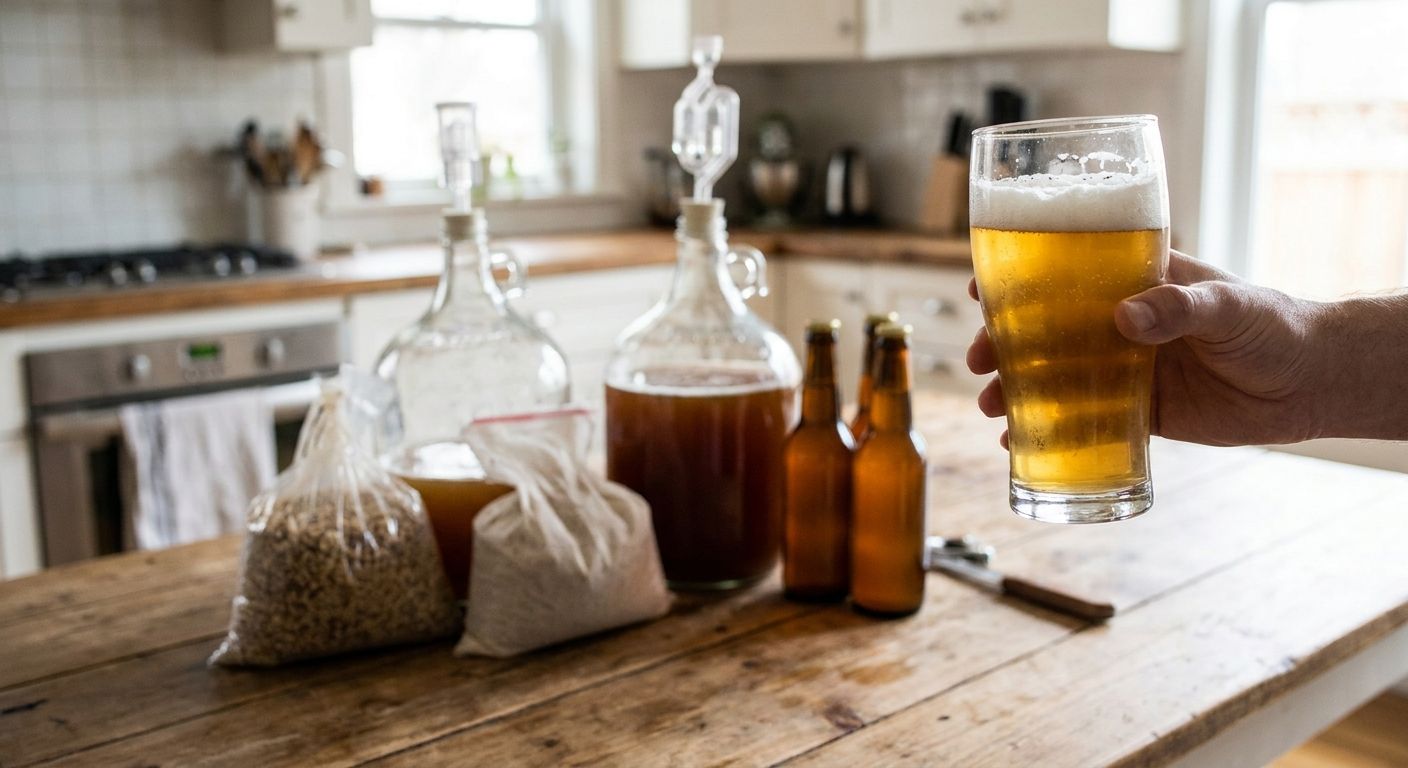
Yes, homemade beer is safe to drink in 2026 when it's brewed and bottled with clean, sanitized equipment — beer's alcohol content, low pH, and hop compounds create an environment that's hostile to the bacteria responsible for foodborne illness, a fact well established in food science literature on fermented beverages. The real risk in home brewing isn't a mystery pathogen, it's a badly sanitized batch that tastes sour or moldy, or a glass bottle that over-carbonates and cracks under pressure.
- Homemade beer is safe to drink when brewed with sanitized equipment — alcohol and low pH stop the bacteria linked to food poisoning.
- The actual homebrew risks are spoilage that ruins flavor and over-carbonated bottles, not illness.
- A batch that smells like nail polish, vinegar, or rotten eggs is spoiled and should be dumped, not a health emergency.
- Standard sanitizing practices before every brew and bottling session close the gap between hobby homebrew and commercial beer.
Why This Question Comes Up
First-time brewers hear "fermentation" and picture something going wrong in a sealed container on the kitchen counter. That instinct is reasonable — most people don't ferment their own food at home. But beer has been brewed and stored safely for centuries precisely because the fermentation process itself works against harmful microbes, not for them.
The short version: yeast converts sugar into alcohol and carbon dioxide, and both of those byproducts, plus the acidity that develops during fermentation, make it very hard for pathogenic bacteria like E. coli, Salmonella, or Listeria to survive in beer. That's a documented characteristic of fermented alcoholic beverages generally, not a claim specific to any one kit or brand.
Is Homemade Beer Safe to Drink? What Actually Protects You
The protection against illness in homebrewed beer comes from a combination of factors that are present in essentially every batch, whether it's a five-gallon carboy or a small-batch kit:
- Alcohol content — even a modest-strength beer has enough alcohol to inhibit most bacteria that cause foodborne illness.
- Low pH — the acidity that develops during fermentation is inhospitable to the bacteria found in contaminated food and water.
- Hop compounds — hops contain antimicrobial compounds that further suppress unwanted bacterial growth, which is part of why hops became standard in brewing long before refrigeration existed.
- An anaerobic environment — active fermentation produces carbon dioxide that displaces oxygen, and most spoilage organisms that could cause a real health problem need oxygen to thrive.
None of this means every batch turns out drinkable — it means a botched batch is far more likely to taste bad than to make you sick. That distinction matters more than most beginners realize.
Why Sanitation Matters More Than Anything Else
If beer's own chemistry handles pathogens, what's the actual job of sanitizing your equipment? Preventing wild yeast and spoilage bacteria from getting into the beer before fermentation has a chance to protect it. Unsanitized gear is the single biggest source of off-flavors in home brewing — not because it's dangerous, but because it wrecks the batch.
Standard practice for any home brewer:
- Clean all equipment that touches the beer after the boil — fermenter, spoon, airlock, bottles.
- Sanitize those same items immediately before use, since cleaning and sanitizing are two different steps.
- Avoid touching sanitized surfaces with hands, towels, or anything that hasn't also been sanitized.
- Re-sanitize bottling equipment separately from fermentation equipment — it's a second contamination window.
A no-rinse cleanser simplifies that last step because there's no rinse cycle to introduce tap-water contaminants back into sanitized gear. If you're brand new to the process end to end, working through a kit's instructions in order — rather than skipping steps under time pressure — closes most of the gap between a clean batch and a contaminated one; see the step-by-step kit instructions guide for the full sequence.
The Real Physical Risk: Bottle Bombs, Not Bacteria
The genuine safety issue in home brewing isn't biological, it's mechanical. If a batch is bottled with too much residual sugar, or with priming sugar measured incorrectly, the yeast keeps producing carbon dioxide inside a sealed bottle. Pressure builds, and in a worst case a glass bottle can crack or burst.
This is why consistent, measured carbonation matters more than most beginners expect. Using pre-measured carbonation drops instead of eyeballing loose sugar removes the guesswork that causes over-carbonation in the first place. It's a mechanical safety fix, not a bacterial one — worth understanding as a separate risk category from "is this beer contaminated."
Why Homebrew Safety Concerns Vary From Batch to Batch
A handful of factors determine whether a given batch stays in the "safe and drinkable, might just taste a bit off" category or crosses into "dump it":
- Sanitation consistency — one skipped step is usually enough to let wild yeast or bacteria in.
- Fermentation temperature — swings outside a normal range can stress yeast and open the door to off-flavors, though this is a flavor and yeast-health issue, not a contamination shortcut.
- Ingredient freshness — old or improperly stored malt, hops, and yeast are more likely to introduce unwanted flavors or weak fermentation.
- Bottling hygiene — the bottling stage is a second contamination window after fermentation, since every bottle and cap gets handled individually.
- Storage conditions after bottling — beer stored somewhere hot or in direct light degrades faster in flavor terms.
- Time in the bottle — beer left conditioning far longer than intended can develop stale or papery flavors, which is a quality issue, not a danger sign.
None of these factors turn a bad batch into a health hazard on their own. They turn it into a batch you probably won't enjoy drinking.
“A contaminated homebrew batch usually announces itself with a bad smell long before it becomes a health question.”
Can Homemade Beer Make You Sick?
Getting sick from drinking properly fermented homemade beer is rare, because beer's alcohol content, acidity, and hop compounds actively work against the bacteria responsible for foodborne illness. The more common outcome of a contaminated or poorly sanitized batch is an unpleasant taste or smell that tells you to pour it out, not a stomach illness.
How Do You Know If Homebrew Has Gone Bad?
Spoiled homebrew usually smells like vinegar, nail polish remover, rotten eggs, or wet cardboard, and any of those smells is a clear sign to dump the batch rather than drink it. Visible mold on the surface of the beer, rather than normal yeast sediment at the bottom, is another dump-it signal.
Is It Safe to Drink Beer That Tastes Slightly Off?
A beer that tastes a little thin, overly sweet, or slightly metallic is more likely a fermentation or ingredient issue than a safety problem, and it's generally fine to taste-test cautiously. A beer that smells sharply of solvent, sulfur, or vinegar is a different situation — treat that as spoiled and don't drink it.
Can Beer Bottles Explode From Home Brewing?
Yes, over-carbonated bottles can crack or burst if too much sugar is left for the yeast to ferment after bottling, and this is a mechanical pressure issue rather than a contamination issue. Using pre-measured carbonation drops instead of loose sugar is the standard way to keep carbonation levels consistent and predictable.
Does Homebrewed Beer Need Refrigeration Right After Bottling?
No, most bottled homebrew needs to condition at room temperature for a period before it develops full carbonation, and refrigerating it immediately can slow or stall that process. Once conditioning is complete, cold storage is for flavor and freshness, not safety.
FAQ
Is homemade beer safe to drink in 2026?
Yes, homemade beer is safe to drink when it's brewed with sanitized equipment — beer's alcohol content, low pH, and hop compounds work against the bacteria that cause foodborne illness. The main risks are flavor-related contamination and over-carbonated bottles, not pathogens.
Can drinking homemade beer make you sick?
It's rare, because the alcohol and acidity in beer suppress the bacteria typically responsible for food poisoning. A contaminated batch almost always tastes or smells bad before it becomes a health concern.
How do I know if my homebrew is contaminated?
Contaminated homebrew usually smells like vinegar, nail polish remover, or rotten eggs, or shows visible mold on the surface rather than normal sediment. Any of those signs means dump the batch rather than taste it.
Why do homebrew bottles sometimes explode?
Bottles can crack or burst when too much residual sugar is left for yeast to ferment after bottling, which builds carbon dioxide pressure inside a sealed container. Measured carbonation drops instead of loose sugar reduce that risk.
Is it legal to brew and drink beer at home?
Home brewing beer for personal use is legal for adults 21 and older in the United States, subject to state and local regulations on quantity. Check your state's specific homebrewing rules before brewing larger batches.
Does homemade beer need special equipment to be safe?
No special medical or safety equipment is required, but sanitized brewing and bottling gear is the standard practice that keeps a batch free of wild yeast and bacteria. A no-rinse sanitizer is a common way to simplify that step.
Can homemade beer cause botulism?
Botulism in beer is essentially unheard of because the alcohol content, hop compounds, and low pH of fermented beer create conditions that Clostridium botulinum can't grow in. This is a documented characteristic of fermented alcoholic beverages generally.
One Last Thing
Most new brewers worry about the wrong risk. The bacteria that cause food poisoning don't survive well in beer — that's basic fermentation chemistry, not a marketing claim. The thing that actually causes problems in a home setup is inconsistent carbonation, and it's also the easiest thing to fix: swapping loose priming sugar for pre-measured carbonation drops removes the guesswork that leads to over-pressurized bottles in the first place.
If you're picking a first kit, look for one built around a complete process rather than piecing gear together — the Classic American Light Complete Beer Making Kit is a straightforward starting point that keeps the sanitizing and bottling steps in order from batch one. Mr. Beer's full lineup covers styles from light lagers to stouts if you want to brew a beer you'll actually want to drink.


