

What 2026 Told Us About American Beer
New venue. New categories. Thousands of competition entries. And another group of breweries proving that great beer can come from just about anywhere.
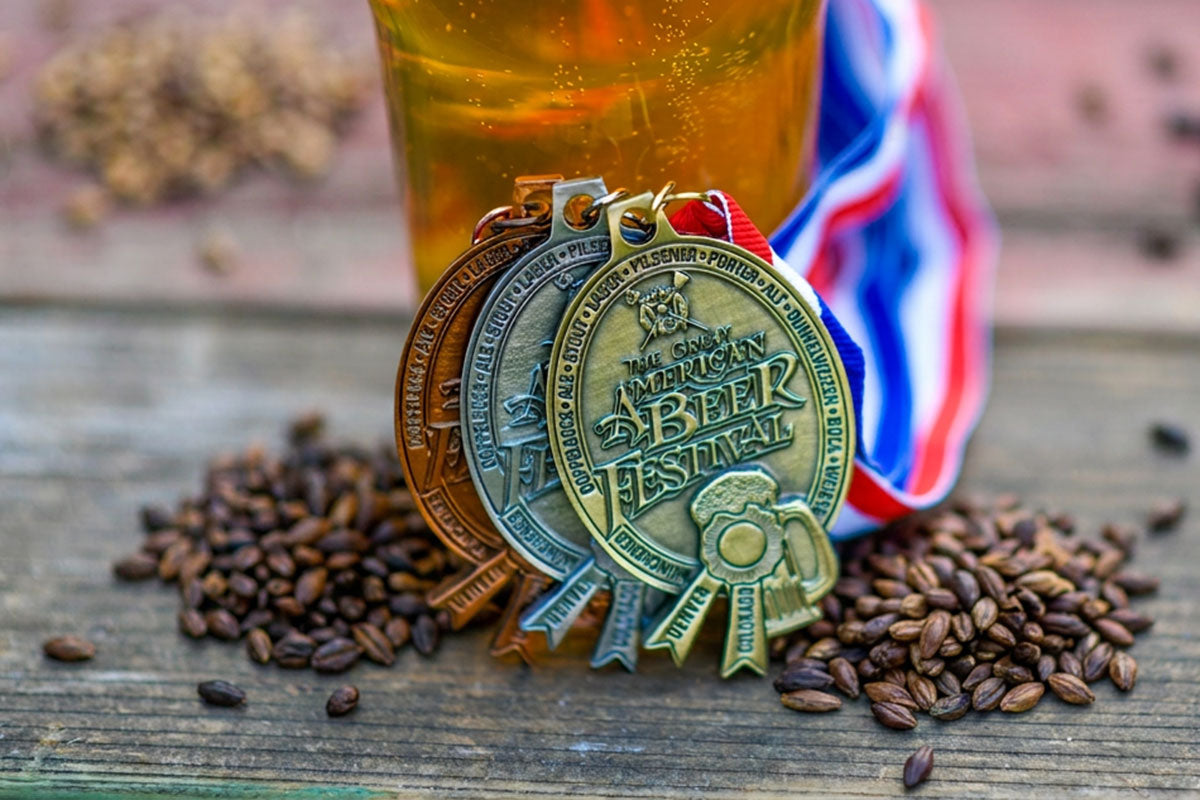
The Great American Beer Festival has always been more than an awards list. It is one of the clearest snapshots we get of American brewing: what brewers are refining, what styles remain fiercely competitive, where experimentation is headed, and which breweries are putting together exceptional bodies of work.
But 2026 felt especially different. The festival moved outdoors to Denver's Levitt Pavilion, leaving behind the large indoor convention-center format. Meanwhile, the competition itself remained enormous: 7,267 beer, cider and hop-water entries from 1,300 breweries and cideries were evaluated by 225 judges. In total, 336 medals went to 243 breweries and cideries.
For homebrewers, that's a lot more than trivia. GABF gives us a chance to look at professional brewing and ask a simple question: what can we bring back to our own brew day?
GABF Went Outside, and It Changed the Feel of the Festival
For years, many beer fans knew GABF as a huge indoor festival at the Colorado Convention Center. In 2026, the public festival moved to Levitt Pavilion, an outdoor amphitheater setting in Denver. Reports from the festival described a noticeably smaller footprint and fewer pouring breweries than the old convention-center era, but also a much different kind of interaction.
The outdoor hillside offered views of Denver and the October weather became part of the experience. More importantly from a beer-lover's perspective, breweries themselves were doing the pouring. That made it easier for attendees to ask questions about what was in their glass rather than simply move from sample to sample. Larger pours also helped shift the experience toward actually spending some time with a beer.
What worked
The new venue gave the event breathing room in a different sense. Local reporting praised the views, easier brewer interaction, larger pours, earlier entry, and the absence of some of the very long entrance lines associated with the festival's bigger years.
What needs work
The outdoor move also introduced practical challenges. Day-one bathroom placement caused long waits before more portable toilets were added on day two. Water stations and shade/seating were also cited as areas that could improve. Most importantly, the grassy hillside presented accessibility difficulties for attendees with mobility challenges.
A different festival doesn't necessarily mean a lesser festival. The 2026 format traded part of the giant indoor spectacle for a more outdoor, brewery-connected experience. If the logistical problems can be addressed, that may give GABF a very different identity going forward.
The Breweries That Rose to the Top
A single medal is a major accomplishment at GABF. Brewery of the Year recognition goes a step further because the competition recognizes breweries within production-size groupings. That matters: a small neighborhood brewer and a much larger producer operate at very different scales.
Breakside Brewery
Oregon's Breakside Brewery was among the headline Brewery of the Year honorees. Its results also included gold for Breakside IPA in American IPA. For homebrewers, Breakside is a reminder that being known for hops does not mean standing still. Familiar styles stay relevant when brewers continue refining them.
Cannonball Creek Brewing Co.
Golden, Colorado's Cannonball Creek earned Brewery of the Year recognition in the 501–1,000 barrel category for the second year in a row, according to Westword. The brewery won three medals, including gold for Mindbender, silver for Featherweight and bronze for Trump Hands.
UPP Liquids
Bend, Oregon's UPP Liquids was also reported among the Brewery of the Year honorees. Its medal results included gold for UPP Yours in Field Beer and gold for Buzz Box in Honey Beer, showing how a smaller producer can stand out through distinctive styles rather than following one narrow lane.
Snow Capped Cider
GABF's competition now gives cider an increasingly visible place. Colorado's Snow Capped Cider earned Cidermaker of the Year recognition and multiple medals, including golds for Kingston Black 26 and The Russets.
These recognitions point to something bigger than one winning recipe: consistency and range matter. At home, that can mean brewing the same style more than once, taking notes, changing one variable at a time, and learning from every batch.
Arizona Had Plenty to Celebrate in 2026
For us at Mr. Beer, the Arizona results hit especially close to home. Our Tucson operation is based at 4700 South Park Ave., Suite 1, Tucson, Arizona, so this year's showing gives us a hometown connection to one of the country's biggest professional beer competitions.
Seven Arizona breweries earned eight GABF medals in 2026, with winners stretching from Phoenix and Goodyear to Gilbert, Scottsdale, Kingman and right here in Tucson. Arizona collected three golds, two silvers and three bronzes.
Wren House Brewing Co. — Phoenix
Gold: Festbier — Dortmunder or German-Style Festbier
Gold: Marzen (Whiskey Barrel Aged) — Wood- and Barrel-Aged Beer
Wren House led Arizona's medal haul with two golds. Its Festbier also won GABF gold in 2022, making the 2026 result an especially notable return to the top of the category.
Saddle Mountain Brewing Co. — Goodyear
Gold: Dill You Take Me Higher? — Experimental Beer
A dill-pickle-infused sour taking gold is a perfect example of how far experimentation can go when an unusual idea is executed well.
Rickety Cricket Brewing — Kingman
Silver: Barrel Aged Bee's Knees 2025 — Barley Wine or Wheat Wine
This barrel-aged medal winner represents another side of the Arizona scene: bigger, richer beers designed around time, strength and depth of character.
Corbett Brewing Co. — Tucson
Silver: Cypress Pils — Smoke Beer
This one is especially fun for us because Corbett Brewing is a Tucson brewery. A local brewery earning national hardware makes the GABF results feel a lot less distant from the Mr. Beer warehouse.
12 West Brewing Co. — Gilbert
Bronze: Zona — Contemporary American Lager
Zona adds another lager medal to Arizona's 2026 results and shows that approachable, crisp beer can stand alongside the competition's more experimental entries.
Fate Brewing Co. — Scottsdale
Bronze: Pueblo Vienna Lager — International-Style Amber Lager
Fate's copper-colored Vienna-style lager adds another classic-leaning lager success to Arizona's medal list.
Barrio Brewing Co. — Tucson
Bronze: Nolan's Porter — Porter or Stout
Another Tucson connection: Barrio Brewing brought home bronze for Nolan's Porter. That gives Tucson two medal-winning breweries in the 2026 GABF results.
With Mr. Beer operating from Tucson, these wins are more than a statewide scoreboard. Two Tucson breweries — Corbett Brewing Co. and Barrio Brewing Co. — earned medals on the national GABF stage. For homebrewers in Arizona, it is a reminder that excellent beer and brewing ideas are being developed right in our backyard.
Arizona's winners also covered an impressive range: festbier, barrel-aged Märzen, experimental sour, barley wine, smoked beer, contemporary lager, Vienna lager and porter. There isn't one “Arizona style” represented here. Instead, the medal list shows a brewing community comfortable working across both classic and unconventional beer.
West Coast IPA Is Still One of the Main Events
If anyone thought American beer had completely moved beyond clear, crisp, assertively hopped IPA, the entry numbers tell another story. West Coast-Style India Pale Ale was the most-entered category of 2026 with 277 entries. Human People Beer of Seattle took gold with Before & After Science.
American IPA remained important as well, with Breakside IPA from Breakside Brewery & Taproom taking gold. The takeaway isn't simply that “IPA is popular.” It's that hop-forward beer continues to split into recognizable expressions, and brewers are still finding room to compete inside those styles.
For a Mr. Beer brewer, an IPA can become an experiment in hop variety, hop timing, bitterness, aroma and balance. Instead of only asking what the newest style is, sometimes the better question is how far you can take one you already understand.
Lagers Continue to Show Their Range
Rice Lager became a new GABF category in 2026. Elsewhere on the medal list, American Lager, American Pilsener, Mexican-Style Pale Lager, German-style lagers and other lager categories showed just how broad “lager” really is.
Among notable results, Masthead Brewing Co. won American Lager gold with Shower Beer, while Schilling Beer Co. won American Pilsener gold with Alexandr. In Colorado, Wild Blue Yonder Brewing Co. took gold in Mexican-Style Pale Lager with Sereno Moreno, while another Castle Rock brewery, 105 West Brewing Co., took silver.
That's useful inspiration for the homebrewer who thinks “new” has to mean strange. Sometimes the most interesting direction is to take a familiar beer and focus intensely on balance, drinkability and clean character.
Flavor Still Has a Huge Place at the Table
The competition's early categories alone show the breadth of ingredients brewers are exploring: American Fruit Beer, Fruit Wheat Beer, Field Beer, Pumpkin Beer, Chili Beer, Herb and Spice Beer, Chocolate Beer, Coffee Beer, Coffee Stout or Porter, Dessert or Pastry Beer and Honey Beer.
Gold medals included Agua Fresca from Los Dos Potrillos Cervecería in American Fruit Beer, Calamansi Wheat from The Sandlot Brewery at Coors Field in Fruit Wheat Beer, Fire Exit from Morgan Territory Brewing in Chili Beer, Sludge Factory from Misfit Brewing in Chocolate Beer, and Stay Calm from East Village Brewing Co. in Coffee Beer.
For Mr. Beer brewers, this is probably one of the most fun areas to watch. Homebrewing lets you start with a beer you understand and then ask what a carefully chosen flavor could add to it.
GABF Is Making Room for New Definitions of Brewing
The competition added Rice Lager, Hop Water and a one-time Craft Malt category in 2026, plus Multi-Adjunct Beer and Hybrid/Crossover Beer under Specialty Beer. Gluten-Free was also divided into three standalone categories: Classic Ale or Lager, Hoppy and Specialty.
Those additions matter because they show that experimentation is not only happening inside established beer styles. Producers are exploring ingredients, processes and beverages that sit alongside the traditional beer world.
At the same time, the classic categories remain full of competition. That mix may be the healthiest takeaway of the whole festival: the industry can preserve brewing tradition and keep experimenting at the same time.
New Names Got Their Moment, Too
GABF reported 125 first-time competition entrants in 2026 and 12 first-time competition winners. That is an important counterpoint to the established breweries taking home repeat honors.
Competitions like GABF aren't only a stage for familiar names. A new brewery can put a beer in front of experienced judges and compete in the same broader system. For a homebrewer, there is something encouraging about that. Brewing rewards experience, but every experienced brewer started with an early batch, made mistakes, took notes and kept going.
So, What Did We Learn From GABF 2026?
First, the festival itself is willing to change. Moving from the Colorado Convention Center to Levitt Pavilion changed the scale, atmosphere and way attendees interacted with breweries. Some parts worked immediately. Others clearly need adjustment.
Second, beer isn't moving in one direction. West Coast IPA can lead the competition in entries while lagers receive fresh attention. Fruit, coffee, chocolate and spice can coexist with carefully made classic styles. Gluten-free beer, hop water and crossover categories can expand the field without pushing traditional beer out of it.
Third, great brewing is still about execution. Trends may get people talking, but medals are awarded to beers that stand out within their categories. The Brewery of the Year awards reinforce the value of doing that across more than a single successful entry.
And finally, GABF is a reminder of why homebrewing is so much fun. You can watch what professional brewers are doing without needing to copy them. Take the idea that excites you, bring it home, and make it yours.
What Should Mr. Beer Brew Next?
After looking at GABF 2026, which direction would you most want to explore at home?
- West Coast IPA
- Rice Lager
- Mexican-Style Lager
- Fruit Beer
- Coffee or Chocolate Beer
- A classic Pilsner
- Something completely different
Let us know in the comments. Your answer might inspire a future brew.
Inspired to Start Brewing?
You don't need a professional brewhouse to experiment with beer. Grab a kit, pick a style, and make the next one yours.
SHOP MR. BEER- Brewers Association, “Here Are the Nation's Best Beers and Ciders of 2026,” Oct. 13, 2026.
- Great American Beer Festival, official 2026 winners list.
- Westword, “Colorado breweries win big at a vastly changed Great American Beer Festival,” Oct. 13, 2026.
- Brewpublic, 2026 GABF winners coverage, Oct. 11, 2026.
Great American Beer Festival and GABF are trademarks of the Brewers Association.


