

What Makes a Beer Weird?
Brewers have put a lot of strange things into beer. Fruit? Completely normal. Coffee? We've all moved on. Peppers, chocolate, herbs, and spices barely raise an eyebrow anymore.
But whale testicles smoked over sheep dung, yeast cultured from a brewmaster's beard, or actual pieces of the Moon? Now we're getting somewhere.
Some of the weirdest beers ever brewed were made for attention. Others came from genuine experimentation, local traditions, unexpected collaborations, or a brewer simply wondering, “What happens if we try this?” The six beers below cover all of the above — and push that question considerably further than most of us ever would.
- Hvalur 2: Icelandic beer made with fin-whale testicles smoked over dried sheep dung.
- Oyster Stout: Porterhouse uses fresh oysters in a stout rooted in an old beer-and-oyster tradition.
- Rogue Beard Beer: Fermented with a yeast strain cultured from brewmaster John Maier's beard.
- Celest-jewel-ale: Dogfish Head brewed with crushed lunar meteorites.
- Voodoo Doughnut Bacon Maple Ale: A brown ale made with smoked bacon and maple flavoring.
- Spaghetti Gose: No noodles, but plenty of tomato, basil, oregano, and salt.
1. Hvalur 2: The Beer With Whale Testicles Smoked Over Sheep Dung
We'll start gently.
Just kidding.
In 2015, Iceland's Stedji Brewery released Hvalur 2, a beer made with fin-whale testicles that had been smoked using dried sheep dung.
There is, somehow, an explanation.
The beer was created for Þorri, Iceland's traditional midwinter festival. Foods associated with the season can include preserved meats and other ingredients that reflect older Icelandic methods of using what was locally available.
The brewery argued that the unusual whale ingredient fit that tradition.
The beer was also highly controversial because of the use of fin whale, and conservation groups strongly criticized the release.
Whatever you think of the ingredient, Hvalur 2 is a good example of something that gets lost when every strange beer is dismissed as a stunt: sometimes what looks completely bizarre from the outside is connected to a regional tradition.
Why did they make it? Regional tradition, seasonal culture, and undoubtedly a willingness to make something people would talk about.
2. Porterhouse Oyster Stout: When the Bar Snack Went Into the Beer
Compared with whale testicles, oysters suddenly sound downright reasonable.
And oyster stout actually has more history behind it than you might expect.
Stout and oysters were a popular combination in 19th-century Britain, when oysters were much more common and inexpensive than they are today. Dark, roasty beer and briny shellfish became natural pub companions.
Eventually, brewers took the pairing one step further and started putting oyster shells—and later oysters themselves—into beer.
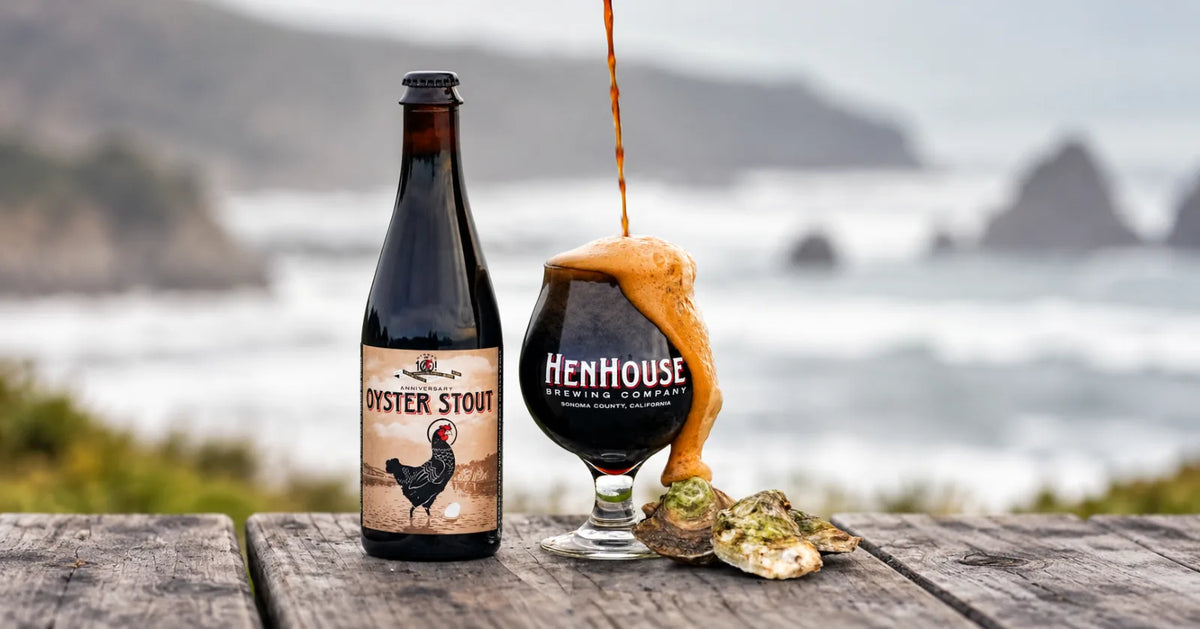
Dublin's Porterhouse Brew Co. continues that tradition with its Oyster Stout. The brewery says fresh oysters are shucked directly into the conditioning tank.
The goal is not to make a pint taste like seafood chowder. The oysters can contribute subtle mineral, saline, and rounded characteristics that work surprisingly naturally with a stout.
It's a good reminder that some ingredients sound considerably stranger than they actually taste.
Why did they make it? A historic food-and-beer pairing eventually became part of the brewing process itself.
3. Rogue Beard Beer: Yes, the Yeast Came From a Beard
This beer sounds like somebody lost a bet.
The real story is much nerdier.
Rogue Ales wanted to find a distinctive local yeast strain that could complement ingredients grown in Oregon. Samples from the brewery's surroundings were collected and sent for testing, but they did not produce a yeast suitable for brewing.
Then somebody joked about testing longtime Rogue brewmaster John Maier's beard.
Maier had been growing it since 1978, so nine beard hairs were sent to a laboratory for analysis.
And they found usable yeast.
Rogue cultured that yeast and eventually brewed Beard Beer with it.
To be clear, drinkers were not getting beard hairs floating in the bottle. The yeast growing on the hairs was isolated, cultured, and then used for fermentation just like another brewing yeast.
Still weird?
Absolutely.
But underneath the beard jokes was a legitimate experiment in finding a unique local microorganism for fermentation.
Why did they make it? Rogue was looking for a distinctive local yeast. The fact that they found it in the brewmaster's beard was the wonderfully strange part.
If yeast suddenly seems more interesting than it did five minutes ago, our Yeast Basics guide explains what these tiny organisms actually do in your beer.
4. Celest-jewel-ale: Beer Brewed With Pieces of the Moon
Some breweries talk about taking beer to another level.
Dogfish Head went off-planet.
In 2013, the Delaware brewery collaborated with ILC Dover, a company known for its work on spacesuits, to create Celest-jewel-ale.
The unusual ingredient was lunar meteorite material.
These were pieces of rock from the Moon that had landed on Earth as meteorites. The material was crushed into dust and steeped in a malty Oktoberfest-style beer.
So no, an astronaut did not bring back a growler full of Moon dust for the brewers.
But yes, customers at the Dogfish Head brewpub could legitimately drink beer that had been in contact with pieces of the Moon.
This was not about making lunar rock the next great flavoring ingredient. It was a collaboration built around science, curiosity, and an absolutely unbeatable story.
Why did they make it? Collaboration, scientific curiosity, and the opportunity to say they brewed beer with part of the Moon.
5. Voodoo Doughnut Bacon Maple Ale: Breakfast in a Bottle
At least this one sounds like food.
Rogue Ales teamed up with Portland's Voodoo Doughnut to create a beer inspired by the bakery's famous Maple Bacon Bar.
And they did not stop at putting a picture of a doughnut on the label.
Voodoo Doughnut Bacon Maple Ale was a brown ale brewed with several smoked malts, applewood-smoked bacon, and maple flavoring.
In other words, somebody looked at a maple bacon doughnut and asked:
“How close can we get to this in beer?”
That is a very different kind of experimentation from Beard Beer or Celest-jewel-ale. The ingredient list was strange, but the target flavor was familiar: sweet maple, smoke, malt, and bacon.
Whether that sounds delicious or horrifying probably tells you whether this beer was ever meant for you.
Why did they make it? A brewery-bakery collaboration that tried to translate an already-famous doughnut into beer.
6. Spaghetti Gose: All the Spaghetti Flavor, None of the Spaghetti
Despite the name, WeldWerks did not dump a plate of spaghetti into a fermenter.
Honestly, what they did might be even better.
For Spaghetti Gose, WeldWerks started with a kettle-soured wheat beer, removed the traditional coriander, and increased the salt.
Then they added tomato purée and fresh tomatoes that were fire-roasted at the brewery.
Finally, the beer was conditioned with fresh basil and oregano.
The idea was not to brew with pasta. It was to build the flavors of spaghetti sauce into a tart, salty gose.
That sounds ridiculous until you break it down.
Tomato brings acidity and sweetness. Gose already brings tartness and salt. Basil and oregano provide familiar savory aromatics.
Suddenly the completely absurd idea starts to have a strange internal logic.
Still not putting it next to the garlic bread, though.
Why did they make it? Culinary experimentation. WeldWerks took the flavor profile of spaghetti sauce and asked whether it could make sense inside a sour beer.
Six Weird Beers at a Glance
| Beer | Weird Ingredient | The Idea Behind It |
|---|---|---|
| Hvalur 2 | Whale testicles smoked over dried sheep dung | Icelandic midwinter tradition |
| Porterhouse Oyster Stout | Fresh oysters | A historic stout-and-oyster pairing |
| Rogue Beard Beer | Yeast cultured from a beard | Searching for a distinctive local yeast |
| Celest-jewel-ale | Crushed lunar meteorites | Science and brewery collaboration |
| Voodoo Doughnut Bacon Maple Ale | Smoked bacon and maple flavoring | Turn a famous doughnut into beer |
| Spaghetti Gose | Tomato, basil, oregano, and extra salt | Recreate spaghetti-sauce flavors in a gose |
So Why Do Brewers Make Stuff Like This?
Because brewing has always been part science, part craft, and part “I wonder what would happen if...”
The reasons behind unusual beers tend to fall into a few categories.
Tradition
Something that looks bizarre to an outsider may make considerably more sense in its original culture. Hvalur 2 was tied to an Icelandic seasonal tradition. Oyster stout grew from a much older relationship between dark beer and shellfish.
Experimentation
Brewers spend their careers learning what yeast, malt, hops, water, temperature, and time can do.
Eventually somebody wonders what happens when you introduce something completely different.
Sometimes you discover a useful new yeast.
Sometimes you discover that tomatoes and gose are weirdly compatible.
Collaboration
Beer gives breweries an excuse to work with bakeries, restaurants, farmers, scientists, artists, and other businesses.
Voodoo Doughnut Bacon Maple Ale and Celest-jewel-ale both started with collaborations that gave the brewers a reason to try something they probably would not have attempted otherwise.
Storytelling
Let's not pretend this part doesn't matter.
“Here's our nicely balanced amber ale” is probably not becoming international news.
“We found the yeast in our brewmaster's beard” has a slightly better chance.
A strange ingredient gives a beer a story before anyone even tastes it.
Because Brewing Is Supposed to Be Fun
Not every beer needs to become somebody's new everyday favorite.
Sometimes the whole point is to make something once, pour it for your friends, and see what happens.
What Homebrewers Can Learn From Weird Beer
No, we're not suggesting you start looking around the house for things to throw into your fermenter.
The useful lesson is experimentation with a purpose.
The strangest successful beers usually have an idea behind them.
Spaghetti Gose was not random tomato beer. It tried to recreate a recognizable flavor profile.
Bacon Maple Ale was built around an existing food.
Beard Beer started as a search for a unique yeast.
That same thinking works on a much more reasonable scale at home.
Start with a beer or recipe you understand. Decide what you want to change. Use food-safe brewing ingredients and a tested method whenever possible. Change one thing at a time and keep notes.
That might mean adding fruit to a wheat beer, experimenting with a different hop, steeping specialty grains, trying a spice addition, or brewing with a different yeast.
You don't need lunar meteorites to make the batch your own.
Weird Doesn't Mean Reckless
This is where homebrewing experimentation needs one important boundary.
Not everything edible belongs in beer, and not every unusual ingredient is safe to add without preparation.
Ingredients can introduce unwanted microorganisms, oils, proteins, allergens, fermentable sugars, or other compounds that affect fermentation, carbonation, flavor, and shelf life.
If you want to experiment, use ingredients intended for food or brewing and follow a trusted recipe or established brewing method.
And no matter how unusual the recipe gets, the fundamentals still matter: clean and sanitize your equipment, follow the appropriate fermentation temperature, and give the yeast a healthy environment to do its job.
The weird ingredient should be the weird part.
Your fermentation shouldn't be.
Feeling Experimental?
You don't need beard yeast or Moon rocks. Start with a tested Mr. Beer recipe and see how hops, grains, fruit, spices, and different yeast strains can change a batch.
Frequently Asked Questions
What is one of the weirdest beers ever brewed?
Hvalur 2 from Iceland's Stedji Brewery is a strong contender. It was brewed with fin-whale testicles smoked over dried sheep dung as part of a beer created for Iceland's traditional Þorri midwinter season.
Was Rogue Beard Beer really made from a beard?
Sort of. Rogue cultured a brewing yeast strain from microorganisms found on brewmaster John Maier's beard. The beer was fermented with the cultured yeast, not with beard hair floating in the beer.
Did Dogfish Head really brew beer with Moon rocks?
Yes. Celest-jewel-ale used crushed lunar meteorites—pieces of Moon rock that had fallen to Earth—which were ground and steeped in the beer.
Does oyster stout actually contain oysters?
Some do. Porterhouse Brew Co. says its Oyster Stout uses fresh oysters shucked into the conditioning tank. Other oyster-stout recipes may use shells, whole oysters, or different methods, so ingredients vary by brewery.
Did Spaghetti Gose actually contain spaghetti?
No. WeldWerks used tomato purée, fire-roasted tomatoes, basil, oregano, and extra salt to create a gose inspired by the flavors of spaghetti sauce.
Can homebrewers experiment with unusual beer ingredients?
Yes, but unusual ingredients should still be food-safe and used with an appropriate brewing method. Starting from a tested recipe, changing one variable at a time, and keeping good notes is a better approach than adding random ingredients to the fermenter.


