

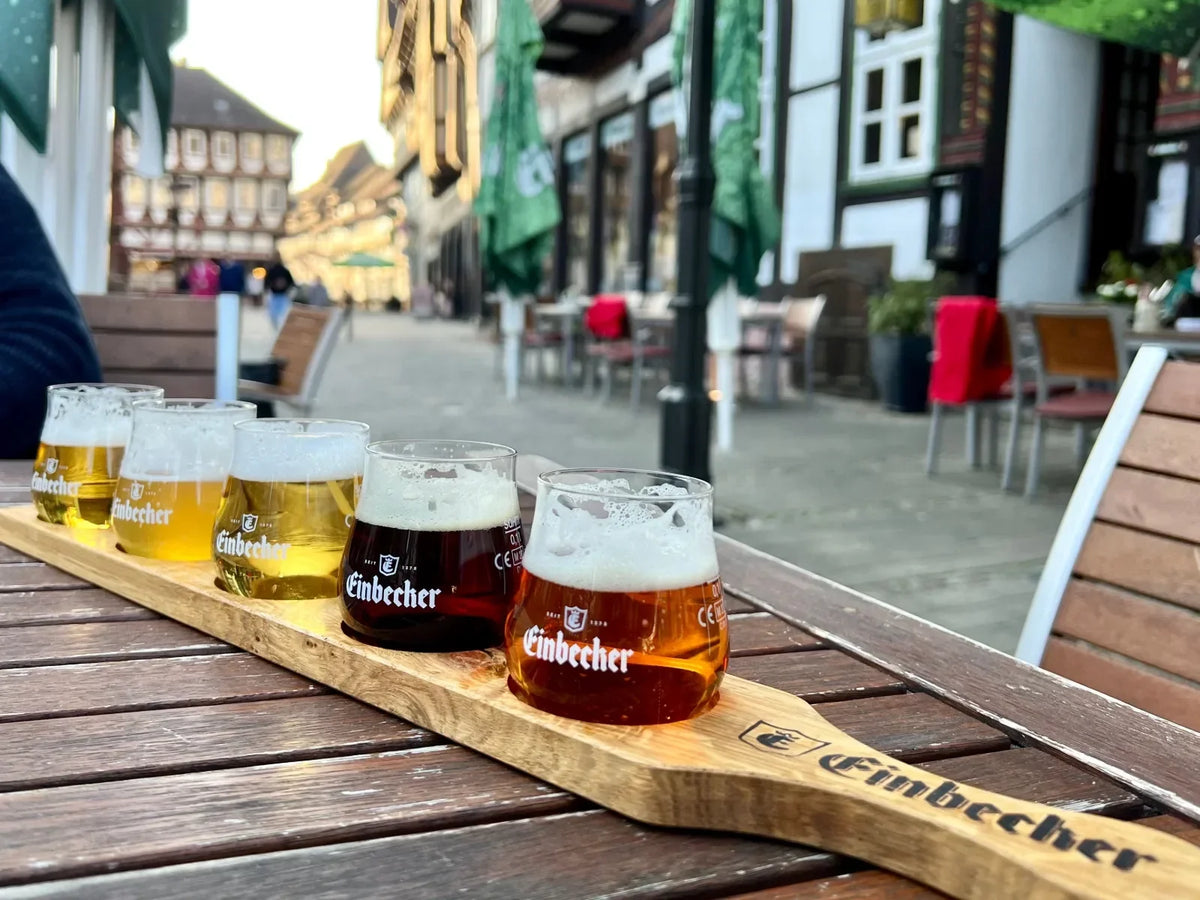
“German beer” can mean a lot of very different things.
It can be a dry, hop-forward German Pils. A soft and malty Helles. A toasty amber Märzen. A dark but smooth Munich Dunkel. A banana-and-clove Weissbier. A copper-colored Altbier. A smoky Rauchbier. Or even a tart Gose seasoned with coriander and salt.
So if you're looking for German beer styles to brew at home, the better question isn't simply, “Which styles are German?”
It's which German beer sounds like something you actually want to drink — and which recipe fits the way you want to brew?
If you're ready to skip straight to the brewing part, you can also browse Mr. Beer homebrew recipes and compare the ingredients, techniques, and fermentation requirements before choosing your next batch.
This guide helps you choose by flavor, color, fermentation approach, and overall brewing experience. If you want a deeper dive into the history behind the styles, our complete guide to German beer styles covers that side of the story.
This guide is intended for adults age 21 and older.
- Want crisp and hop-forward? Try German Pils.
- Want pale and malt-forward? Munich Helles is softer and less bitter.
- Want toasty and amber? Märzen is the classic choice.
- Want dark without heavy roast? Munich Dunkel is built around rich, bready malt.
- Want banana, clove, and wheat? Brew a Weissbier.
- Want something unusual? Rauchbier brings smoke, while Berliner Weisse and Gose bring tartness.
- Choosing your first one? Look at the actual recipe steps and yeast requirements rather than assuming one style is automatically easier than another.
German Beer Is Much More Than Lager
Germany is famous for lager brewing, but German beer is not exclusively lager.
Alongside German Pils, Helles, Märzen, Dunkel, Schwarzbier, Bock, and other bottom-fermented styles, Germany also has important top-fermented traditions including Weissbier, Kölsch, Altbier, Berliner Weisse, and Gose.
That variety is part of why German beer is such a good rabbit hole for homebrewers. According to the German Brewers Association, Germany has roughly 1,400 breweries producing more than 7,500 beer brands.
You could spend years brewing German-inspired beer without making the same thing twice.
Which German Beer Style Fits Your Taste?
| If You Like... | Try Brewing | Typical Character |
|---|---|---|
| Crisp beer with noticeable hops | German Pils | Pale, dry, crisp, herbal or spicy hops |
| Soft malt with restrained bitterness | Munich Helles | Golden, smooth, grainy-sweet, soft finish |
| Toasted bread and rich amber malt | Märzen | Amber, smooth, malty, toasted |
| Dark beer without burnt roast | Munich Dunkel | Bread crust, toast, malt richness |
| Dark color with a drier finish | Schwarzbier | Dark chocolate, light roast, dry and smooth |
| Wheat beer with expressive yeast character | Weissbier | Banana, clove, wheat, high carbonation |
| Very delicate pale beer | Kölsch | Pale, subtle, clean, lightly fruity |
| Copper malt plus firmer bitterness | Altbier | Toasted malt, dry finish, noticeable bitterness |
| Smoky flavors | Rauchbier | Smoked malt layered over German lager character |
| Tart or sour beer | Berliner Weisse or Gose | Bright acidity; Gose traditionally adds coriander and restrained salt |

1. German Pils: Crisp, Dry, and Hop-Forward
If you like beer that finishes crisp and puts hops noticeably ahead of malt, start with German Pils.
Compared with Munich Helles, German Pils is generally drier, more bitter, and more hop-forward. Traditional German hops can bring floral, herbal, or spicy character while a pale malt base keeps the beer lean and refreshing.
It is also a useful reminder that “Pilsner” does not describe one universal beer. German Pils differs from Czech Pilsner in balance, bitterness, body, and hop presentation.
Choose German Pils if: you enjoy crisp lagers but want more bitterness and hop character.
Brewing note: Follow the yeast and fermentation temperature specified by the recipe. The fact that a beer is pale does not make the fermentation process automatically easier or harder.
2. Munich Helles: Pale Beer With Malt in the Driver's Seat
Helles looks similar to Pils in the glass, but the balance moves in a different direction.
Expect a smooth, golden lager with a more noticeable malt presence, restrained bitterness, and a soft, dry finish. The hops are still there, but they support the malt instead of leading the beer.
This makes Pils versus Helles a particularly useful comparison for homebrewers. Two beers can be similar in color and still drink very differently because of changes in malt balance, hopping, yeast, and fermentation.
Choose Helles if: you like pale lager but prefer soft malt flavor over assertive bitterness.
3. Märzen: Toasty, Amber, and Built Around Malt
Märzen moves German lager into deeper malt territory.
Traditional examples lean toward amber color, toasted bread, rich malt, and a smooth finish rather than aggressive hop flavor.
It is closely connected to Oktoberfest history — but there is an important distinction modern beer drinkers often miss.
Märzen vs. Festbier:
Amber Märzen was served at Munich's Oktoberfest for much of the 20th century. Around 1990, the paler golden Festbier became the standard festival beer. Modern Festbier is generally lighter in color and body, while Märzen retains more amber malt richness.
So when someone says “Oktoberfest beer,” they may be talking about an amber Märzen-inspired beer, a modern golden Festbier, or simply a seasonal lager marketed for Oktoberfest.
Choose Märzen if: toasted bread, amber malt, and smooth lager character sound better than hop-forward beer.
If you're interested in brewing the traditional lager side of the style, The King's Märzen – Oktoberfest Lager Recipe uses W-34/70 lager yeast, recommends cooler fermentation, and benefits from additional conditioning time.
4. Munich Dunkel: Dark Beer Without the Roast Bomb
Munich Dunkel is one of the best examples of why beer color can be misleading.
It pours deep copper to dark brown, but it is not supposed to taste like a stout.
The style is built around rich Munich-style malt character: toasted bread crust, deep grain flavor, and sometimes hints of chocolate, nuts, caramel, or toffee. Harsh roasted or burnt flavors do not belong.
Choose Munich Dunkel if: you want a dark beer that stays smooth, malt-forward, and relatively soft.
Mr. Beer's Duke's Desert Dunkel takes this direction with a malty dark-lager profile, creamy body, and light chocolate character.
5. Schwarzbier: Darker, Drier, and Lightly Roasty
Dunkel and Schwarzbier can look similar from across the room, but they should not taste identical.
Schwarzbier typically brings a drier impression and a little more roasted character. Think light dark chocolate or coffee rather than the deeper bread-crust emphasis of Munich Dunkel.
That roast should stay smooth. Schwarzbier is not supposed to finish burnt, harsh, or heavy.
Choose Schwarzbier if: you enjoy dark beer but want something drier and lighter on the palate than many porters or stouts.
6. Weissbier: Wheat, Banana, Clove, and a Lot of Personality
German wheat beer deserves a much bigger place in this conversation than the original “Germany equals lager” stereotype gives it.
Classic Weissbier is a pale, highly carbonated wheat beer with a distinctive fermentation profile often described as banana and clove.
Those flavors do not come from tossing bananas and cloves into the fermenter. They come primarily from the yeast.
That makes Weissbier a great example of how dramatically yeast choice can shape a beer.
Choose Weissbier if: you like wheat beer, expressive fermentation character, and a soft, refreshing body.
If that sounds like your lane, the Bavarian Weissbier Standard Refill offers a straightforward 2-gallon route into wheat-forward beer.
Want to take the wheat-beer idea a step further? Ice-Clear WeissBier builds on Bavarian Weissbier with wheat flakes, Pilsen Malt, Hallertau hops, WB-06 wheat yeast, and a cold-crash step for a clearer Kristall-style finish.
7. Kölsch: A German Ale That Drinks Almost Like a Lager
Kölsch is top-fermented, which makes it an ale, but the finished beer is known for a clean, delicate profile.
Expect pale color, restrained malt and hops, and subtle fermentation character. Traditional production also includes cold conditioning after fermentation.
Because the beer is relatively subtle, fermentation flaws can be easier to notice than they are in beers with more intense malt, hop, roast, or spice character.
Choose Kölsch if: you want something pale, delicate, and clean but want to explore a German ale rather than another lager.
8. Altbier: Copper-Colored, Bitter, and Cold-Conditioned
Altbier gives you another distinctly German approach to ale fermentation.
Associated with Düsseldorf, Altbier uses top-fermenting yeast but is traditionally cold conditioned. The finished beer is typically amber to copper, with rich toasted malt balanced by noticeably firmer bitterness than many malt-forward German lagers.
That combination makes Altbier especially interesting if you've already brewed straightforward ales and lagers and want to explore a process that borrows elements from both traditions.
Choose Altbier if: you like toasted malt but want a drier beer with more bitterness than Märzen or Dunkel.
9. Rauchbier: When You Actually Want Smoke in Your Beer
Rauchbier is not subtle about its defining ingredient.
Classic Bamberg Rauchbier uses smoked malt to build a beer where smoke is part of the flavor rather than an accident from leaving dinner on the grill too long.
The smoke can range from gently noticeable to unmistakable depending on the recipe and malt bill.
Because smoked malt has a strong personality, this is one style where following a tested recipe makes a lot more sense than deciding that “another handful should be fine.”
Choose Rauchbier if: you already know you enjoy smoky flavors and want a German beer that is completely different from the usual pale-lager experience.
10. Berliner Weisse and Gose: The Tart Side of German Beer
Germany has sour-beer traditions too.
Berliner Weisse is a pale wheat beer known for bright acidity, high carbonation, and very low bitterness.
Gose is also a tart wheat-based beer, but traditional examples add another layer with restrained coriander and salt.
Neither should simply taste like a standard wheat beer with lemon juice poured into it. The acidity and fermentation process are part of the recipe itself.
Choose one of these if: tart beer is already something you enjoy and you're ready to follow a recipe designed specifically for sour brewing.
Do not improvise a sour process from instructions written for a standard refill. Follow the recipe's fermentation and sanitation guidance.
11. Bock and Doppelbock: When You Want More Malt and Strength
The bock family pushes German lager into richer territory.
Traditional Bock leans toward strong malt flavor, while Doppelbock turns the intensity up further with more body, richness, and alcohol.
These beers are a good reminder that the most useful definition of “advanced” isn't the style name — it's what the specific recipe asks you to manage.
A higher-gravity or longer-conditioned recipe may involve more yeast management or patience than a basic refill even when the ingredient list looks simple.
Choose Bock or Doppelbock if: rich malt is the main attraction and you're willing to give the beer whatever fermentation and conditioning schedule the recipe requires.
Which German Beer Should a Beginner Brew First?
Don't choose based on a rule like “ales are easy” or “lagers are hard.”
Choose based on the actual recipe.
Before buying, check:
- Brew-day steps: Is it a basic extract brew, or does it include grain steeps, hop additions, or other extra steps?
- Yeast: What strain does the recipe use?
- Fermentation temperature: Can you maintain the range the recipe calls for?
- Fermentation time: Does the beer need a standard fermentation period or extra conditioning?
- Your taste: Do you actually want two gallons of the beer you're about to make?
A straightforward recipe can be beginner-friendly whether the finished beer is pale, amber, wheat-based, dark, malty, or hop-forward.
And a seemingly simple style can become more involved if the recipe uses traditional lager yeast, specialty grains, additional hops, or extended conditioning.
The easiest first German beer is the recipe whose process fits your equipment, temperature control, available time, and taste.
Four German-Inspired Mr. Beer Batches to Try
A smooth, malty amber lager-style beer with a streamlined brew day. A good choice if you're new to homebrewing and want equipment plus your first batch in one box.
Shop Oktoberfest Lager →A smooth, refreshing wheat-style option for brewers who want something lighter and wheat-forward rather than another amber lager.
Shop Bavarian Weissbier →A darker lager recipe with smooth malt character, creamy body, and light chocolate notes for brewers ready to explore the dark side of German-style beer.
Shop Duke's Desert Dunkel →For brewers ready to try a more traditional lager process, this recipe uses W-34/70 yeast and benefits from cooler fermentation and extra conditioning.
Shop The King's Märzen →Refill or Recipe? Check the Process, Not the Label
Mr. Beer Standard, Deluxe, and Craft refills are different product formats and beer profiles — they are not an easy, medium, and hard progression.
A basic refill can keep the core brew day very straightforward.
Recipe kits may introduce extra techniques such as:
- Specialty grain steeps
- Hop additions or hop boils
- Dry hopping
- Specialty yeast
- Fruit, spice, or other additions
- Cooler fermentation or extended conditioning
That is why reading the recipe before choosing your next German beer matters more than simply deciding whether you want a lager or an ale.
Frequently Asked Questions About German Beer Styles
Are most German beers lagers?
Germany is especially famous for lager styles such as German Pils, Helles, Märzen, Dunkel, Schwarzbier, and Bock, but it also has major top-fermented traditions. Weissbier, Kölsch, Altbier, Berliner Weisse, and Gose are important examples of German ales.
What is the difference between German Pils and Helles?
Both are pale German lagers, but German Pils generally emphasizes a drier finish, more bitterness, and more hop character. Munich Helles shifts the balance toward smooth malt flavor with softer bitterness and a rounded finish.
Is Märzen the beer served at Oktoberfest?
Historically, amber Märzen was strongly associated with Oktoberfest and was served at the Munich festival for decades. Around 1990, the paler golden Festbier became the standard festival beer. Märzen remains closely connected to Oktoberfest brewing culture, especially outside Germany.
What is the difference between Dunkel and Schwarzbier?
Munich Dunkel emphasizes rich, toasted, bread-like malt character without harsh roast. Schwarzbier is usually darker and drier, with a light roasted edge that can suggest dark chocolate or coffee while remaining smooth.
Is Kölsch an ale or a lager?
Kölsch is an ale because it uses top-fermenting yeast. Traditional production also uses cold conditioning, which helps create the clean, delicate character many people associate with lager.
What does Dunkel mean?
“Dunkel” means “dark” in German. In beer, Munich Dunkel refers to a traditional dark Bavarian lager built around rich toasted malt character rather than heavy roasted or burnt flavor.
Why does German wheat beer taste like banana and clove?
Classic Weissbier yeast produces fermentation compounds that can create recognizable banana-like fruitiness and clove-like spice. Those flavors are part of the fermentation character rather than ingredients added directly to the beer.
What German beer should a beginner brew first?
Choose a beer you enjoy and a recipe whose steps, fermentation temperature, and conditioning schedule fit your setup. Style names alone do not determine difficulty. A straightforward extract recipe can be approachable across many different colors and flavor profiles.
Start With the German Beer You Actually Want to Drink
You do not need to work through German beer styles in some imaginary order from “beginner” to “advanced.”
If you love crisp bitterness, start with Pils. If toasted malt sounds better, brew Märzen or Dunkel. If wheat beer is your thing, go Weissbier. If you want something completely different, Rauchbier, Berliner Weisse, or Gose can take you there.
Then read the recipe.
Check the yeast. Check the temperature range. Check the additional steps. Check the conditioning time.
And brew the beer that makes you want to open the fermenter cabinet five weeks from now and say, “Yep. That's the one I wanted.”
Ready to brew something German-inspired?
Explore Mr. Beer recipes and find a batch that fits the flavors and brewing process you're looking for.


