

The Brew Times Homebrewing Blog
How to use a hydrometer?
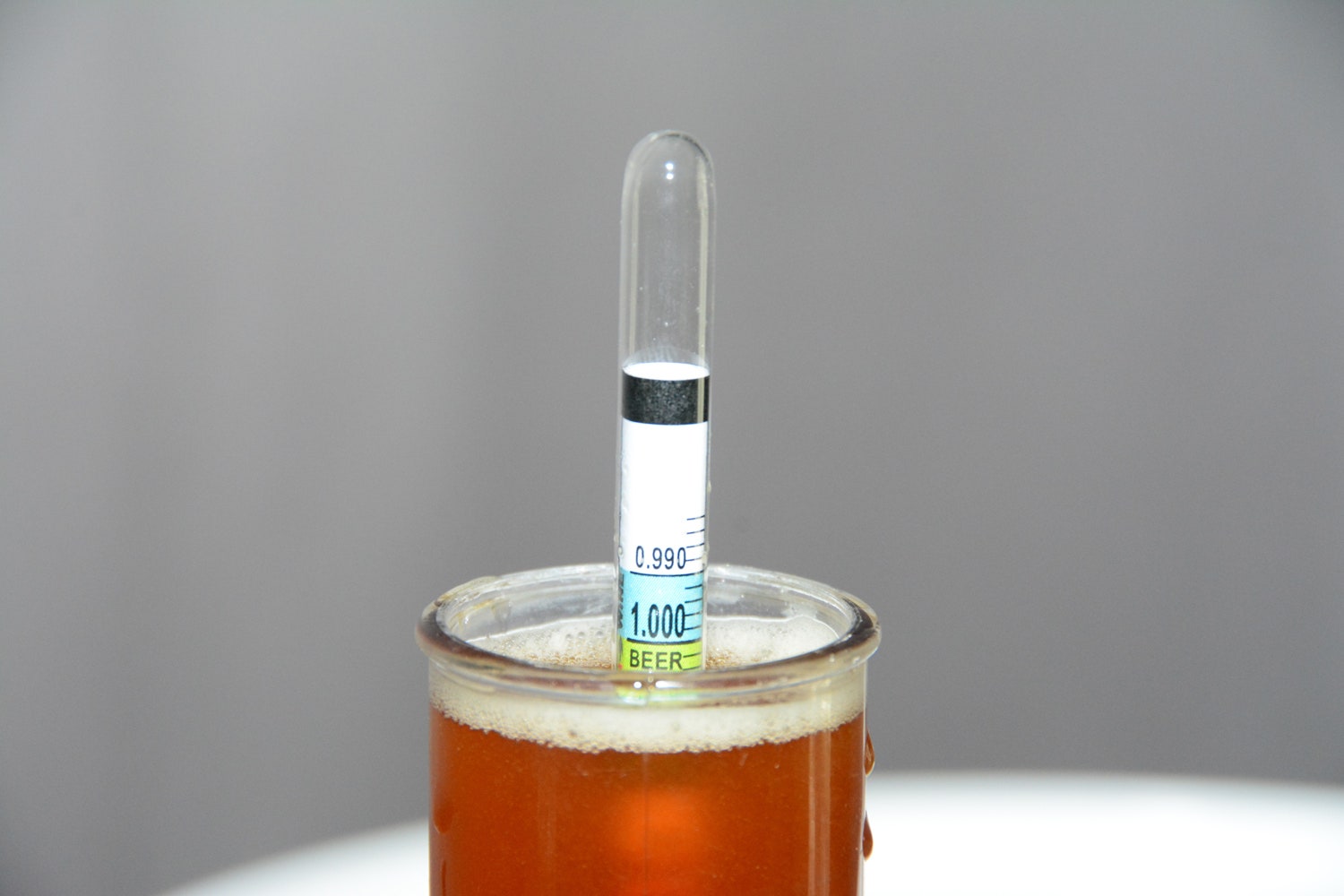
If you are a brewer, the term “hydrometer”, is probably one you have heard before and you may or may not use one. If you do use a hydrometer or want to use one, then this article is for YOU! Today I will break down what a Hydrometer is and how to use it, as well as some other helpful information and resources. What is a Hydrometer, anyway? A Hydrometer is a scientific tool that measures the density of a liquid in relation to water. In the case of beer making, we are measuring how much sugar is in the solution. The more sugar that is in the solution, the higher the hydrometer will float. As sugar is turned into alcohol during the fermentation, the hydrometer will slowly sink lower in the solution. When fermentation is finished, the hydrometer will stop sinking. Why would I use a hydrometer, when I can just taste my beer and make sure it is not sweet? A Hydrometer is an instrument used to measure the progress of fermentation and determine alcohol percentage. With our refills and many of our recipes, “tasting” is a fine way to determine the completion of fermentation, however, with recipes, especially those containing non-fermentable sweeteners like lactose sugar, using a hydrometer can help you to determine if your beer is fully fermented despite the remaining “sweet taste”. How do I use my hydrometer? Place a sample of the liquid to be tested into the hydrometer testing tube and lower the hydrometer into the sample. Ideally, you want to add enough beer to your sample tube, that when the hydrometer is added, the fluid level fills up the tube almost completely. Spin the hydrometer to eliminate any air bubbles that might cling to the side of the hydrometer. Once the Hydrometer stops moving, take your first reading from the gravity scale. Make sure it is not clinging to the tube itself. In beer making, the first reading is often called the “Original Gravity Reading”, which implies it was taken prior to the onset of fermentation and before the addition of any yeast. How do I determine if fermentation is finished? When fermentation stops, usually activity within the fermenter is no longer visible and your wort will smell like beer. This is the time to take a final hydrometer reading and record it on your recipe or log sheet. If you are unsure if fermentation is over, you can use your Hydrometer to test. Take two readings 1–2 days apart. If the reading drops between the two days, you still have an active fermentation. Does the temperature of my sample affect my reading? YES. Typically, hydrometers are calibrated to give an accurate reading at approximately 68 °F. This means that if the temperature of the liquid being tested is something other than 68 °F, the Temperature Correction must be considered when determining the accurate gravity reading. There are many online charts and calculators that make this simple for you, but you can also use this chart and equation, as a guide for your corrections. Here’s an example of this correction equation, in action: If the temperature of the “Wort” is 84 °F. and the Specific Gravity is 1.040, the true reading would be: How do I determine the alcohol percentage of my beer? The most accurate way to determine alcohol percentage by volume in beer is to make an Original Gravity reading and Final Gravity reading. Then plug those numbers into the following formula: (Original Gravity Reading”) - (Final Gravity Reading”) x (131) = % Alcohol Content by volume. Example: 1.073 was the Original Gravity reading and 1.012 is the Final Gravity reading.: 1.073-1.012=.06 x 131 = 7.99% Alc. By Vol How do I know what numbers to record? Once your hydrometer has stabilized and is floating in the solution, you will want to record the number directly below the meniscus of the water. You can use this diagram as a guide. Once you have tested your beer, do not be tempted to return the sample back to the fermenter, as this can potentially infect your batch. Plus, it’s a lot more fun to just drink it! What about a refractometer? Can I use one of those? Yes and no. Refractometers, while convenient because they use a smaller sample, do not provide accurate readings beyond determining the original gravity, prior to any fermentation. Refractometers can be used to simply determine if the beer is still in active fermentation, but the actual figures provided will not be accurate. How can I test that my hydrometer is providing accurate readings? Easy! Chill some distilled water and add it to your clean sample tube, insert your hydrometer, spin, and observe the waterline at the “true reading”, right below the meniscus. If your hydrometer is working correctly, and your distilled water is at 68 degrees, you should get a read of 1.000. Well, there you have it, folks! The highly requested, written “How to” on using your hydrometer! I hope you found this helpful, and feel free to ask any questions in the comments or you can also contact us directly by emailing customerservice@mrbeer.com and we are happy to help! If math and equations just aren’t your thing, check out these amazing free calculators, found here: https://www.brewersfriend.com/hydrometer-temp/ https://www.brewersfriend.com/abv-calculator/ Happy Brewing! Ashley
Read moreThe Brew Times Homebrewing Blog
Beer Spiked Apple Pie
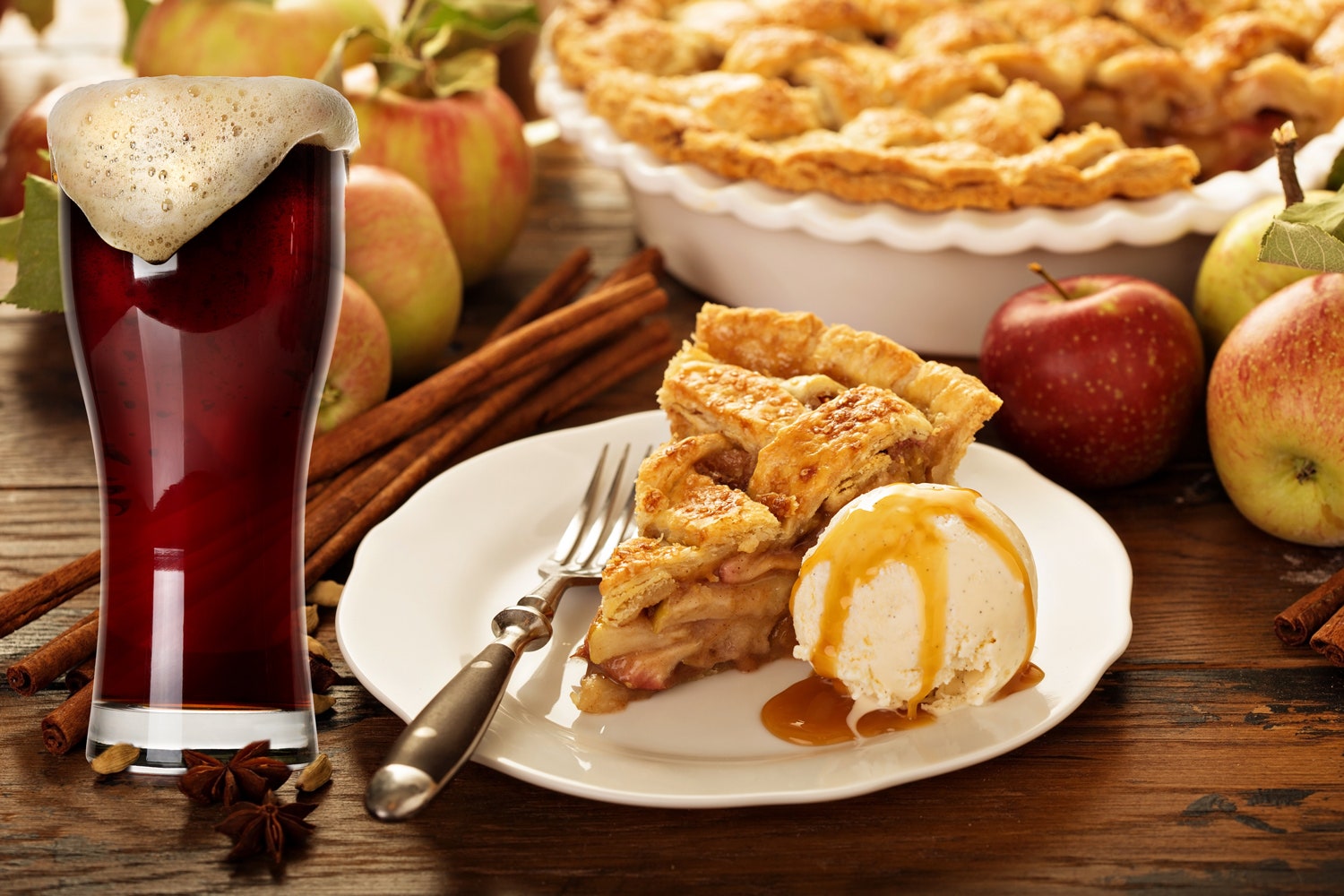
It is officially fall and even here in Tucson, at the Mr. Beer HQ, we are starting to feel a chill in the air! I personally love to pick apples in the fall and make all sorts of delicious treats from them. On my last apple-picking adventure, it occurred to me that I needed to “beerify” a quintessential fall classic, the Apple pie. Truth be told, it wasn’t terribly hard to do, but boy oh boy, is it GOOD! So, get yourself some apples, and let’s make a pie! What you need: 2 sheets of pre-made pie crust (One layer for the top and one for the base) 8-10 Granny Smith apples (peeled cored and sliced) 12 ounces of any beer spiced with cinnamon and or other holiday type spices 2 tablespoons of flour OR cornstarch 2 tsp Cinnamon 1 tsp Ginger ½ tsp. Salt 1/4 C White sugar ½ C Brown sugar 2 Tbsp chilled butter, cut into small cubes 1 egg 1 Tbsp milk How to make it: In a large bowl, combine the apples and the 12 oz. of the spiced beer of your choice. Soak at room temperature for 2 hours, stir occasionally. While the apples are soaking in the beer, preheat the oven to 400 degrees Fahrenheit. Place one of the sheets of pie crust dough in the bottom of a pie plate. Using a colander, drain the liquid off the apples and place them in a bowl. Toss them with flour or starch, cinnamon, ginger, salt, and both sugars until coated. Place the Ale apple mixture into the prepared pie plate with the crust and add a few small chunks of chilled butter evenly over the surface (don’t worry about mixing, the butter does not need any help). Top with the remaining layer of crust, pressing the edges of both layers together with the prongs of a fork, so that they crimp together. In a small dish, whisk together the egg and milk to create an egg wash and brush liberally over the surface of the pie top crust. Cut five slits in the top for venting. Cover the edges of the pie with a strip of foil to prevent over-browning and bake on a sheet pan on the middle rack for 35 minutes. Remove foil and continue baking for 10-20 minutes or until crust is golden brown and filling is bubbling. Watch it carefully in case it starts to bubble over out of your crust. Let cool for at least 30 minutes before slicing. Serve with a scoop of vanilla ice cream and maybe even a little caramel drizzle! Well, there you have it! A delicious Apple pie, containing delicious beer. I think you will really love what the beer does to the apple slices in the soak! You will come out with a crowd-pleasing pie to suit any of the hungry mouths at your holiday dinner table, or, you know, your own mouth if you prefer not to share. Heheheh. As always, I hope you enjoy this recipe, and let us know if you have any questions, down in the comments. Cheers! -Ashley
Read more
10 Things To Consider Before You Start Homebrewing
So, you say you want to start homebrewing, aye? Or maybe you already do, either way, these tips might still be just what you need. At Mr. Beer, our mission is to make homebrewing, as simple, all-inclusive, and as straightforward as possible. There are still a few things that are helpful to know before you get started. Here are 10 of the best tips you should know! Keeping these things in mind will help you to have many successful and fun brew days to come. 1. 1. Never neglect your sanitation This is probably the single most important part of your brewing procedure. Cleaning and sanitation should never be rushed or overlooked. Brewing beer in a dirty fermenter can lead to an infection that will have you wanting to pour your brew down the drain. Dirty bottles can take a delicious brew and turn it sour and undrinkable. 2. 2. Move quickly once your wort is off the heat Heat over 175 degrees, causes your hops to continue to bitter within your wort so, for this reason, it’s important to get the wort transferred to the cold water inside the keg as soon as possible once you have completed the wort making process. This helps lock in the correct amount of bitterness and preserve the integrity of your flavors. 3. 3. Try brewing a stout or a porter if you are not having luck with lighter styles This is a pretty “old” piece of brewing advice, but it’s a good one, nonetheless. When it comes to brewing, the devil is almost always in the details. For that reason, darker beers can leave a bit more “margin for error” when it comes to being a newbie. 4. 4. Use high quality, fresh ingredients This may go without saying, but just like any other thing, the quality of the ingredients you are using, matters. Always do your best to use “in-date” extracts, grain, and hops. A good thing to remember about grocery items like juices and purees is that if you do not enjoy it outside your beer, you probably will not like it in your beer either. 5. 5. Check your fermenter with water before starting your brew If you are just starting out in your brewing hobby, with a brand new LBK unit, make sure you test it for leaks with water first, if you have a leak, contact us ASAP and we are happy to ship you a replacement. Avoid a big giant mess by taking a small amount of time to verify you have a leak-free fermenter. 6. 6. Think about the future, and make sure you are available to bottle when your beer will potentially be “finished” It has happened before, and it will likely happen again, you start your brew and then remember you will be out of town, making you a week late to bottle…. Hey stuff happens, but it’s always a good idea to check out your calendar before getting started. 7. 7. Read and understand before getting started Before you start, read through your brewing instructions, and make sure you have a solid understanding. This way, you can contact us if you have any questions, before getting in the weeds. 8. 8. The only “dumb” question is the one you don’t ask I know you have heard that before… This time, we really mean it. If something doesn’t make sense, don’t be afraid to ask for help! 9. 9. Get yourself a brew-pot You can certainly brew Mr. Beer refills in very small kitchen pots, but if you would like to move onto recipes at some point, it is a great idea to purchase a pot with at least a 2-gallon capacity. 10. 10. Bring a friend Brewing, even with Mr. Beer can be a lot more fun when you enjoy the process with a buddy. It’s also not a bad idea to have some extra lifting power if you’ve “skipped” arm day for a while. As always, if you have any questions, feel free to ask them in the comments. Cheers! Ashley
Read moreCan beer be good for your health?
Ahhhhh beer, we love the way it tastes and the way it makes us feel when we make it or enjoy it, but have you ever wondered if it might have any health benefits? If this has crossed your mind, science says you might be in luck! Before we get to some of the good stuff, there are a couple of things I must mention so bear with me. I am not a medical professional and the information stated here is taken directly from studies and literature published to reputable scientific, sources. If you wish to visit any of these sources yourself, please feel free to check out the citations! This information is not meant as medical advice, so make sure you always talk to your doctor before making any personal health decisions. Please be aware that any of the statements made as to the possible health benefits of beer, apply only to cases of moderate and responsible consumption. Alright, so back to my point, could beer have any health benefits? Well, let us explore what science has to say on the matter. Heart disease is the leading cause of death in the United States, according to the National Center for Complementary and Integrative Health. The good news is, a 12-week study in 36 overweight adults, found that moderate beer intake — one drink for women, two drinks for men per day — improved the antioxidant properties of HDL (good) cholesterol while also improving the body’s ability to remove cholesterol, according to an article from the National Library of medicine. Another review from The National Library of Medicine stated that low to moderate beer intake — up to one drink per day in women, up to two for men — could lower heart disease risk to a similar extent as wine. Now if that is not good news for us beer enthusiasts, I do not know what is! Moderate beer consumption may not just be good for your heart! Several studies have found that light to moderate alcohol intake appears to reduce insulin resistance, which is a risk factor for diabetes and contributes to the overall risk for developing type 2 diabetes in your lifetime. a large study in over 70,500 participants associated moderate alcohol intake — 14 drinks per week for men and nine drinks per week for women — with a 43% and 58% lower risk of diabetes for men and women, respectively. Well, I do not know about you, but that is surprising news! Low to moderate beer intake may be linked to stronger bones in men and postmenopausal women and who does not like the sound of good, strong bones? With those strong bones, you are going to want to have a strong mind too! The good news, light to moderate alcohol intake may lower the risk of dementia. However, it is very important to remember that heavy alcohol intake can instead increase the risk, so always imbibe responsibly. I am, of course, asking nicely. You might also be surprised to learn that Dr. Tim Cooper himself is a cardiologist, that has spoken in-depth about the potential and promising health benefits of delicious, beer! Cooper’s original founder, Thomas Cooper, even began brewing beer for medicinal purposes to help treat his sick wife’s symptoms. I hope you enjoyed this little exploration into the subject of what positive impacts beer could potentially have for one’s health. If you wish to learn more, please explore the citations below! Knowledge is power, especially when it comes to your health! Cheers, Robert For a list of references that see the list below. National Center for Complementary and Integrative Health. “Cardiovascular Health” https://www.nccih.nih.gov/health/cardiovascular-disease National Library of Medicine “Moderate Beer Intake and Cardiovascular Health in Overweight Individuals” https://pubmed.ncbi.nlm.nih.gov/30189619/ National Library of Medicine “Effects of moderate beer consumption on health and disease: A consensus document” https://pubmed.ncbi.nlm.nih.gov/27118108/ National Library of Medicine “Moderate alcohol consumption increases insulin sensitivity and ADIPOQ expression in postmenopausal women: a randomized, crossover trial” https://pubmed.ncbi.nlm.nih.gov/18504547/ National Library of Medicine “The Relation of Light-to-Moderate Alcohol Consumption to Glucose Metabolism and Insulin Resistance in Nondiabetic Adults: the Moderating Effects of Depressive Symptom Severity, Adiposity, and Sex” https://pubmed.ncbi.nlm.nih.gov/28688095/ National Library of Medicine “Association between alcohol consumption pattern and the incidence risk of type 2 diabetes in Korean men: A 12-years follow-up study” https://pubmed.ncbi.nlm.nih.gov/28779170/ National Library of Medicine “Alcohol drinking patterns and risk of diabetes: a cohort study of 70,551 men and women from the general Danish population” https://pubmed.ncbi.nlm.nih.gov/28748324/ National Library of Medicine “Effects of beer, wine, and liquor intakes on bone mineral density in older men and women” https://pubmed.ncbi.nlm.nih.gov/19244365/ National Library of Medicine “Effect of alcohol intake on bone mineral density in elderly women: The EPIDOS Study. Epidémiologie de l'Ostéoporose” https://pubmed.ncbi.nlm.nih.gov/10965974/ National Library of Medicine “Silicon: a review of its potential role in the prevention and treatment of postmenopausal osteoporosis” https://pubmed.ncbi.nlm.nih.gov/23762049/ National Library of Medicine “Alcohol use and dementia: a systematic scoping review” https://pubmed.ncbi.nlm.nih.gov/30611304/ The BMJ “Alcohol consumption and risk of dementia: 23 year follow-up of Whitehall II cohort study” https://www.bmj.com/content/362/bmj.k2927 “ESTERS AND PHENOLS IN BEER. WHAT ARE THEY, AND WHAT DO THEY CONTRIBUTE? PART 1” https://www.mrbeer.com/blog/post/esters-and-phenols-in-beer-what-are-they-and-what-do-they-contribute-part-1 “ESTERS AND PHENOLS IN BEER. WHAT ARE THEY, AND WHAT DO THEY CONTRIBUTE? PART 1” https://www.mrbeer.com/blog/post/esters-and-phenols-in-beer-what-are-they-and-what-do-they-contribute-part-2 Dr Tim Cooper - Coopers Brewery https://www.youtube.com/watch?v=5S4nMbjS3js
Read moreHow to add pumpkin to your homebrew?
The fall season is upon us, and lots of brewers are curious about how they can add a pumpkin flavor to their beer. Today we will tell you all about how to achieve that and what potential “mistakes” to avoid. Like adding most “extras” how you add it depends a lot on what you want your “final” product to taste like. As is true with most fruit additions, pumpkin puree can be added either during your boil or during fermentation. But pumpkin has another area it can be added and that is in your grain steep, which we will talk more about in a moment. First things first: What form of pumpkin is best to add to beer? Canned pumpkin puree is typically the easiest and most convenient way to add pumpkin to your brew, as it is already pasteurized and ready to use. But make sure you use puree and NOT pumpkin pie filling. Pre-made filling can contain ingredients that would be undesirable in your brewing process. Pumpkin pie filling is also typically “pre-spiced” which prevents you from adjusting the level of spice or lack of spice that you desire. Should I cook the pumpkin puree before adding it? Typically, yes, it is a good idea to “caramelize” pumpkin puree before adding it to your brew, even if that just means a quick “cook” in your brew pot at the beginning of your brewing process. Doing this helps to caramelize the sugars within the pumpkin and helps it to taste less raw “squash-like” and more like the pumpkin flavor we are most familiar with in a pie. Yum. How much Pumpkin can I add for a 2-gallon batch? In most cases, the max for this yield should not exceed 15 ounces of pumpkin puree. When should I add my pumpkin? Pumpkin can be added to your brew in 3, primary ways. The first way is in your boil, for this method, the pumpkin is typically added in the final 5 minutes of your wort boil. The second option is adding cooled, caramelized puree to your beer midway through fermentation just like you might with other fruit additions, this method will preserve the MOST pumpkin flavor by adding it this way. The third method for adding pumpkin is to add it to your grain steeping water. This may sound odd, but it actually has some great benefits for your yeast! Because pumpkin contains a fruit enzyme called “Protease”, a powerful protein cleaver, adding this enzyme to your grain steep helps to free up the nitrogen locked up within your grains and releases them from the protein, making them more available for your yeast. Yeast love free nitrogen and they will show you through a vigorous and healthy fermentation. How much “spice” should I add to my pumpkin puree? This depends largely on your personal preference, but a good starting range is typically 2 teaspoons of pumpkin pie spice, more can be added if desired but typically 1 tablespoon is the general maximum for a Mr. Beer sized batch. If you are creating your own spice blend, start with half a teaspoon of each powdered spice component. Can I use fresh pumpkin puree? Yes, fresh pumpkin puree can be used, but if you desire to add it during fermentation, you will want to cook it enough to kill off any infectious pathogens. This is easily done through the Caramelization process. Cheers, Robert
Read moreChicken With Hefe-Honey Sauce
Finally, it is officially fall! Even here in the very hot, “Tucson Arizona”, the days are getting shorter and a little cooler too. When it comes to “fall appropriate” recipes that include beer, I am usually bringing you sweets and desserts, but not today! Today we are putting beer on our chicken…Well, beer “glaze”, anyway. Bring in the fall with this warm, delicious chicken dinner! Chicken breasts meet up with honey, hefeweizen beer, and Dijon mustard to bring you a deliciously warm and savory chicken meal that everyone at your supper table will be sure to love! This recipe is even better to me because it’s very affordable and quick to make but tastes like something far more decadent! What’s not to love? What you will need: 2 teaspoons canola or vegetable oil 4 boneless, skinless chicken breast halves (about 6 ounces each) ¼-1/2 teaspoon ground black pepper 1/8 teaspoon salt (more if to your tastes) 3 tablespoons thinly sliced shallots ½ cup Hefeweizen beer 2 tablespoons of soy sauce 1 tablespoon Dijon mustard 1 tablespoon honey 2 tablespoons fresh parsley leaves How to cook it: Pat the chicken breasts dry with a paper towel. Season chicken with salt and pepper. Add the oil to a large pan and coat completely. Once the oil is hot, add in the chicken breasts and sauté for about 6 minutes on each side or until the chicken is fully cooked. Remove the chicken from the pan and cover to keep warm. In the same pan, add the shallots and cook them for about 1 minute until they are translucent and fragrant. While the shallots are cooking, combine the beer, soy sauce, Dijon mustard, and honey in a small bowl. Add this liquid mixture to the pan with the shallots to deglaze. Bring this mixture to a boil while scraping the bits from the pan, incorporating them into the sauce as it boils. Cook for 3 minutes or until the liquid reduces to about a half-cup. Return the chicken breasts to the pan and turn them to coat. Sprinkle the chicken breasts with parsley and serve with roasted vegetables, side salad, or mashed potatoes. Oh, and don’t forget a big, cold, glass of hefeweizen on the side! If you enjoyed this recipe, or have any questions, please let us know in the comments. Until next time, it’s “winner, winner, chicken dinner!” Cheers! Ashley
Read moreWhat Does Fresh Hop, Wet Hop, Dry Hopped, and Double Dry Hopped Mean?
I continue to see and hear "fresh hopped", "wet hopped," and "dry hopped" used side by side, so when I set out to get smart about hops, I assumed they were all processes for hopping your beer. Incorrect. Only dry hopping is a process. So, if you want to get this right, there are fresh hop beers, wet hop beers, and dry hopped(or double dry hopped) beers.
Read moreHow to Brew Beer with Coffee
Looking for ways to keep your fall and winter beers bold and inviting? Bring some coffee into the mix! Whether you intend to make a beer that only features coffee alongside other notes, or a beer that is big on java flavor, we'll give you tips on how to achieve the beer you want.
Read moreIf your ingredients are stored in the fridge or freezer when should you take them out for brew day?
If you are storing your ingredients in the fridge or freezer when should you pull them out for brew day? We break it down in this episode of BrewTalk with Mr. Beer. We did a video a long while back about how to store your ingredients if you are not going to brew with them right away. The best way is to store your hops in the freezer and your yeast or grains in the refrigerator. Now, this brings up the question, when should you pull the ingredients out for brew day. You would want to pull everything out at least a few hours before so it can get up to room temperature. The main reason for this is temperature swings, especially with your yeast. Yeast is very sensitive to temperature fluctuations and wild swing can cause off-flavors or the yeast to not work properly. So a good rule of thumb is to always take all of your ingredients out a few hours before or if you are brewing in the morning take them out the night before. Cheers, Robert
Read more
Is homebrewing legal?
If you are a homebrewer, you may or may not have given much thought to the “legality” or the “legal history” of your hobby. Don’t worry, it’s federally legal to homebrew in the United States, but the subject is nuanced, and we do get quite a few questions about it. For that reason, I have put together this “quick guide” to homebrewing legality and some of the history associated with it. Is homebrewing legal on the federal level? Yes. In 1978, for the first time since prohibition made it illegal in 1919, homebrewing became federally legal in the United States. Do some State Laws prohibit homebrewing? In 2013, the last two states to legalize homebrewing on the local level were Mississippi and Alabama. As of now, all states in the US permit homebrewing though some have local statutes that differ from Federal law. Can States make their own laws and regulations regarding homebrewing even though it is federally legal? Yes, Individual states are still free to make laws governing the production of fermented beverages at home. Alaska is one example of a State still exercising this power over homebrewers beyond federal law. How many gallons of beer can I make at home without breaching federal law? The United States Federal government allows for 100 gallons of beer per adult 21 years or older, per year and up to no more than 200 gallons per household, per year IF there are 2 or more adults living in the household. Can I sell my home brewed beer? Because alcohol is federally taxed and regulated, homebrewers are prohibited from selling their beer, without a federally issued tax ID and license for the sale of alcohol. Which president made homebrewing legal again in the US? Jimmy Carter Can I make home-distilled spirits under U.S. Federal law? Distilling at home is illegal In the U.S. and can carry federal criminal penalties. Even owning a non-running still can get you in the weeds! How do I find out if my State has any remaining statutes about homebrewing, beyond what the federal law states? The American Home Brewers association provides a tool for looking up your statutes by state, here: https://www.homebrewersassociation.org/homebrewing-rights/statutes/ Does home Brewing fall under my constitutional rights? Yes, sure does! See the 21st amendment and the repeal of the 18th amendment. Here’s how you can sum it all up. “In 1978, Congress enacted Public Law 95-458 (H.R. 1337), amending the Internal Revenue Code to allow any adult to produce beer, without the payment of tax, for personal or family use. The beer produced per household may not exceed: (1) 200 gallons per calendar year if there are two or more adults residing in the household, or (2) 100 gallons per calendar year if there is only one adult residing in the household. Under the 27 C.F.R. §25.206, homemade beer for personal or family use may be removed from the premises where made for organized affairs, exhibitions, or competitions such as homemaker's contests, tastings, or judging. Under 27 C.F.R. 24.75, adults may produce wine for personal or family use in the same amount as allowed for beer.” In summary, if you are a citizen of the United States, and homebrewing within the Federal and local statutes for the state you live in, you shouldn’t have anything to worry about. If you ever have doubts or concerns, it is best to do your research and contact a legal professional if possible. You can also contact your local division of Alcohol Control and ask them for an explanation. I hope you enjoyed this article and the information provided within it. Please feel free to ask questions in the comments section and let us know if you have suggestions for future articles. Cheers! Ashley
Read moreWhat do you need to brew Mr. Beer’s new 5 gallon recipes?
{{widget type="Solvature\VideoSlider\Block\Widget\VideoSliderWidget" video_embed1="LYcTVfk4nK8" video_title1="What do you need to brew Mr. Beer’s new 5 gallon recipes?" video_cta_color1="white" video_cta_color2="white" video_cta_color3="white" video_cta_color4="white" video_cta_color5="white"}} Last week we added some new 5 gallon recipes to our offerings. For those who are interested, we break down what you need to brew these new recipes. With the launch of our 5-gallon recipes, we are hoping to expand the offerings for those of our customers who already brew 5 gallons, but if you have never brewed this size before you may be wondering what extra equipment you need. Well, you don’t need that much at all. For our 5 gallon recipes, we used Coopers HME’s as the base. So just like with most Mr. Beer recipes, you are starting with HME as a base so you don’t need a lot of extra equipment. So the first thing you will need is a 5-gallon fermenter. I would recommend the Coopers DIY fermenter we sell on our website. It's an awesome fermenter. It has a spigot for easy bottling and the bottom of it is actually a slight conical to help all the trub settle down there. Also, with the krausen kollar this fermenter can hold up to 8.9 gallons. So once you have that you will need a 1-2 gallon pot for your boils. Then you will need enough bottles to bottle 5 gallons or 19 liters of beer. This is about 30 of 740ml bottles which we do sell on the website. All of these items can be found under the 5-gallon brewing section on our site. So if you are ready to start brewing more, then give these recipes a try. Cheers, Robert
Read moreHow are Mr. Beer’s New Advanced Brewing Recipes Different?
{{widget type="Solvature\VideoSlider\Block\Widget\VideoSliderWidget" video_embed1="uef_KfS4n80" video_title1="How are Mr. Beer’s New Advanced Brewing Recipes Different?" video_cta_color1="white" video_cta_color2="white" video_cta_color3="white" video_cta_color4="white" video_cta_color5="white"}} We launched some new recipes last week dubbed our advanced brewing series. So we thought it would be helpful to break down what the difference is between these and our other recipes. I saw some comments on this in the Facebook group so I thought it would be worth addressing. The main difference between these recipes and our other ones is that these do not use Hopped Malt Extract as a base. Instead, they use either UME or DME as the main base for your brew. Now this will change up the brewing method a little bit. The first thing is that you will have to do longer boils. Since there is no bitterness from hops in the UME or DME all the bitterness has to be done by hop boils. So if you will notice all of these recipes require around 60+ minutes of boil time to brew. The basic premiums of how to brew one of these recipes are that you will do your grain steep which is usually around 30 minutes. Then you will mix in your UME or DME and then that will boil for another 30 or 60 minutes depending on the style and hop additions that are required. Other than that the brewing process is the same. The only other thing you will need is a larger pot. At least 1 gallon depending on the recipe, I would recommend getting a 2 gallon just so you have the extra space. Brewing this way is more of a traditional brewing style and kind of the next brewing step for those looking to brew beyond hop malt extract but who do not want to get into all-grain brewing. So if you are feeling up to it give this a try, they are all awesome recipes, and keep an eye out for more of them in the future. Cheers, Robert
Read more
Stout and Apple Breakfast Bread
Fall is coming! Fall is coming! Okay, I know that’s not how it goes, but it’s still a true statement. Cooler months are right around the corner and with that, comes my desire to bake warm, delicious treats that contain my other favorite thing, beer. That’s where this delicious, not too sweet, apple and stout, “breakfast bread” takes center stage! Whole wheat flour and velvety stout, join to make a truly sumptuous beer-infused, treat! Here is how to make it! What you will need: ¼ cup butter cut into small cubes, plus a little more for greasing your pans 1 Large Fuji apple (or similar variety) Peeled, sliced cored, and diced. 175 grams of all-purpose flour 450 grams of whole wheat flour 90 grams Oatmeal 2 ½ tsp baking soda 4 TBSP Sugar About 6 ounces of Stout beer 5 TBSP Molasses 400 ML Buttermilk How to make it: Heat oven to 350 degrees F. Butter three 1lb loaf tins. Add apples to a bowl and toss the apple with 2 tbsp of the plain flour. In another large mixing bowl Mix the flour and oatmeal with 1 tsp salt and the baking soda. Add the butter and mix it in with your fingertips then, stir in the sugar. Make a “hole” in the middle of the mixture and gradually pour in the stout, followed by the molasses, then the buttermilk. Mix the liquids in with a spoon as they are added, also working in the floured apple. Work quickly and be careful not to overmix. Divide the mixture between the loaf pans and bake for 35-40 mins. To test whether the loaves are ready, remove one from the pan and tap the bottom. If it sounds hollow, it’s ready; if not, return to the oven for a little longer. Turn the loaves out of the pans and leave them to cool on a wire rack. This is not a very sweet bread, so it tastes amazing with a bit of jam or honey! I hope you enjoy this delicious recipe; if you have any questions or make it, please let us know in the comments! Cheers! Ashley
Read more