

The Brew Times Homebrewing Blog

Beer Marinated Steak Tacos
It is that time of year again… Grilling season! But if you are like me, and you occasionally get a little tired of the usual “burger fare”, then this TACO recipe is for you! Now, if that was not enough on its own, these tacos are really special, because the steak in this recipe takes a long, luxurious, soak in our Aztec Mexican Cerveza! Marinating “tougher” cuts of meat in beer works beautifully to soften the tissues of the beef and turn those cuts into vehicles for flavor! So, grab some steak, sacrifice one of your bottles of Aztec, and thank me later, because this recipe is WORTH IT! What you will need: 1 LB Skirt steak, trimmed into 6-inch pieces. 1-1/2 cups of Mr. Beer Aztec Mexican Cerveza. 4 tablespoons of lime juice, divided. 1 teaspoon Kosher salt, plus extra as desired. ¼ Teaspoon black pepper. Plus, extra as desired. 2 cloves of garlic, thinly minced. 1 tablespoon olive oil. 2 Large tomatoes, cores removed. ½ a 7 ounce can of chipotle chilies in adobo sauce, chopped. 3 Tablespoons chopped cilantro, plus extra for serving if you like it. 8 corn tortillas. Various taco toppings, whatever you like. Some classics include avocado slices, crumbled Cotija cheese, and lime wedges. How to make it: In a resealable container or freezer bag, add the beef, Aztec beer, 1 tablespoon of lime juice, 1 teaspoon of salt, and ¼ teaspoon of black pepper. Seal it up and give it a good shake, then place in the refrigerator for a minimum of 3 hours, or overnight to marinate. After marination is complete, bring a grill to high heat, grill the tomatoes, turning them occasionally until they become well charred but are not totally falling apart… This can take anywhere from 5-8 minutes, in most cases. Remove the tomatoes from the grill and set them aside. Reduce the grill to medium-high heat. Remove the steak from the marinade and pat it dry with a paper towel. Season the steak with salt and pepper and grill the steak until it is charred, which usually takes about 2-3 minutes per side. Once cooked, remove the steak and set it aside to rest for about 10 minutes. While your steak rests, add to a blender, your onion, garlic, charred tomatoes, chipotle, and the last 3 tablespoons of lime juice: blend until smooth. Add in the chopped cilantro as well as salt and pepper to taste, then pulse the blender until combined. Put that tasty salsa you just whipped up, in a bowl for serving! Lastly, grill those tortillas to get a little char on them, for about 30 seconds per side. Slice the steak into ½ inch strips. Add steak to tortillas, top with salsa, cilantro avocado, and cheese, if you like it that way! Serve those tasty tacos with a wedge of lime. There you have it! AZTEC TACOS! As always, let me know in the comments if you make this recipe! I hope you enjoy it and feel free to ask any questions! Cheers! Ashley
Read moreThe Brew Times Homebrewing Blog
After you cold crash your beer do you need to bring it back to room temperature to bottle?
{{widget type="Solvature\VideoSlider\Block\Widget\VideoSliderWidget" video_embed1="9TheMTccaRs" video_title1="After you cold crash your beer do you need to bring it back to room temperature to bottle?" video_cta_color1="white" video_cta_color2="white" video_cta_color3="white" video_cta_color4="white" video_cta_color5="white"}} Cold crashing can do some great things for your beer. It clears it up and helps prevents excess trub from getting in your bottles. But can you bottle right after or do you need to let it warm up? This was a very good question that was asked by someone in our Facebook group. After cold crashing can you just bottle your beer or do you need to let it warm back up? So I thought it would be a good topic to cover today. So a quick recap on cold crashing. Cold crashing is when you put your fermenter in the fridge or cool the temp down for 24-48 hours before bottling. What this does is helps all the floaties settle to the bottom and will solidify that trub layer so you get less in your beer when you bottle. It’s a great way to clear up your brew. Now the question comes into play because using an ale yeast the beer needs to carbonate between 70-78 degrees. At those cold temperatures, the ale yeast is dormant. So to answer that question, you do not need to warm up your fermenter before bottling. For one, that will defeat the purpose of the cold crash. Once you bottle your beer it will start to warm up. Once it gets in the right temperature range those yeast cells will wake up and start to eat the sugar from bottling and crate C02. So to recap you do not need to warm your beer before bottling after you cold crash. Just go ahead and bottle. Cheers, Robert
Read more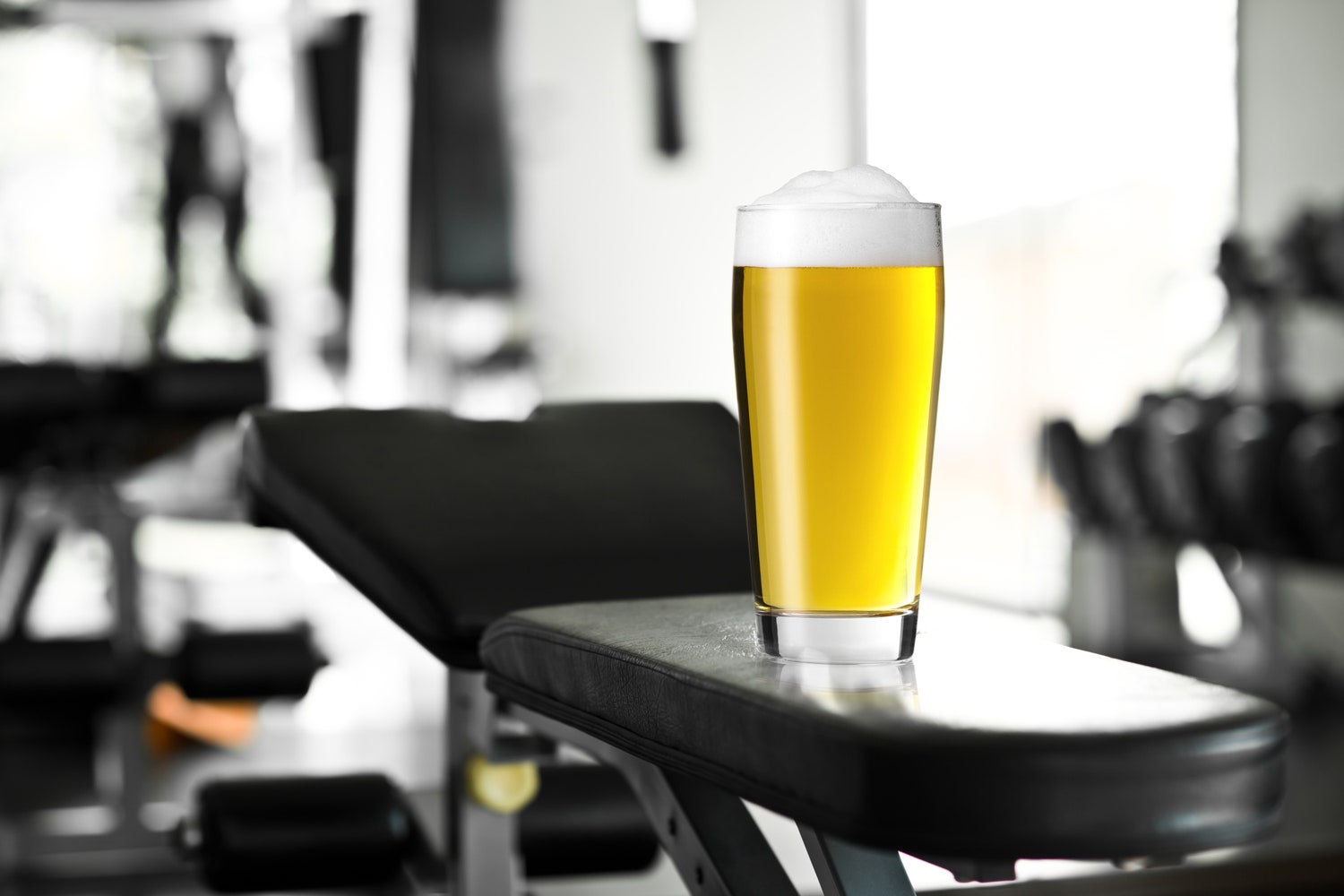
How Beer Can Help You With Exercising?
Beer and exercise probably do not sound like a “perfect” match to most, at first… But you might be quite surprised to learn that science is starting to show us that we might have been wrong in thinking that beer and “getting shredded”, did not belong in the same conversation. That’s what we will discuss in the blog, today! Now, I have said it before, but I have to say it again; I am not a medical professional, and this is not meant to provide any medical advice. What I will do, is share information with you published by medical and scientific professionals so you don’t have to hunt for it yourself! Germany loves beer, but what you may not have known is that for a very long time, many German endurance athletes have “sworn” by its merit as a “post-training” beverage. It’s not just Germany either, this philosophy is catching a lot of attention across the world, due to new research. For that reason, athletes foreign and domestic alike, are feeling a lot less guilty about that after workout beer. You are probably wondering what the science says about that, now, right? Well let’s take a look, shall we? Beer and Muscle Soreness: Physical training and sore muscles tend to go together like ham and cheese, but a 2014 study in the International Journal of Kinesiology and Sport Science found that the athletes they observed reported a reduction in “perceived muscle soreness” after drinking beer versus a placebo. I don’t know about you, but I am already, SOLD! Who “likes” being sore? Beer and Kidney Health: It likely comes as no surprise that intense exercise can cause dehydration, and dehydration can cause kidney stones in some instances. Well, if you like exercise AND beer but you DO NOT like kidney stones, a 2013 study published in the Clinical Journal of the American Society of Nephrology found that “regular, moderate” beer consumption, reduced a person’s risk of developing kidney stones by a whopping 41%, and yes, you read that correctly! Beer as an Anti-Inflammatory: Okay, this one is a little less about the beer itself and a little more about the hops, IN the beer! Yup, a 2009 study in Molecular Nutrition and Food Research found that hops could reduce acute inflammation in study participants. And a 2006 study in Planta Medica found that hops could work similarly to traditional over-the-counter COX-2 inhibitors, a type of non-steroidal anti-inflammatory drug. In simpler terms, the active ingredients in hops might be as effective in reducing certain types of exercise-related inflammation as something like Ibuprofen or aspirin. Beer Consumption and Gut Health: If you have ever beat your own backside at the gym, you know a little “tummy rumble from down under” can really throw your plans off… Oh come on, you can pretend you don’t know what I am talking about, but one brush with the “runners trots”, and you will not soon forget! But do not worry, I have really good news about that, too! Moderate alcohol consumption shows promise in combatting the bacteria often responsible for stomach ulcers, Helicobacter pylori, as reported in a study from The American Journal of Gastroenterology. Beer is also a good source of arabinoxylan-oligosaccharides, the prebiotic food that your good gut bacteria feast on which serves to regulate your gastric “comfort”. Who does not like fewer “belly aches”? Beer And Bone Health: A surprisingly little-known benefit of consuming beer is its silicon content! That is right! Beer contains a vital mineral that your bones NEED, a lot. A paper published in the journal Food and Science in Agriculture concluded that drinking about three bottles of any beer would satisfy your daily requirement for silicon! What?! “Bartender! I’ll take 3, for my bone health!” Beer And Your Heart Health: I have talked about this before, and the American heart association has stated that a single beer a day, could raise your “good” cholesterol while reducing your risks for clots and reducing heart attack risks… What athlete does not require a healthy heart? That, being said, the AHA strongly drives home the fact that MODERATION is key! If all that did not make you want to add beer to your “workout” routine, I don’t know what will! Once again, this is not medical advice, so PLEASE speak to your doctor before adding or changing your lifestyle. I hope you enjoyed this, and maybe even learned something you didn’t know! If you would like to check out my sources for yourself, check out the links provided below! Cheers! Ashley Beer and muscle soreness: http://www.journals.aiac.org.au/index.php/IJKSS/article/view/591/560 Beer and hydration: https://jissn.biomedcentral.com/track/pdf/10.1186/s12970-015-0088-5.pdf https://europepmc.org/article/med/25588064 Beer and post workout inflammation: https://pubmed.ncbi.nlm.nih.gov/19655312/ https://www.researchgate.net/publication/7243285_Selective_Inhibition_of_COX-2_by_a_Standardized_CO_2_Extract_of_Humulus_lupulus_in_vitro_and_its_Activity_in_a_Mouse_Model_of_Zymosan-Induced_Arthritis#page=75 Beer and Bone Health: https://www.ncbi.nlm.nih.gov/pmc/articles/PMC2658806/ https://onlinelibrary.wiley.com/doi/full/10.1002/jsfa.3884 Beer and Gut Health: https://journals.lww.com/ajg/pages/default.aspx https://pubmed.ncbi.nlm.nih.gov/21328111/ Beer and Heart Health: https://www.heart.org/en/healthy-living/healthy-eating/eat-smart/nutrition-basics/alcohol-and-heart-health
Read moreDo you need to strain your homebrew if you dry hop or add fruit without a hop sack?
{{widget type="Solvature\VideoSlider\Block\Widget\VideoSliderWidget" video_embed1="Ja62eoqnUt8" video_title1="Do you need to strain your homebrew if you dry hop or add fruit without a hop sack?" video_cta_color1="white" video_cta_color2="white" video_cta_color3="white" video_cta_color4="white" video_cta_color5="white"}} This is a very common question for new brewers who are entering the stage of brewing recipes. You are starting to add hops, and fruits, and all kinds of other cool stuff to your brew. One question that we see quite often is about straining your beer and if you should do it or not. In our opinion with homebrewing, you should not strain your beer. We really don’t see a benefit to doing that and it seems to only have a negative impact on your beer unless it is done correctly. I would say that the overwhelming majority of brewers do not strain their beer. I could be wrong on that, but I do think that is a good assumption. There are 2 main reasons you do not want to strain your beer. The first being that it opens up another chance for your beer to get infected. Whether you are running it through a cheesecloth or an actual straining system if something is not sanitized properly then you will get an infection in your beer. So by not straining reduces the risk for infection. The second main reason is that it can oxidize your beer. Exposure to oxygen is not good for beer. It can lead to off-flavors in your beer, like a cardboard taste, and those are hard to condition out. So when you filtering or straining your beer it is naturally going to knock it around a little bit which can expose it to excess oxygen. Which can lead to an off-flavor. So by not straining your beer, it can reduce the risk for an oxidized beer with off-flavors. The best way to still clear your beer and reduce folates or sediment in your beer is to cold crash. Put your fermenter in the fridge for 24-48 hours before bottling. This will help all the sediment, hops fruit, or whatever else is in your beer settle to the bottom. You can also prop up the front of your fermenter which will help most of that sediment settle to the back of your fermenter. So to wrap it up, do not strain your beer, it does not help. Cheers, Robert
Read moreWhen sampling your beer should you always toss your first pour?
{{widget type="Solvature\VideoSlider\Block\Widget\VideoSliderWidget" video_embed1="5be9l_-J5ZY" video_title1="When sampling your beer should you always toss your first pour?" video_cta_color1="white" video_cta_color2="white" video_cta_color3="white" video_cta_color4="white" video_cta_color5="white"}} Today we are going to talk about sampling your beer. This is probably one of the most exciting parts about brewing, the first initial taste of your actual beer! In order to get a good first taste, you need to do one crucial thing. Now there is a little trick when it comes to sampling to make sure you are getting a good sample of your beer. During the brewing process, sediment will develop at the bottom of your fermenter. That is called Trub and that is the bi-production of the fermentation process. It’s a good way to know that your beer is fermenting. For the most part, that sediment will settle below your spigot, but when you do your first sample pour you can get a few pieces in your glass. Now it does not hurt you but it does not taste all that great and does not give you a good representation of what your beer will taste like. So when you are pouring your sample you will want to toss that first pour. That will clear the spigot area of any sediment that is sitting in there and then you can take your sample again and it will be much clear and just the beer. Hope that helps! Cheers, Robert
Read more
Bewitched Caramels
Looking for a sweet treat to whip up for those summer celebrations? Wouldn’t it be even better if that treat contained some of YOUR delicious homebrew? Say no more, because today I bring you my recipe for; “Bewitched Caramels”! These delicious little morsels don’t require a lot of effort, but they yield a hefty number of servings and if you opt to wrap them individually (which I highly suggest) they provide the perfect portable and giftable way for people of all ages to enjoy a little bit of your beer, without any of the buzz! I personally love them as an afternoon pick-me-up with a nice coffee (stout) as my beverage. What You Need: 4 cups of Bewitched Amber Ale (Oktoberfest would also work) 1 teaspoon plus 1 cup of butter, divided. 3 cups of sugar 2/3 cup of light corn syrup (not the dark one) 2 cups of heavy whipping cream, divided. 1/3 cup water 1 teaspoon salt About ½ teaspoon kosher salt Candy thermometer (helpful) A clean pastry/basting brush (also, helpful) How to make them: In a large saucepan, bring beer to a boil; cook until reduced to 2/3 cup. Set aside to cool. Meanwhile, line a 9-in. square pan with foil; grease the foil with 1 teaspoon butter and set aside. In a Dutch oven or large, deep-pan, combine the sugar, corn syrup, 2/3 cup cream, water, salt and remaining butter. Cook and stir over medium heat until a candy thermometer reads 238°, about 20 minutes. In a small bowl, combine reduced beer and remaining cream; slowly stir into sugar mixture. Using a pastry brush dipped in cold water, wash down the sides of the pan to eliminate sugar crystals. (This part is important so you do not end up with gritty caramel) Cook, stirring constantly until a candy thermometer reads 245° (firm-ball stage), about 30 minutes. Remove from the heat. Pour into prepared pan (do not scrape saucepan), sprinkle with kosher salt. Let stand until firm, about 5 hours or overnight. Using foil, lift candy out of the pan. Discard foil; cut candy into 1-in. squares using a buttered knife. I like to wrap them individually in wax paper so that they can be easily and hygienically shared…. If sharing is your “thing”, that is. I hope you enjoy this recipe, and if you make it, let us know! Until next time, Cheers!
Read moreAfter you pitch your yeast should you stir or not stir your wort?
{{widget type="Solvature\VideoSlider\Block\Widget\VideoSliderWidget" video_embed1="WptRg1PIVCE" video_title1="After you pitch your yeast should you stir or not stir your wort?" video_cta_color1="white" video_cta_color2="white" video_cta_color3="white" video_cta_color4="white" video_cta_color5="white"}} Today we are going to answer the age-old question, should stir your wort after you pitch your yeast or not? This idea is an older brewing idea. It used to be part of our instructions about 10 years ago. We would have you pitch your yeast then aerate your wort. The idea behind this was that it would mix your yeast up in your wort and help it do a better job during fermentation. However, it actually does not really do anything. Mixing your wort after you pitch your yeast can actually make things worse. It can kick up yeast on the side of your fermenter that you need for fermentation. It adds more of a risk element for infection in your beer and it can make your yeast a little unhappy. So, the best thing to do is to thoroughly aerate your wort then pitch your yeast. Do not stir your wort after you pitch your yeast. Cheers, Robert
Read moreShould you cap your beer bottles as you fill them or at the end of bottling?
{{widget type="Solvature\VideoSlider\Block\Widget\VideoSliderWidget" video_embed1="ze1XqWHtq_U" video_title1="Should you cap your beer bottles as you fill them or at the end of bottling?" video_cta_color1="white" video_cta_color2="white" video_cta_color3="white" video_cta_color4="white" video_cta_color5="white"}} Should you be capping your bottles as you go or should you wait and cap them all at the end of bottling? We break down what you should be doing in this week's episode of BrewTalk with Mr. Beer. I saw this question presented in our Facebook group the other day and I thought It was very interesting. This is not something that we explicitly call out in our instructions, so I thought it would be good to discuss this topic. So in an official capacity, you should cap your bottles right after you fill them, and there are a few reasons for that. Also, I don’t see any real benefit to filling all your bottles then capping them all at the end. All you are doing is creating the risk for infection. The first is just having them sit there with no caps on and the beer in them, it can open up the risk for them to get an infection. You could have anything floating around in the air that could just drop into your bottle of beer and cause an infection. You want to keep those caps sitting on your bottles at all times. A proper procedure for helping to keep your bottles safe and clean should be like this. Sanitize your bottles. Pour out the sanitizer and put the cap on top of the bottle, you don’t need to tighten it, just set it on top. Then when you are ready to fill your bottle, add your carbonation drops, then fill your bottle with beer, then cap it. That would be the best way to minimize the risk of infection during bottling by reducing the amount of time the inside of the bottles is not covered after sanitizing. Cheers, Robert
Read more
Is brewing all grain really cheaper?
Many craft beer enthusiasts choose home brewing as an enjoyable hobby and extension of their love for fermentation and the freedom to create their own custom recipes, but another notable advantage is, financial. If you love craft beer; I likely don’t have to tell you that buying it can get expensive, a “bottle shop” 6-pack, at a time. For many, homebrewing can a great way to reduce overall costs, especially if you like to enjoy and share those classy-craft-brews, on a regular basis. Here at Mr. Beer, we have spent some time talking about how brewing with our products, especially refills, can save you on both ingredient costs, equipment costs, and of course, time… But it may seem with our recipes, that an all-grain version might be a “less expensive” option. I decided to see if that was true. Is it a better value to brew with Mr. Beer when it comes to recipes, over an all-grain equivalent? I selected one of our more complex “clone” recipes from the site and compared it to the cost of brewing the same beer, but all-grain, and shopped all the needed ingredients for the “official” all-grain” version of the recipe. The recipe I selected for this comparison was “Gnomes in The Abbey”, as this our “Mr. Beer version” inspired by Lost Abbey’s seasonal favorite, “Gnoel De Abbey”. Luckily, the publication “Brew Your Own” provided us with an all-grain “clone” recipe of this beer to compare with… I should really say “beers”, as the all-grain version they have provided, requires you to brew two separate batches in order to achieve the final product, after finally conducting a 70/30 blend. That is probably the first, most noticeable advantage of brewing the Mr. Beer version of this beer; you are only required to execute ONE brewing and fermentation process. Now, let’s look at the finer details starting with a list of ingredients for both versions, as well as the total estimated cost for each when shopped online: Mr. Beer’s Gnomes in The Abbey 2 Canadian Blonde Brewing Extract (HME) 2 Packets of Robust LME 1 Packet of Booster 1 Packet of Vienna Malt 1 Packet of Honey Malt 1 Packet of Chocolate Malt 1 Packet of Crystal 60 1 Packet of Northern Brewer Hops 1 Packet of Oak Chips 3 Muslin Hop Sack 1 Packet of T-58 1 Packet of No-Rinse Cleanser Cost from Mr. Beer: $39.95 All-grain Version from “Brew Your Own” magazine: (Both recipes below are for 5 gallons, however, the final total represents what it would cost to shop these ingredients for a 2.25-gallon batch. I have listed the 5-gallon quantities to maintain the integrity of the original clone recipe.) Blending beer #1 Abbey Blonde 9.75 lbs. (4.4 kg) American 2-row pale malt 5 oz. (0.23 kg) German Vienna malt 6.3 AAU US Magnum hops (90 min.) (0.45 oz./12.8 g at 14% alpha acids) 0.07 oz. (2 g) freshly ground coriander (15 min.) 1⁄2 tsp. Irish moss (15 min.) White Labs WLP830 (German Lager) or Wyeast 2124 (Bohemian Lager) or Mangrove Jack’s M84 (Bohemian Lager) yeast Blending Beer #2 Imperial Stout 13.4 lbs. (6.08 kg) American 2-row malt 0.4 lb. (0.18 kg) Gambrinus honey malt 0.4 lb. (0.18 kg) crystal malt (70–80 °L) 0.4 lb. (0.18 kg) crystal malt (120 °L) 0.4 lb. (0.18 kg) crystal malt (165 °L) 0.4 lb. (0.18 kg) chocolate malt 0.4 lb. (0.18 kg) Weyerman Carafa® II malt 0.8 lb. (0.36 kg) roasted barley 0.8 lb. (0.36 kg) flaked barley 1.75 lbs. (0.79 kg) dextrose 16.4 AAU US Magnum hops (90 min.) (1.1 oz./31 g at 14.9% alpha acids) 4.9 AAU Cascade hops (15 min.) (0.65 oz./18 g at 7.6% alpha acids) 1⁄2 tsp. Irish moss 4 oz. (113 g) Bourbon-soaked oak chips White Labs WLP001 (California Ale) or Wyeast 1056 (American Ale) or SafAle US-05 yeast Wyeast 1098 (British Ale) or White Labs WLP007 (English Dry Ale) or LalBrew Nottingham yeast Total cost estimate AFTER modifying for 2.25 gallons, shopped on a competitor’s website: $60-65 These estimates demonstrate how brewing the Mr. Beer option can save you money where ingredients are concerned, but there are even more advantages to be had. Continuing to use the all-grain version above as an example, even when the weights of the grains are reduced by half, storing, milling, and working with several lbs. of malted grain can be quite a hassle, and the equipment required for processing it and brewing with it, demands quite a large commitment to space. Next, we have the time-saving aspect. All-grain brewing can often be an all-day commitment from start to finish. That factor becomes even more pronounced when it comes to brewing two beers on the same day! By comparison, our clone version only requires about 2 hours maximum of your time, from the start of your brew day to the cleanup. Not worrying about where to store two fermenters is also another advantage in this case, and you will not have to worry about any pesky blending once fermentation is complete! Not having to blend two separate beers after fermentation, also greatly reduces the chance of infection and unwanted oxygen exposure. To sum it all up, Mr. Beer's recipes allow you to brew beers easily and cost-effectively, which would typically be time-consuming, complicated, and expensive in their all-grain forms. We do all the hard work for you, so what’s left is an enjoyable and successful brewing experience; A greater chance of success, and a faster path to advancement in the flavor complexity of the beers you brew! We think home brewing should be inclusive to everyone, that means cost, accessibility and ease-of-use are always some of the biggest factors we consider when creating these recipes for our brewers. The value goes beyond money, time, and space; you might save a little on your sanity, too! All-grain brewing is awesome, but the truth is, not everyone has the resources of time, space, and money to achieve their goals and that makes our recipes a unique value! I hope you enjoyed this, and like always, if you have any questions or suggestions for future topics, do not hesitate to let us know! We always value hearing your thoughts and feedback! Cheers! Ashley
Read moreDo you add your hopsack to your fermenter after a hop boil?
{{widget type="Solvature\VideoSlider\Block\Widget\VideoSliderWidget" video_embed1="OgU8afJ5do8" video_title1="Do you add your hopsack to your fermenter after a hop boil?" video_cta_color1="white" video_cta_color2="white" video_cta_color3="white" video_cta_color4="white" video_cta_color5="white"}} This is a question that we get all the time with our recipes. So we thought it would be helpful to clear the air! When brewing any of our recipes you will always leave the hopsack in the fermenter unless the instructions tell you to take it out. This goes for any adjunct that you might be using, zest, oak chips, cacao nibs, hops, etc. If the instructions do not tell you to take it out then it goes into your fermenter for the duration of fermentation. Leaving your hops in during fermentation will add a touch (very small amount) of flavor and aroma to your brew. Now boiling hops does reduce the impact of hop flavor in aroma, but you get some great bitterness out of the hops. If you are looking to get more flavor and aroma from your hops then you will want to add them either when you take your pot off the heat. Throw them in and let it sit for a minute. You can also add them later as a dry hop. So to wrap it up and make it clear, you will always leave your hopsack in the fermenter unless the instructions tell you otherwise. Cheers, Robert
Read more
Strawberry Malted Milkshake Cheesecake Bites
Very few desserts bring back nostalgic, summer memories, quite like the flavor of an “old-fashioned” strawberry malted milkshake. Now tell me you didn’t smile a little just thinking about it?! Assuming you have had a chance to look at some of my previous recipes, you already know I love to cook and bake with beer, but did you know that liquid malt extract makes for an incredible cooking ingredient, too? Well, I am here to show you how, with these mouthwatering and decadent cheesecake bites, inspired by one of my favorite summer treats from childhood. This recipe captures the flavor and spirit of those classic malted milkshakes, but with a “grown-up” twist that makes an awesome and easy to prepare party snack… Or you can eat all 36 of them yourself while hiding in the hallway coat closet; I am not here to tell you how to live! But seriously, these things are GOOD, so you will probably want to stash a couple in the freezer behind the frozen peas, as they are not known to last very long! Without any further delay, let’s make some! Ingredients: 36 whole Vanilla Wafers 24 ounces, weight Cream Cheese, Softened 3/4 cup Milk Powder 4 Tablespoons Pale or smooth LME ½ cups Sugar 1 teaspoon Vanilla Extract 1 cup Strawberry Jam or preserves (not jelly, because that has gelatin, and we don’t need that for this) 1 pinch Salt 3 whole Eggs ¾ cups Sour Cream Whipped topping: 1-½ cup Heavy Cream ¼ cups Powdered Sugar Other Items: Enough cupcake tins and wrappers to make 36 bites A small shot glass to crush each wafer inside the tin Sliced strawberries to use as a garnish (optional) How to make them: Preheat the oven to 300ºF. Place a vanilla wafer in each lined muffin tin, cup. Using your shot glass, press the vanilla wafers until crushed to fill the bottom of each liner. Using an electric mixer, combine the cream cheese, milk powder, malt, and sugar until fluffy, 3 minutes. Add the vanilla and jam. Beat until well incorporated. Scrape the bowl and add the salt, eggs, and sour cream; beat until smooth. Add about 1/3 cup of cheesecake batter to each cup in your tins and make sure each crumbled wafer is covered. Bake for 30-45 minutes until the centers are just set. Check at 30 minutes with a toothpick. The center should be still a little loose, but mostly solid. They can take up to 45 minutes. Just make sure you watch them! Take them out of the oven and let them cool for about 10 minutes at room temp and then into the fridge for 4 hours. Once the bites are fully chilled, whip the heavy cream and powdered sugar together. Dollop the whipped cream on top of each cheesecake and top with a strawberry slice. I hope you love this recipe! Let me know if you would like to see more recipes that use LME or DME as an ingredient! ENJOY! Ashley
Read moreWhy you should put your beer in the fridge for 48-72 hours before drinking it?
{{widget type="Solvature\VideoSlider\Block\Widget\VideoSliderWidget" video_embed1="tQrDM0pDYWM" video_title1="Why you should put your beer in the fridge for 48-72 hours before drinking it?" video_cta_color1="white" video_cta_color2="white" video_cta_color3="white" video_cta_color4="white" video_cta_color5="white"}} So this is one of the last steps in our instructions, but a crucial step that often gets overlooked. You have spent all this time waiting to taste your beer and you just want to chill it real fast and drink it now! Well, you might be better off letting it sit in the fridge a bit before you drink it. The reason we tell you to leave your beer in the fridge for 48-72 hours is that it will help with your carbonation. If you have ever pored a warm beer you will notice that although it will pour foamy the C02 is lacking a little bit or will dissipate rather quickly. When a beer is cold it helps the C02 absorbed better into the beer. So if you let it sit for those 72 hours you will have a much better-carbonated beer. Having a well-carbonated beer also help bring out all those hop flavors and aromas that you might not taste otherwise. So it can provide a good balance to your beer and improve the flavor of IPAs for example. If you have a hard time waiting that long, then what I would recommend is putting 2 bottles in the fridge. One to drink if you just can't wait and the other to sit for at least 48 hours to allow that C02 to fully absorbed into the beer. You will definitely notice the difference in taste between the 2. The one that was allowed to sit in the fridge for a bit longer is going to taste much better. So make sure to leave your bottles in the fridge for at least 48 hours prior to drinking for the best results. Cheers, Robert
Read more
What is Kveik yeast?
You probably have heard of this word, or maybe you have not until today, so let’s go ahead and answer the question in our title, first; “What is Kveik yeast?”. The very simplest explanation is that “Kveik” refers (currently) to about 3, brewer’s yeast strains that are native to Norway, specifically. Now, that is the short definition, but Kveik gets much more interesting than that! I field many questions about Kveik yeasts, every summer because, unlike most other brewing yeasts, it can tolerate very high temperatures by comparison, and it attenuates VERY quickly. Because of this higher temperature tolerance and blazing speed, warmer months seem to be when ya’ll really want to know about the stuff! Hey, I get it and you know by now, I need very little justification to talk about brewing yeasts, so here we go! “Where does Kveik come from?” As already briefly mentioned above, Kveik yeast originates in Norway and the word itself literally means “the yeast”! Certain varieties of Kveik can also be found in Lithuania, Latvia, and other surrounding areas… But these yeasts are part of the family associated with the “Norwegian farmhouse” style, or as we often call it nowadays, just “Farmhouse” style. Many of the original varieties of “old world” Kveik have been lost to time, but on the west coast of Norway, from Hardanger in the south to Sunnmøre in the north, there are still some yeast cultures that have survived and are in use to this day, along with more contemporary strains and blends, as well. Specific, regional cultures were usually passed down as well guarded family secrets, so the wild varieties of Kveik that we may not even know of today, likely existed on a vast spectrum. “What’s it got, that other “Ale” yeasts, don’t?” You likely already gleaned; Kveik’s special talents are SUPER fast fermentation and high-temperature tolerance… But so, what? There are other yeasts that do that too, right? Well, sort of… But there are not many yeasts that can do all that and still taste GREAT, that’s where Kveik gets “extra” special if time and temperature are management issues for you. Depending on the specific variety of Kveik you are brewing with, “ideal” fermentation temps can run anywhere from 90-104 degrees F! That is some sultry, stuff! “Can I only use this yeast for Farmhouse styles, then?” That is probably the best part of this whole “thing”. Kveik yeast is surprisingly flexible, at least far more flexible than you might think! Brewers across the country have used it to ferment anything from IPA’s to Pilsner-style beers! That means you can have wort, to beer in as little as 3 days and conditioning will happen much faster, too! “What kind of flavors can I expect to get from Kveik varieties?” Kviek yeast is typically characterized as “estery” (fruity), but usually low in phenols, which are those spicy flavors you will sometimes find in Belgian styles. Different labs will create varying mixtures of Kveik varieties a long with bacteria, in order to modulate and or manipulate various flavor characteristics, so it is very important to make sure you “do your research” prior to purchasing and brewing with a Kveik strain. Some varieties even boast “neutral” flavor profiles when brewed at the lower temperature ranges. Keep in mind though, with a few exceptions, Kveik’s usually provide the best flavors, at higher temperatures. “Where can I find Kveik yeast of my own to brew with?” While we are not yet carrying Kveik varieties, over at Mr. Beer… “YET, You might be please to learn that LOTS of specialized vendors carry it, so make sure to check in the brew shops that are local to you as well, they might just surprise you with what they have in stock! Alright, folks, that might have seemed like “a lot” but when it comes to the wild and funky world of Kveik, the rabbit hole can get MUCH deeper! I hope that answered some of your questions and if you find yourself wanting “more”, give us a call or send us a message and we will be happy to talk “shop” on wild yeasts with you! Until next time, Cheers! Ashley
Read more