

The Brew Times Homebrewing Blog
Can you use a dented can of malt extract?
{{widget type="Solvature\VideoSlider\Block\Widget\VideoSliderWidget" video_embed1="kLJtiqZfYbs" video_title1="Can you use a dented can of malt extract?" video_cta_color1="white" video_cta_color2="white" video_cta_color3="white" video_cta_color4="white" video_cta_color5="white"}} We have all seen Ace Venture and know what can happen to your box during shipping. So it is inevitable that you will get a can of malt extract that is dented, but can you still brew with it? We break it down on this episode of BrewTalk with Mr. Beer. So if you happen to get a dented can you can brew with it. You do not need to worry about any bacteria forming or anything being wrong with the malt extract itself. The cans have a very strong internal lining in them to prevent the malt extract from getting distributed and they have no oxygen in them to prevent bacteria growth. So if your can is dented don’t worry about it, you can still brew it with no problem. The only time you should ever be concerned is if your HME can is bulging. This will only happen if the can is very very old. In this case, we would recommend not brewing that. But other than that dents or even past its expiration date the malt in your can will be good to brew. Cheers, Robert
Read moreThe Brew Times Homebrewing Blog
Bawker Bawker Tucson's First Cider House
Downtown Tucson is known for many things and most locals are happy to name them off for you. The University of Arizona, several nationally known restaurants and breweries, historical sites, small businesses; the list could go on and on. Despite all of that, there’s still something the Tucson area has never had before. A new and brilliant Jewel in the crown of Downtown and it's called Bawker Bawker Cider House. Tucked neatly into the corner on 400 N. 4th Ave, Owner and Brewer, Don Rubino, and his wife Jaimie have turned this historical, semi-industrial space, into a warm, quirky, and inviting spot for all that enter. From the first step over the threshold, I was met with the familiar, tangy aroma of fermentation. Next, my eyes wander up to the bar and then to the many taps, all in a row, a true delight for those that appreciate, “options”. After taking my seat, being greeted, and being offered a tour of the vast (and constantly rotating) menu, my adventure began. With 24 ciders on tap, I opted for a flight… Soon after ordering, I was served a circular rainbow of vivid color, a feast for the eyes no doubt. I had a feeling I was in for something “GOOD”, and boy, was I right! As I sipped my flight, I couldn’t help but notice and appreciate the labor and love applied to each flavor I tried. The complexity, the yeast character, the creativity… It was all there and all perceptible within those six, little, glasses. Beyond the cider being delicious, the atmosphere is inviting, there’s no TV’s or loud music to contend with, making it the kind of place you could have a conversation with someone, at reasonable decibel. The service is friendly and if you ask questions, Don is happy to answer them. Speaking of questions… Owner, Don, was kind enough to take the time of his busy schedule and give us an interview for The Mr. Beer Blog about his new “baby”. Here is what he had to say: Ashley: What made you want to open the first Cidery in Tucson? Don: “I have been making cider for 10ish years and have always enjoyed making and drinking it. I have been a "maker" since I was a kid. I knew Tucson didn't have a cider house and wanted others to enjoy my creations and realize that there are more options than the commercial sweet sugary ciders, as ours tend to be on the dry side.” Ashley: Where do you draw your inspiration for the unique range of flavors you offer? Don: “Everybody and everywhere. My wife, our friends, our customers, things we have drunk, and things we dream about. There are no limits!!” Ashley: Many people were surprised to see you open during such a challenging time for so many small businesses. What are some of the “special” challenges this has created for you? Don: “Hmmm what wasn't a challenge at that time? Getting building material to the job site for the build-out. Getting the permits. Getting the inspections. Trying to figure a budget for something we didn't know when would end. Do we finish the build as planned or do we try to see the future and build for a "new way of life”? having to navigate subs, when we couldn't work in the same room. did I mention how to navigate a budget with no idea when we would open? How we could do “to-go” products without anyone ever trying our product.” Ashley: Have there been any challenges you did not anticipate? If so, what were they? Don: “Yes. a can shortage. we had ordered 900 cans and thought that would hold us for a bit, and then selling out in just 2 weeks. How long it ended up taking for deliveries? Over the last year freight has been going up due to a shortage of truck drivers. (Thank a truck driver for being out there, we need them!!) and then when we did open our taproom, there was a shortage of people that could work. To name a few.” Ashley: Now I know you get this question all the time but humor me. Why the name “Bawker Bawker” and why are there chickens all over the place? Don: “They are funny. My wife would comment about me “bawkering” with the girls in the coop, and it made me laugh. So, it stuck with me. Everyone tried to talk me out of it, but at 2 in the morning when I was doing the paperwork… Nobody was there to talk me out of it.” Ashley: Where did your passion for making cider, begin? Did you start as a homebrewer? Don:” I did start as a homebrewer. Before I met my wife, I was content drinking Tecate light, and she thought it was silly for me, who has always loved to cook and create, to be drinking such a mild beer. I was in love with her even more from that moment. Who’s girlfriend wants you to take time and make beer/cider…” Ashley: What’s your favorite part about running a Cidery? Don: “The cider, the people, getting to make a cider here and there just for me and the way I like it. (I always do make enough to share) Seeing people get excited about a new flavor. Working nights. Listening to the bands. Being able to live my life as a maker of something I am passionate about. Seeing our logo out in public on a sticker or a shirt.” Ashley: It’s no secret that you and your wife, Jaimie, are hard workers as it’s easy to catch you both working behind the bar on any given day. Do you feel like a “work-life balance” exists anymore? Don: “Balance. That’s a funny word lately. I do struggle making time for a life outside of here. As we hire staff and get people trained, I do see time off. Maybe not a bunch for a while, but a couple days here and there. My wife is the rockstar here. She still has a full-time career in her field, but still takes the 20-40 hours a week to be here and do the social media, be behind the bar, make appointments, do tastings, and keep me in check so I don’t work 22 hours a day.” Ashley: Does Bawker Bawker Cider currently, or plan to in the future, offer canned ciders for sale at local bottle shops? Don: “We do, and as of today, we are at Flores Market, Feast, and Gourmet Girls, and would be more than happy to be anywhere we are asked to be” Ashley: What’s next for Bawker Bawker Cider? Where do you see yourselves (hopefully) in 5 years? Don: “A vacation!! Dialing in our craft. Getting more people to enjoy a dry cider. Being in more places on tap finding that balance with work. I would like to see us maxing out our production space and finding that rhythm of producing cider and selling it, and if am being dreamy, expanding into a bigger production space. Going into total wine and seeing our cans on their shelves” Besides answering my questions, Don invited me to take a tour of his production space. All production is conducted in under 900 square feet. His brewing area is filled with delightful experimental batches, and cylinders populated will happy little yeasts. To help minimize costs, his fermenters are not jacketed, and all his ciders are fermented at 68 degrees, and then carted by hand, into the cooler for cold crashing. Most of the kegs and fermenters used, have been repurposed from other breweries, as building a cidery from the ground up is no small investment. Every bit must be spent wisely. From the taps to the sleek, well-designed restrooms, Don has put his background as a contractor to good use, and it shows in every detail. There’s no doubt; Bawker Bawker has been well-received by the Downtown and Tucson community. Being that 60-70% of their traffic comes from walk-ins, I think it is safe to say, “We see you Bawker Bawker, and we like it!”. From unique flavors like Horchata, prickly pear, to cherry Vanilla Nitro and many more, this place has something for everyone. You can even find fun events like, trivia and food trucks! So, if you find yourself in Tucson, needing somewhere to beat the heat and enjoy cider, crafted by someone truly passionate about their product… Find yourself at Bawker Bawker Cider house. Check out Bawker Bawker’s website: https://www.bawkerbawker.com/ As always, if you enjoyed this article, or have questions, let us know in the comments section. Cheers! Ashley
Read moreCan you wash your brewing equipment in the dishwasher?
{{widget type="Solvature\VideoSlider\Block\Widget\VideoSliderWidget" video_embed1="vb8pxGFvBZU" video_title1="Can you wash your brewing equipment in the dishwasher?" video_cta_color1="white" video_cta_color2="white" video_cta_color3="white" video_cta_color4="white" video_cta_color5="white"}} This is a question that people ask quite often, and there are certain pieces of equipment that you can put in your dishwasher and other ones that you cannot. Now I will say that I have heard from many people that they wash or rinse all of their equipment in the dishwasher without any issues. And if you do that’s awesome and a good way to clean your equipment. To start for our brewing purposes in our brew room, we hand wash everything. We don’t use the dishwasher. We just feel it's better for the equipment to help it last longer to hand wash and clean it all. Okay, so when talking brewing equipment things like your mixing bowls, plastic brewing paddles, pots strainers all that stuff would be fine in the dishwasher. When looking at bottles it depends. Glass bottles will usually hold up well in the dishwasher. If you are washing swing-top bottles in there just keep an eye on your gaskets so they don’t erode over time. If you have plastic bottles I have heard of people putting them in the top rack, but we would recommend just hand washing them. For your fermenter, it depends on what kind you are using. Certain bucket fermenters and ones like the Coopers 6 Gallon Fermenter can do into the dishwasher. Others like our 2-gallon LBK you do not what to put in the dishwasher. The main reason you do not is the heat that is generated can warp certain plastic if it gets too hot. So to wrap it up it is best in our opinion to wash and clean your equipment by hand. Cheers, Robert
Read moreCan you pitch more yeast in your homebrew?
{{widget type="Solvature\VideoSlider\Block\Widget\VideoSliderWidget" video_embed1="ibPEDhSjOc0" video_title1="Can you pitch more yeast in your homebrew?" video_cta_color1="white" video_cta_color2="white" video_cta_color3="white" video_cta_color4="white" video_cta_color5="white"}} Do you ever wonder what pitching more yeast in your beer could do? Would it fermenter faster, maybe cleaner, or nothing at all? We break it down in this episode of BrewTalk with Mr. Beer. If you have been brewing with Mr. Beer for a while you will notice a few things. One of those things would be that the amount of yeast you pitch in a refill brew vs some of our recipes is different. When brewing one of our refills you will pitch the packet under the lid which is about 5g of yeast. With most recipes, you will pitch a different packet of yeast which is about 15g. Now the question is does this cause a difference in your finished result, and the answer is, well it depends but it can affect your beer in a positive way. First off, we need to say that if you are holding your fermentation temperatures solid, and you are pitching at the proper temp, your sanitization is on point then adding the extra yeast might not have that big of an impact on your beer. However, if you are getting off-flavors in your beer consistency and having trouble holding temperatures or not monitoring your pitching temperature then adding more yeast could help you. Now you do not want to pitch more than 15g of yeast into one of our recipes, that is too much yeast and won't change anything with your brew. So if the brew you are doing already calls for 15g then stick with that. With our refills and a few recipes, you are only pitching 5g of yeast. So if you always having a slight off-flavor, try pitching more yeast. You can do 2 or 3 of the Mr. Beer packets of yeast. What this will do is if will put less stress on the yeast when it is eating up all those sugars in your beer. It will also help it clean up any off-flavors faster. So if you are always having a slight twang of off-flavor in your brew, then pitch more yeast in your 2-gallon batch. Now just to reiterate you don’t want to pitch more than 15g in your Mr. Beer batch. If you are already making great beer with just the 5g packet then keep doing what you are doing. This is only for those who keep getting a slight off-flavor and they just can't track it down, pitching more yeast can clean that up for you. Cheers, Robert
Read more
Brew Now Enjoy for Labor Day
It is always fun to brew some beers during certain holidays. It is even better if you can prepare ahead of time and brew some beers to enjoy during certain holidays. So, I wanted to provide some recommendations that you can brew now and enjoy for Labor Day. Labor Day this year is September 6th, so that is about 4 weeks from now, so if you brew now, you will be ready to drink for Labor Day. Below are some of the recipes that brew in the 4-week time frame and that would be perfect to enjoy for Labor Day. Golden Ale Craft Refill – Brew Time 10-14 days. Carbonating Time 14 days American Ale Standard Refill - Brew Time 10-14 days. Carbonating Time 14 days M&B Cream Ale - Brew Time 14 days. Carbonating Time 14 days Xtra Special Bitter ESB - Brew Time 14 days. Carbonating Time 14 days Over-Inflated Wheel Amber Ale - Brew Time 14 days. Carbonating Time 14 days Workout IPA - Brew Time 14 days. Carbonating Time 14 days Day After Day IPA - Brew Time 14 days. Carbonating Time 14 days Pennsylvania Traditional Lager - Brew Time 14 days. Carbonating Time 14 days Light Speed Blonde Ale - Brew Time 14 days. Carbonating Time 14 days Naughty Cream Ale - Brew Time 14 days. Carbonating Time 14 days Heavy McWee Scottish Style Ale - Brew Time 14 days. Carbonating Time 14 days Make sure no matter what you are drinking for Labor Day to post and tag us on social so we can share your awesome brews. Cheers! Robert
Read moreWhat is Diacetyl in Your Beer and How to Prevent & Fix It?
{{widget type="Solvature\VideoSlider\Block\Widget\VideoSliderWidget" video_embed1="sOmrjvKf8DA" video_title1="What is Diacetyl in Your Beer and How to Prevent & Fix It?" video_cta_color1="white" video_cta_color2="white" video_cta_color3="white" video_cta_color4="white" video_cta_color5="white"}} Have you ever gone to taste your beer and noticed a slight buttered popcorn taste or smell to it? Well, that would be the unfortunate chemical compound called Diacetyl. In this episode, we will take how to prevent it and fix it if that happens. Now how diacetyl gets into your beer is a little complicated so we will break it down as simply as we can. But there are two primary ways you can get this in your beer. This flavor is usually very noticeable when you are getting ready to bottle your beer, so there are a few things you can try to do to help prevent this. Either through slow or inefficient expression and intracellular reduction of naturally occurring diacetyl precursors or by a bacterial infection Let's break down the second way first as that is more simple. The best way to prevent that is just to have good sanitization since it is a bacterial infection. So if you get diacetyl in your beer make sure to give all of your equipment a thorough cleaning with a brewery cleanser, not a sanitizer, but something that will clean your equipment. We use the Craftmesiter Oxygen Brewery Wash which works really well. The second reason is a little more complicated. There is a precursor to Diacetyl and that is acetolactate. If you do not give it the time or proper conditions to be absorbed in the beer, you can do a few things. If you bottle your beer and get that buttered popcorn taste or smell, you should let your beer fermenter for 2 more days but raise the brewing temperature by 2-3 degrees. This can help dramatically reduce the amount of this compound in your beer. So to make sure you are preventing this, you want to make sure you keep your brewing equipment clean, make sure you have excellent sanitation, and make sure you are brewing in the proper temperature range suggested in your brewing instructions. If you have this taste in your bottles, you can let your beers condition at room temperature for a few weeks, which might help the flavors. To recap just make sure you are sanitizing and holding your proper brewing temp and you should be good! Cheers, Robert
Read more
How to Pair Beer With Food Like A Pro
If you are like most of us, you probably enjoy imbibing your awesome, home-brews with some delicious food, but sometimes that can seem like a challenging task. Worry no more, I am here with an easy guide to get you well on your way to beer-pairing greatness! Below you will find some general suggestions, but these are just ideas and what’s here is only a few of them so do not be afraid to experiment and try things, too! Sometimes, rules are meant to be broken! Basic beer and food pairing suggestions: Light lagers: Spicy food, burgers, salads Crisp, refreshing, and typically more neutral in flavor, “Light Lagers” tend to pair harmoniously with most savory foods, but they can really become an asset when it comes to spicy food. Grilled foods like chicken, hot dogs, brats, and even raw veggies also pair nicely with Light lagers. Wheat beers: Spicy food and fruity desserts Typically, soft on the pallet with a light grain character, garnering most of its “flavor” from the yeast character, wheat beers are another style that is well-matched with a broad range of foods. Try pairing wheat beers with Buffalo wings, Spicy noodles, Salads, Fruit tarts, or Pastries. India pale ales (IPAs): Steak, barbecue, and Mexican food Hoppy, bold, and often delightfully bitter, IPAs, characterized by their strong flavor, often do best when paired with rich-tasting and “fatty”, meals. They can hold their own against dishes such as Barbecue ribs, French fries, Mozzarella sticks, Steak, Burritos, and Fajitas. Amber ales: Pizza, fried food, smoked pork Toasty, and typically slightly bready on the aroma, with a crisp, clean finish; Amber ales do well at balancing out rich, savory foods, without getting in the way of their flavor. For this reason, they pair well with comforting foods such as Barbecue pulled pork, Jerk chicken, Pizza, and Brisket. Dark lagers: Pizza, burgers, hearty stews These beers typically boast a light caramelly sweetness, that is balanced by darker, roasted flavors. I find these beers really shine when they are paired with certain traditional European dishes, like Sausage, Goulash, Potato dumplings, Bangers, and mash or pretzels! Brown ales: Sausage, sushi, fish Heavier roast, and rich roasted flavors of coffee and chocolate, brown ales showcase a round and nutty flavor with a drier finish. Truth be told… Brown ales pair well with MANY things, but here are a few suggestions to get your wheels turning: Sausage, Roast pork, Barbecue, Fish, Sushi. Porters: Seafood, coffee-flavored desserts, game meats Porters are made with roasted brown malts that give the beer strong notes of chocolate, caramel, and coffee. Like Brown ales, but richer. They are typically drier on the finish and though similar in flavor to Stouts, they are not as “creamy” in texture. Try them with Lobster, Crab, Mexican mole, Barbecue, Rabbit, venison, and game meats. Stouts: Chocolate desserts, shellfish, Mexican food Stouts are best known for their black color and dark, roasted flavor. Despite their appearance, stouts are not necessarily high in alcohol content, bitterness, or flavor, and there are many mild, well-rounded types of stout. Usually characterized by strong hints of chocolate and coffee as well as a silky-smooth consistency. Try pairing with: Chocolate truffles, Chocolate mousse, Lobster, Barbecue, and Shellfish. Well, I don’t know about you, but now I am STARVING! So, do as I do, get yourself some homebrew, and whip up some of these delicious foods to pair along with it! If you enjoyed this article, or if you have tried any of the above pairings, let us know in the comments section! Until next time… CHEERS! Ashley
Read moreTips for Reusing Commercial Glass Beer Bottles
{{widget type="Solvature\VideoSlider\Block\Widget\VideoSliderWidget" video_embed1="2xsvQk8hG34" video_title1="Tips for Reusing Commercial Glass Beer Bottles" video_cta_color1="white" video_cta_color2="white" video_cta_color3="white" video_cta_color4="white" video_cta_color5="white"}} If you drink a decent amount of beer chances are that you can build up a good collection of glass bottles. These can be used for bottling your homebrew beer which is a great way to save on bottles. We got a few tips for reusing those bottles. However, there are a few tips we wanted to provide you with when looking to reusable commercial glass beer bottles. The first thing is that if the bottles are twist off you cannot use them. You will not be able to re-cap them properly. This will cause you to lose C02 during carbonation and your beer will be flat. So don’t use twist-off glass bottles. The second would be to just be aware of the thickness of the bottles. This is easy to judge just by weight. The heaver the glass bottle the thinker the glass is. The thicker the glass the more durable the bottles will be. So if you are using glass bottles that are not as thin they may become less durable over time. This could result in under carbonated beer or you may have some bottles explode. Now I have only seen this happen a few times and it only happens in reused commercial beer bottles. So just be aware of what bottles you are using and how old they are. If you feel like a bottle might explode then chill it in the fridge to stop that yeast from making C02. Lastly if you are reusing some swing top bottles keep in mind to replace the gaskets after they are used a few times. This will help keep the seal tight and assure you are not losing any C02 during carbonation. Cheers, Robert
Read more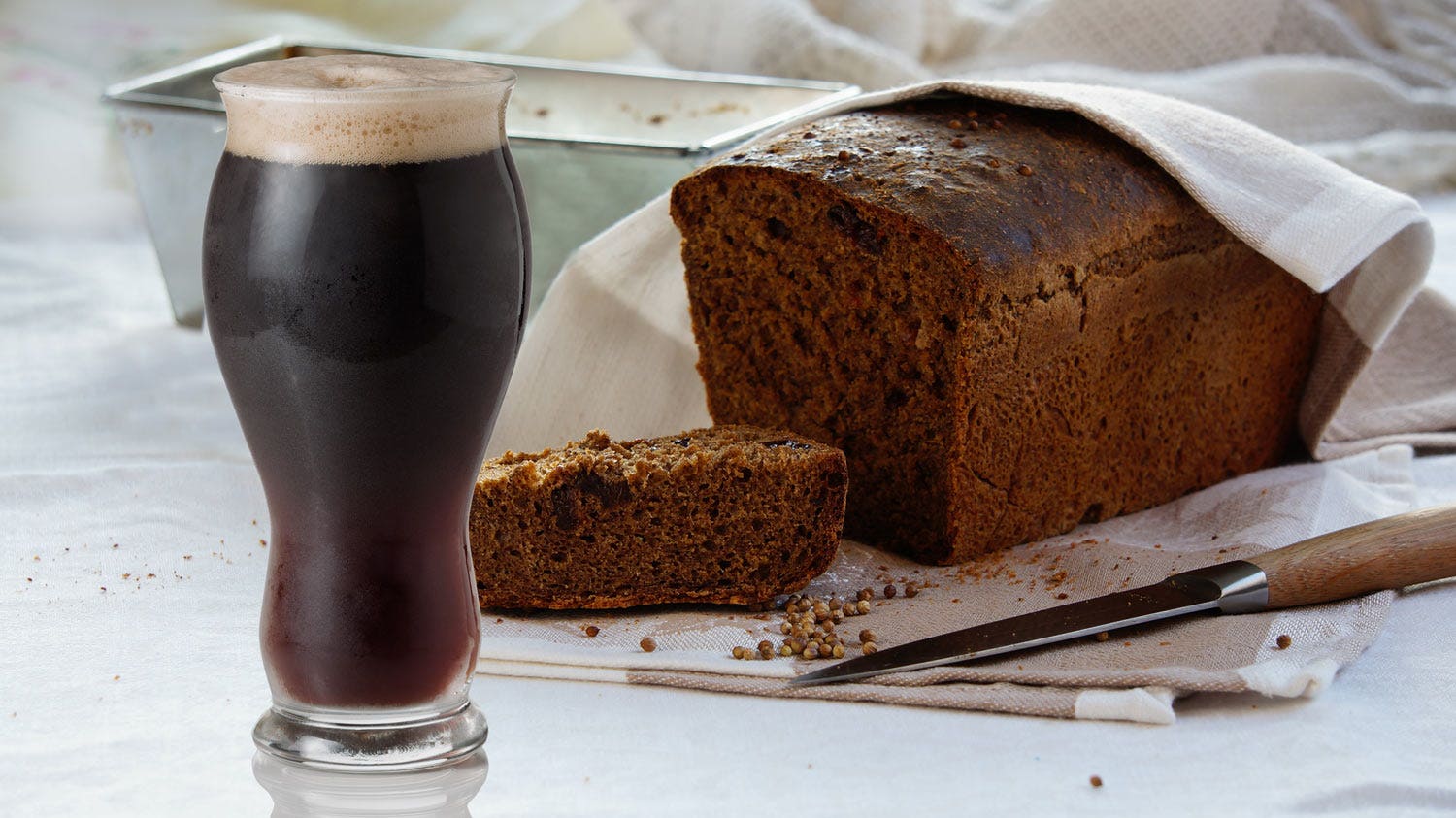
Maple Stout Bread
It is still technically summer for most of the world… But that does not mean can’t start thinking about, and enjoying some of those fall flavors a little early, right? I wait eagerly, every year for the chance to start incorporating all those warm and comforting flavors into both my brewing and my baking! In honor of the cooler months to come, I bring you the best of both “fall” treats and BEER! So let's put on those aprons and make this DELICIOUS “Maple Stout”, bread! What you will need to make it: 1 and ¾ cups of All Purpose Flour (preferably sifted) 1 teaspoon baking soda ½ teaspoon baking powder ½ teaspoon salt 6 tablespoons of softened butter ¾ cup packed dark brown sugar 2 large eggs ½ teaspoon vanilla extract ½ cup St. Patrick’s Irish stout beer (or any Stout you love, will do!) ½ cup fat-free sour cream 5 tablespoons maple syrup, divided Nonstick cooking spray, such as pam. 5 tablespoons powdered sugar 9x5 inch loaf pan coated with Pam How To Make It: Preheat your oven to 350 degrees, you want it to be nice and hot! Combine sifted flour, baking soda, baking powder, and salt, stirring well with a whisk. Set aside. Add butter and brown sugar in a large mixing bowl; beat with a mixer at high speed until well blended. Add eggs to the butter and sugar, 1 at a time, beating well after each addition. Beat in vanilla. Combine beer, sour cream, and 1/4 cup syrup (that would be 4 of your 5 tablespoons), stirring well with a whisk in another separate bowl. Beating at low speed, add flour mixture and beer mixture in alternating order, into the butter mixture in the large bowl, beginning and ending with flour mixture; beat just until combined. (this step is sometimes easier if you have someone to dump for you while you mix) Dump your batter into the greased loaf pan and bake at 350F and bake for 43 minutes or until a toothpick, poked into the center, comes out mostly clean or with some crumbs sticking to it, but not “wet” with batter. Allow pan to cool for about 10 minutes, before turning the loaf out onto a wire cooling rack, to cool completely. Once your loaf has cooled, add the last tablespoon of maple syrup to the powdered sugar in a small bowl and mix it until it becomes a smooth glaze. Drizzle this glaze over the loaf and slice it into generous portions and enjoy it with a cup of coffee, tea, or a pint of Stout! You know you want to! The biggest issue you can expect to have with this recipe is possibly a “tightening” of the waistband of your trousers, but who’s judging?! We’re just “layering” for those colder months to come! Life is short, eat the cake and drink the beer! If you make this recipe or have any questions, let us know in the comments section or contact us at customer service! Cheers, and enjoy! Ashley
Read moreHow to make hard root beer with your Mr. Beer Kit?
{{widget type="Solvature\VideoSlider\Block\Widget\VideoSliderWidget" video_embed1="ynmNbVBQHUY" video_title1="How to make hard root beer with your Mr. Beer Kit?" video_cta_color1="white" video_cta_color2="white" video_cta_color3="white" video_cta_color4="white" video_cta_color5="white"}} Looking to make some good old fashion root beer with a bit of alcohol in it? Well, we break down how in this episode of BrewTalk with Mr. Beer. A while back we used to have a kit to make hard root beer. While the kit was discontinued you can still brew up a batch of hard root beer pretty easily. You will need a few things to get started, a standard refill, US-05 Ale Yeast, a root beer refill, and our Root Beer caps and gasket strip. You also need to have a fermenter that you are not afraid to toss and some plastic bottles you are not afraid to toss or set aside for hard root beer only. The main reason for that is the root beer flavoring can leach that flavor into the plastic and then that flavor will be in all your future brews. So you either need to set aside a fermenter and bottles to use for hard root beer or just toss them if you don’t like it. Now the brewing part is very easy. You will brew up your standard refill as the normal brewing instructions. When we had the kit we did the classic American light refill, but you can always try different refills to see how it tastes. So once your beer is done fermenting, you need to sanitize a second fermenter. Then in the second fermenter, you will add 2-3 cups of white or brown sugar depending on how sweet you want it to be. Then you will transfer your beer to the second fermenter. You will want to use a sanitized tube for this, just find one that fits around the outside of the fermenter. You want to minimize aeration as much as possible during this step. Once your beer is transferred into the second fermenter you will add the 2 packets of root beer mix. Then you will mix slowly with a sanitized spoon until the sugar is dissolved. From there you will bottle like you normally do, except instead of using regular gaps you will use our Root Beer caps and gaskets. We use special caps with holes in them and a gasket to prevent the bottling from exploding when the root beer is carbonated. That’s it, you let it sit for 2 weeks to carbonation and condition, and then it's ready to drink. If you have any questions about how this works just shoot our customer service team an email and they would be glad to help. Cheers, Robert
Read more
How to prepare fresh fruit to add to your beer during fermentation?
Beer is good, fruit is good… Beer with fruit in it is even better! Like myself, many homebrewers enjoy incorporating fruit flavors in one form or another, into their beer, especially during the hot summer months. Every spring and summer season, we get lots of questions about how to safely add fresh fruit to a brew, during fermentation but after high Krausen has passed, without introducing unwanted infection. Sure, you can always use store-bought or pre-pasteurized purees, but if you have access to fresh, local, fruit, you would surely be crazy not to use them in your beer! Luckily, preparing fresh fruit to add in post-boil, is pretty easy! Chances are, you have heard us discuss the “vodka tincture” method for things like citrus zest, but what about larger quantities of fleshy, “bulky” fruits like peaches or strawberries? Well, that is what we will discuss today! Allow me to paint you a picture, it is a beautiful weekend day and you just picked yourself several pounds of juicy, fresh peaches with every intention of adding them to your beer. Now you are wondering, “How do I handle these peaches so that they don’t spoil my beer?” There are a couple of ways to get the job done, so here goes! Method #1 Heat pasteurization: This is a great low-heat pasteurization method that you can do in a double boiler. First, wash pit and puree your fruit. In a double boiler, hold the mashed fruit at around 150-170°F for about 15 minutes, while stirring the fruit occasionally with a sanitized spoon so that you maintain the heat consistently throughout the mixture. This method should rid the fruit of most unwanted bacteria. Let this cool a bit before adding it into your fermenter. In my opinion, this is the most “reliable” method, but be careful not to “overdo” it, as your goal is not to “cook” the fruit, but only to sanitize it. If you overcook fresh fruit, you can lose some of the wonderful flavors, that make using fresh fruit so desirable. Overcooked fruit also expresses more fruit pectin’s which can contribute to something called “chill haze”. Method #2 Freezing: In my opinion, this method is slightly less ideal, as it is not quite as reliable, and it requires a bit more “work” and patience. The advantage to using this method over the low heat method is that some feel it maintains even more of the fresh fruit flavors than the low heat method. I, personally, find the difference to be negligible in most cases. If you wish to use this method, start by prepping the fruit the same as you would if you were using the heat method. I like to add an ounce or two, of very high-proof alcohol to the fruit in the blender. This helps to add a little extra sanitation power without causing dilution of the flavor. Once blended, you will need a sealable container or back that can tolerate being frozen and thawed, several times over. Transfer the pureed fruit to your container and place it in the freezer until frozen solid. After it is completely frozen, remove the container and allow it to thaw, then place it back in the freezer and repeat this process at least 4 times. This method is said to damage the cell walls of bacterial organisms, rendering them weak and unable to reproduce. Once you have completed this freezing and thawing process, the fruit can be added to the brew during fermentation. So, there you have it folks, 2 ways to “pasteurize” your fresh fruit additions! I hope you enjoyed this, and maybe even learned a little something, too! If you have any questions, do not hesitate to contact us at customer service, or leave your question in the comments and we will be sure to answer it! Cheers, Ashley
Read moreWhy you need to hold the proper temperature during your grain steep?
{{widget type="Solvature\VideoSlider\Block\Widget\VideoSliderWidget" video_embed1="3FtqGc7ezxk" video_title1="Why you need to hold the proper temperature during your grain steep?" video_cta_color1="white" video_cta_color2="white" video_cta_color3="white" video_cta_color4="white" video_cta_color5="white"}} If you are looking to step up your brewing and get into our partial mash recipes then you will notice that they have the addition of grains. It is critical that you steep your grains for the proper temperature. These grains are great for adding more complex flavors to your brew and they help you transform a basic HME into totally different recipes. The most important thing when it comes to stewing grains is maintaining a consistent temperature. The ideal temperature for steeping grains is between 155 and 165 degrees. We usually recommend you hold your temperature right at 160. The main reason you want to be in that temperature range is because of off-flavors that you can get in your beer. If your steeping temperature is too high then that will create tannins in your beer. Tannins can lead to an astringent or bitter flavor in your beer. They can also lead to a haze in your beer that won’t clear up. These are off-flavors that you cannot condition out so you want to make sure you are holding the right temperature when steeping grains. So before you go brewing partial mash recipes make sure you have 2 things. One is a bigger pot for longer boils. If you have your 30-minute grains steep plus a hop boil, then you will need more water. The second is a thermometer. This is critical to maintaining the right temperature to get off-flavors in your beer. So to sum it up, the reason you need to maintain your steep to between 155-165 is to prevent tannins from releasing in your beer. Cheers, Robert
Read moreWhat to do if you have under-carbonated beer?
{{widget type="Solvature\VideoSlider\Block\Widget\VideoSliderWidget" video_embed1="j6kHh_s6CNk" video_title1="What to do if you have under-carbonated beer?" video_cta_color1="white" video_cta_color2="white" video_cta_color3="white" video_cta_color4="white" video_cta_color5="white"}} It can be a very frustrating thing, but when you do all that waiting then you go to pour a beer, and it's flat or under-carbonated it is very depressing. So we break down a few things that could be causing that under-carbonated beer in this week's episode of BrewTalk with Mr. Beer. So we thought it would be useful to talk about a few of the things that can impact the carbonation of the beer. The first is temperature. If your bottles are sitting below 70 degrees, then they may take a little longer to carbonate. So you can either warm them up or let them sit for at least another week longer. The second might be that you let your beer fermenter for far too long and you don’t enough active yeast cells to create C02. In that case, you can add more yeast to your beer for carbonation. We did a video on that a while back. Another reason might be that your bottles are just old. If you have used your bottles for a long time the seals around the caps may be starting to wear down so Co2 is escaping during carbonation. There is not much you can do once the beer is bottled, but you should purchase new bottles before you bottle your next batch. To sum up why you have under carbonated beer is that your temperature is too cold, not enough active yeast cells in the bottles or your bottles are old. Cheers, Robert
Read more